

* Greg has braved threats, ridicule, illegal detention, and lawsuits — all in the service of journalism
* Beyond his own courage, he has opened doors for others, created jobs, mentored the next generation, and shown us that journalists can innovate to build their own path
* Above all, he practices journalism with integrity, honesty, and a real soul—Former MISA Malawi Chapter president Golden Matonga
By Duncan Mlanjira
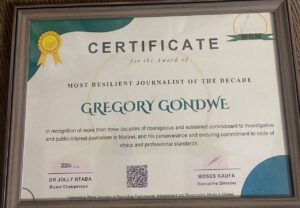
Renowned investigative journalist, Vitus-Gregory Gondwe been honoured with the prestigious award; the ‘Most Resilient Journalist of the Decade’ — conferred by the Media Council of Malawi (MCM) and Malawi Human Rights Commission (MHRC).

Advertisement
The citation on the award’s certificate reads: “In recognition of more than three decades of courageous and sustained commitment to investigative & public-interest journalism in Malawi, and his perseverance and enduring commitment to code of ethics and professional standards.”
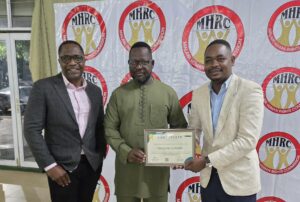
Former MISA Malawi Chapter president, Golden Matonga, who received the award on behalf of Gondwe, highlighted on his Facebook wall that his colleague and partner at Platform for Investigative Journalism deserves this highest honour.
“There couldn’t have been a more deserving winner,” he wrote. “Greg has braved threats, ridicule, illegal detention, and lawsuits — all in the service of journalism.
“Beyond his own courage, he has opened doors for others, created jobs, mentored the next generation, and shown us that journalists can innovate to build their own path.
“Above all, he practices journalism with integrity, honesty, and a real soul. It’s a genuine privilege to work alongside such a generous, humble, and gentle colleague every day.”
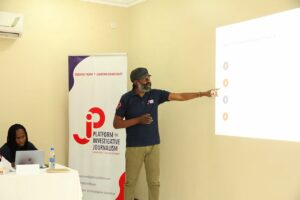




The prominent investigative journalist, editor, and media leader, is the founder and managing director of the Platform for Investigative Journalism (PIJ) — a highly influential nonprofit newsroom dedicated to exposing corruption, illicit financial flows, and governance failures.
He posted on his Facebook account saying he was deeply honoured to receive the award with a grateful heart and a renewed commitment to the work that has given his life so much meaning.
He highlighted that the words in the citation on his certificate means more to him than he can easily express: “They bring back memories of the difficult days, the sacrifices, and the people who helped me find the strength to keep going.

“Through threats, detention, ridicule, and lawsuits, my belief in journalism that serves the public has remained firm.
“But I have never walked this journey alone — to my family, wife Edith, colleagues, friends, and everyone who has stood beside me: thank you.
“You have carried burdens that rarely appear in a byline or on a certificate. This recognition belongs to you too.
“To my colleague, partner, and friend Golden, who accepted the award on my behalf, thank you for representing me and for your heartfelt words.
“Your friendship and solidarity mean so much. To be recognised in this way is an honour; to hear such kindness from someone who knows the journey makes it even more meaningful.
“You have seen the difficult days behind the work, and your friendship, solidarity, and partnership have helped me keep going.
“No one walks this road alone, and I am grateful to walk it with you. My sincere thanks to the Media Council of Malawi and the Malawi Human Rights Commission for this recognition, and to every colleague, friend, and family member who has stood by me when it mattered most. This honour is yours too.”

Advertisement
Congratulations poured in immensely on his account as well as Matonga’s, with Muwamba Mwana Muwamba saying: “Congratulations, ada bwana! Your resilience has shown as a primary beacon, standing out tall. Well deserved.”
Civil rights advocate, Charles Simbi wrote: “Well deserved accolade. You have stood up for the integrity and purity of the art of journalism.
“You have been a lone, unequivocal and an unwavering warrior for dutybearer transparency, accountability and responsiveness. As a nation, we owe you a lot.”
The awards formed part of 30th Anniversary for Media Council of Malawi (MCM), which were held alongside the Annual Media and Access to Information (AMATIC) 2026 Conference — in collaboration with, MHRC, and Centre for Human Rights and Rehabilitation (CHRR).

The awards, designed to recognise outstanding contributions and legacy, not competition, included:
* Lifetime Achievement in Media: Aladdin Osman (Capital FM)
* Most Resilient Journalist of the Decade: Gregory Gondwe (Platform for Investigative Journalism (PIJ)
* Public Communication & Access to Information Legacy: Sangwani Mwafulirwa (Malawi Electoral Commission)
* Women in Media Leadership: Tereza Tamela Ndanga (former MISA Malawi Chapter president)
* Media Academic Contribution Award: Dr. Levi Zeleza Manda (Malawi University of Business & Applied Science-MUBAS)
* Responsible Digital Media Influencer: (Stanley Onjezani Kenani)
* Media Industry Leadership: Times Media Group (The Daily Times; Malawi News; The Sunday Times; Times TV)
* Public Interest Broadcasting: Zodiak Broadcasting Station
* Newspaper of the Decade: Nation Publication Limited
* Religious Broadcasting Contribution: Trans World Radio (TWR)
* Community Radio Station of the Decade: Mudziwathu Community Radio Station (Mchinji on 107.6 MHz FM frequency)
* Entertainment Radio Station of the Decade: MBC Radio 2 FM
* Press Freedom Star: MISA Malawi Chapter
* Democracy Champion Media Award: Montfort Media
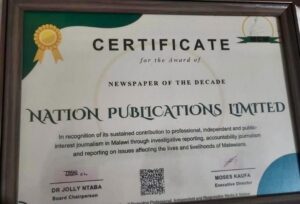
Nation Publications Limited was honoured as ‘Best Newspaper of the Decade’ — recognising it for its “sustained contribution to professionalism, independent and public interest journalism in Malawi through investigative reporting, accountability journalism and coverage of issues affecting the lives and livelihoods of Malawians”.


Public Communication & Access to Information Legacy was awarded to Malawi Electoral Commission (MEC) Director of Media & Public Relations, Sangwani Mwafulirwa.
The citation recognises Mwafulirwa’s sustained contribution to public communication, media relations and access to information — including efforts to strengthen communication between public institutions, the media and citizens.
The MCM@30 awards recognised long-term impact and contribution to Malawi’s media and public communication landscape over its 30-year legacy.
Gregory Gondwe applauded MCM and its partners for recognising the lifetime of work and perseverance and to the younger journalists finding their way through difficult circumstances, he inspired:
“Your work matters — hold on to your integrity, support one another, and never underestimate the value of serving the public with honesty and courage.”

Present at the awards was graced by Minister of Information & Communications Technology, Shadric Namalomba, who called on media practitioners to uphold high standards of professional ethics.
He highlighted the media’s role as an essential pillar of democracy while calling on public institutions to prioritise full compliance with the Access to Information (ATI) Act to promote transparency and good governance.
Namalomba commended institutions that have complied with statutory reporting requirements, while urging those lagging behind to take swift action to meet their legal obligations.


Parliament of Malawi was recognised at the event by the Malawi Human Rights Commission as the best-performing institution in the implementation of the Access to Information (ATI) Act.
The recognition reflects Parliament’s efforts in promoting access to public information and complying with obligations under the ATI Act, which provides citizens with a legal framework to obtain information from public institutions.
Namalomba thus stressed that access to public records is critical to strengthening democracy and building trust between citizens and public institutions.
“When citizens are able to access information held by public institutions, they are better placed to understand government programmes, participate meaningfully in national development and hold institutions accountable.”


The Minister emphasised that access to information in Malawi is a constitutional right that must be upheld, rather than a policy privilege — citing Section 37 of the Constitution, that guarantees every person the right to access information held by the State or any of its organs at any level of government, where such information is required for the exercise of their rights.
He stated that the provision should be understood alongside Section 35, which guarantees freedom of expression, and Section 36, which guarantees freedom of the press and provides for access to public information.
Namalomba added that the ATI Act, 2016, enacted as Act 13 of 2017, provides the legislative framework for giving effect to the constitutional right by establishing procedures for accessing information.
The Act’s commencement was provided for through a Government Notice in 2020 and Namalomba stressed that continued engagement among government, the media and other stakeholders, is important to address challenges in implementing the right to information and ensure that citizens and the media can access information necessary for informed public participation and accountability.
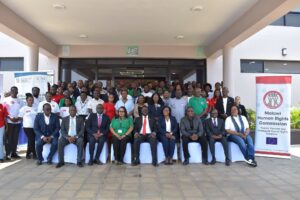
MHRC Executive Secretary, Habiba Osman rubbed it, saying the right to information is fundamental to transparency, accountability and good governance, noting that citizens can only participate meaningfully in public affairs when they have access to accurate, relevant and timely information.
“Access to reliable and authoritative information is therefore an important part of the response to these challenges,” said Osman, adding that public institutions have a responsibility to proactively provide accurate and timely information to reduce information gaps and counter false narratives.
However, she observed that a significant number of institutions covered by the law were yet to fully comply with their obligations.—Additional reporting by Khumbo Msambala Salanje, Malawi News Agency (MANA)

Advertisement