

* Agrees with the observation that it was amended without due process and that it erodes governance principles
* We add our voice to theirs in condemning this move, which we view as a detriment to our constitutional democracy
* We, therefore, call upon all relevant institutions and leaders to reflect on the profound implications of this constitutional amendment
* Prioritise robust, inclusive, and transparent processes in all matters of national governance and uphold the sanctity of the Constitution and the democratic principles it enshrines, particularly the separation of powers
By Duncan Mlanjira
The Church of Central African Presbyterian (CCAP), through it Church & Society department, has expressed “profound disappointment and deep concern” regarding the passage of the Constituency Development Fund (CDF) Constitution Amendment Bill by the National Assembly on Thursday, saying the process eroded “two fundamental principles of democratic governance; lack of inclusive consultation and violation of the separation of powers”.

Advertisement
Issued by Church & Society’s Executive Directors, Rev Master Jumbe (Blantyre Synod), Rev MAT Mulagha (Livingstonia Synod) and Rev EMY Mwanza (Nkhoma Synod), the Church maintains that it stands “in solidarity with the many voices from civil society, governance experts, and the general public — who have repeatedly raised alarms about the dangers of amending the Constitution without due process and the erosion of governance principles”.
“We add our voice to theirs in condemning this move, which we view as a detriment to our constitutional democracy,” says the statement of the Bill, which lawmakers from both sides of the house voted unanimously in its favour — with 199 members supporting it, none opposing, and 25 absent.
It establishes the Constituency Development Fund in the Constitution, outlining its purposes, governance framework, and guiding principles for management and utilisation.
When the Bill was tabled in Parliament by legislator, Emmanuel Chambulanyina Jere, of Mzimba South Constituency, some CSOs and governance experts opposed its deliberation, saying the process neglects the high court ruling on the matter.
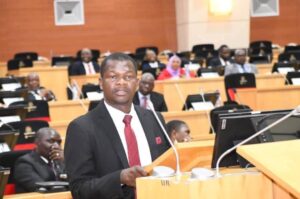
Emmanuel Chambulanyina Jere
They also reiterated that the Bill undermined the doctrines of separation of powers, reverses decentralisation, exposes the nation to heightened corruption risks and contradicts empirical evidence on the dangers of MP-managed CDF systems.
But according to the communique by Parliament Media, the Legal Affairs Committee approved the amendment after thorough consultation — as reported by the Committee’s chairperson, Gilbert Khonyongwa, who indicated that they consulted CSOs, the Malawi Local Government Association (MALGA), the Ministry of Justice, and the mover of the Bill.
A major point of public concern was the role of Members of Parliament in the management of CDF funds and to address these fears, the Committee recommended that MPs should not handle or approve funds directly.
It also stressed that district councils should continue managing all financial and procurement processes in line with the Public Finance Management Act.

However, the Church & Society concern is rooted in two fundamental principles of democratic governance, that the process lacked inclusive consultation, saying: “It is a well-established democratic norm that any amendment to a nation’s supreme law, the Constitution, requires broad, transparent, and meaningful consultation with a wide spectrum of stakeholders.
“This process ensures that such significant changes reflect the will and address the concerns of the citizenry. We observe, with regret, that this critical consultative phase was severely lacking in the process leading to the passage of this Bill.
“The rushed nature of this amendment denies Malawians their rightful role in shaping the foundational law that governs them.”
On the violation of separation of powers, the Church & Society maintains that its core principle “is designed to safeguard democracy by ensuring checks and balances among the Executive, Legislature, and Judiciary”.
“The primary role of Members of Parliament is legislation and oversight of the Executive. Direct involvement in the implementation of development projects, as facilitated by the CDF model, fundamentally blurs this critical line.
“It risks conflating oversight roles with executive functions, potentially leading to conflicts of interest, weakening accountability, and undermining the very oversight Parliament is meant to provide.”
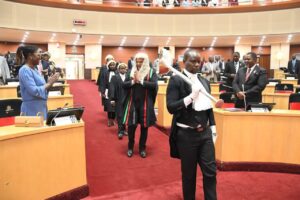
Forging ahead, the Church & Society thus calls upon all relevant institutions and leaders to:
* Reflect on the profound implications of this constitutional amendment;
* Prioritise robust, inclusive, and transparent processes in all matters of national governance; and
* Uphold the sanctity of the Constitution and the democratic principles it enshrines, particularly the Separation of Powers.
“The strength of our nation lies in respecting its foundational laws and governing institutions. We urge a return to these principles for the sustained development and democratic health of Malawi,” says the Church & Society.


Advertisement