
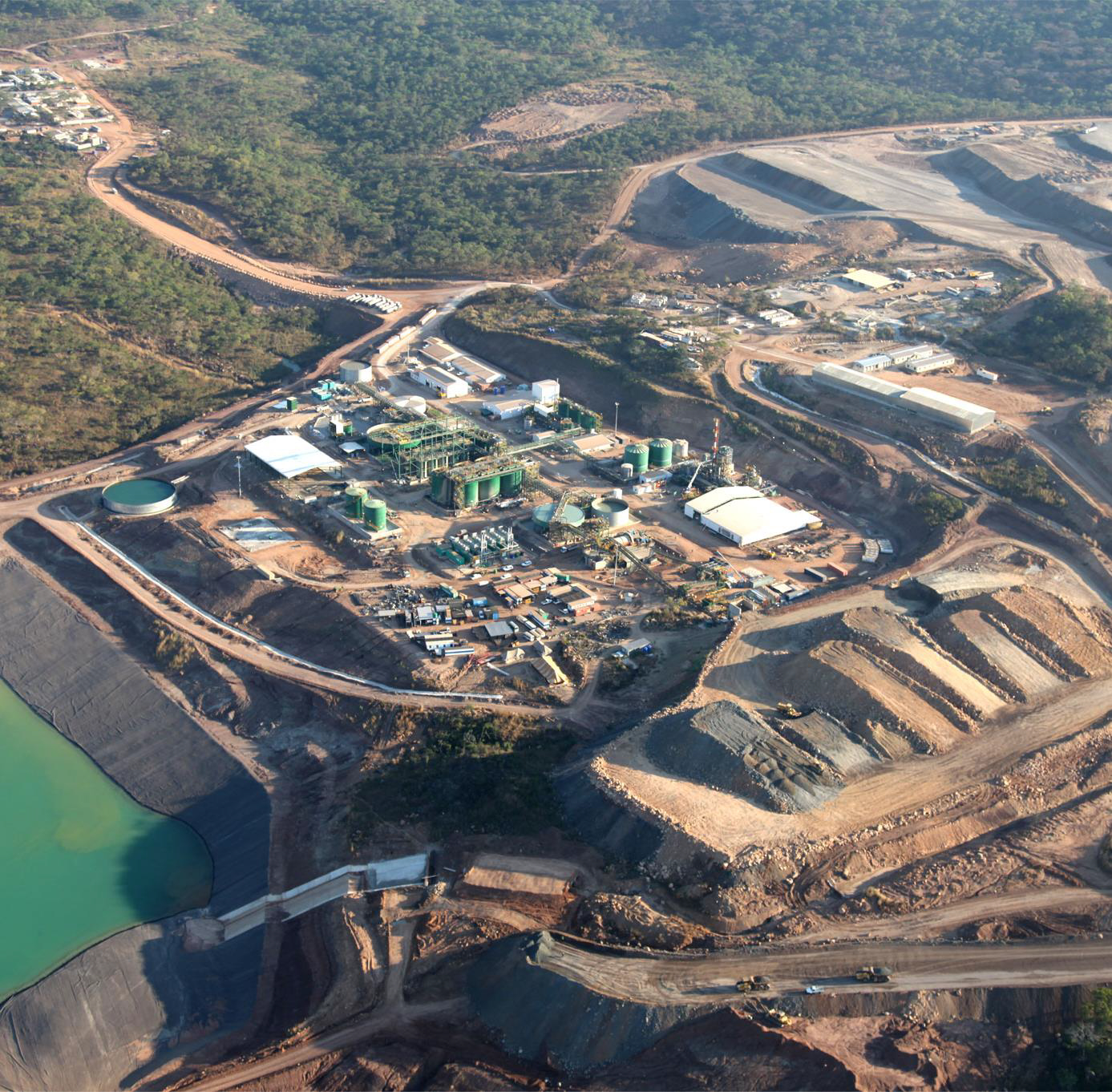
Kayelekera mine in Karonga
* If mining proceeds from Kasiya and Kangankude would be managed properly, the country would be generating around US$500 million every year
* Malawi is endowed with an extensive exploration portfolio with Kasiya in Lilongwe being rich with rare rutile deposits and Kangankude boasting of rare earths deposits
By Brenda Nkosi, MANA & Duncan Mlanjira, Maravi Express
President Peter Mutharika has expressed optimism that the country stands to significantly benefit from mining sites discovered at Kasiya in Lilongwe and Kangankude in Balaka — emphasising that he will not allow exportation of raw materials from all mines.

Advertisement
“Raw materials have to be processed here. Those involved in illegal mining or abuse, your days are numbered,” said the President yesterday at Sanjika Palace during the swearing-in of the State Second Vice-President Enock Chihana, Minister of Agriculture, Irrigation & Water Development, Roza Mbilizi and Minister of Industrialisation, Business, Trade & Tourism, George Patridge.
The President said if the mining proceeds from the two sites would be managed properly, the country would be generating around US$500 million every year.
Malawi is endowed with an extensive exploration portfolio with Kasiya in Lilongwe being rich with rare rutile deposits with Kangankude boasting of rare earths deposits, which is being developed by Australian investor, Lindian Resources.

Kangankunde rare earths mine in Balaka being developed by Australian company Lindian Resources
Another rare earth mines is being developed by Mkango Resources at Songwe Hills in Phalombe; another Australian mining company, Lotus Resources invested in Kayelekera uranium mine in Karonga.
Other projects include uranium-tantalum-niobium-zircon in Thambani and a nickel-cobalt prospect in Chimimbe among other untapped mineral resources. Malawi. However, the mining industry has been riddled with poor contract deals.
This surfaced through Kayelekera, whose red flags were raised by ActionAid Malawi in its report of June 2015, that exposed raw dealings that were granted to Australian company, Paladin (Africa) Limited.
In the report, ActionAid Malawi, lost out on US$43 million in revenue in six years up to 2015 from a single company, Paladin — money that was lost through a combination of harmful tax incentives from the Malawian government, and tax planning using treaty shopping by Paladin.
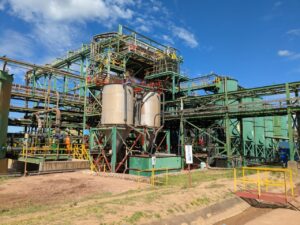
Machinery at Kayelekera mine

Paladin is reported to have exported tons and tons of uranium deposits which it indicated them as samples and proceeded to sell Kayelekera mine to fellow Australian company Lotus Resources in 2024.
Against the well-founded recommendations made by ActionAid Malawi, the Malawi Government once more granted Lotus Resources strong tax break on its investment on Kayelekera.
According to a 2024 report by Australasia’s Mining Weekly publication; lotus-malawi-government-sign-mine-development-agreement-for-kayelekera, the Mining Development Agreement (MDA) which the government signed with Lotus Resources in July 2024, guaranteed a stability period of 10 years during which the project will not be subject to any detrimental changes to the fiscal regime.
“Key tax terms are aligned with the restart definitive feasibility study assumptions, including a royalty rate of 5% and a corporate tax rate of 30%,” said the report. “Relief is provided on resource rental tax and withholding tax, specifically as it applies to dividends to non-residents.
“There are exemptions for import and duties, excise and value-added tax on capital goods and specified consumables directly related to mine production. The MDA includes internationally recognised principles relating to legal protection on security of tenure, dispute resolution and expropriation.”
After economic stakeholders had voiced their concerns over weak mining development agreements that the government had been signing with foreign companies, the past administration’s President Lazarus Chakwera admitted that the Ministry of Mining was operating in secret with the foreign investors.
At the official opening of the Malawi Mining Investment Forum 2025 in April this year— under the theme; ‘Advancing Malawi’s mining agenda in an evolving global industry’ — Chakwera said it is not acceptable that the citizenry should learn of mining operations hearing about mining operations taking place right here in Malawi “from a press conference by a foreign company in Australia”.
“Or from that company’s report of the performance of its stock on the London Stock Exchange, as if here in Malawi the Ministry of Mining has no information to give Malawians about how Government is securing a prosperous future for them through this resource.”
He thus ordered the silence Ministry to ensure that there are functional systems working around the clock to regulate the conduct of every player in the sector and to safeguard every single ounce of the country’s minerals.

Advertisement
He also ordered for a strong regulatory framework made up of a combination of strong institutions, strong laws, strong policies, and strong testing labs to aid in the effective regulation of the sector — “to ensure that there is equal opportunity for genuine investors, a fair and level playing field for stakeholders, while leaving no room for illegal mining or environmental degradation.
He thus announced the establishment of a new mining law and its Mining Authority to negotiate smart agreements and to bring order to mining activities — ensuring that the sector operates in a more structured and regulated manner to give Malawians updates on the status of mining development agreements for every mine in the country.
That’s the status on mining that President Mutharika has inherited, as he pledges to further transform the industry by not allowing raw materials from the country’s mines to be exported but to be processed right here in Malawi.
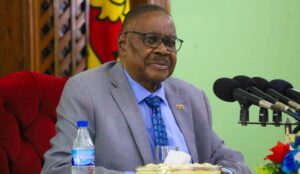
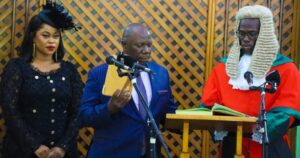
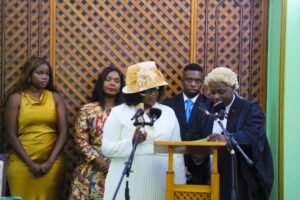
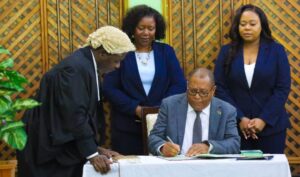
Mutharika thus advised the newly-sworn in Ministers, especially Patridge, to be vigilant and help government deliver to its people: “The oath you have taken today is a solemn commitment to the people of this country that you will serve them.
“It is not about oneself. It’s old fashion to eat at the expense of the people we are supposed to serve,” he said, while in an interview, Patridge promised to transform the country through his sector.
“My first assignment is to make sure that the business environment is right for business to thrive,” he said. “Once we produce, as emphasised by the President, most of these problems will be solved.”


Advertisement