
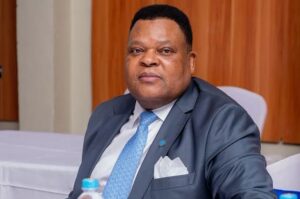
DPP Secretary General Peter Mukhito
* The DPP recognises and respects the important role of religious institutions and civil society in promoting democracy, good governance and accountability
* However, this responsibility must be exercised with objectivity, impartiality, constitutional accuracy and intellectual honesty
* Institutions demanding transparency, democratic governance and accountability from others must equally demonstrate these principles in their own affairs
By Duncan Mlanjira
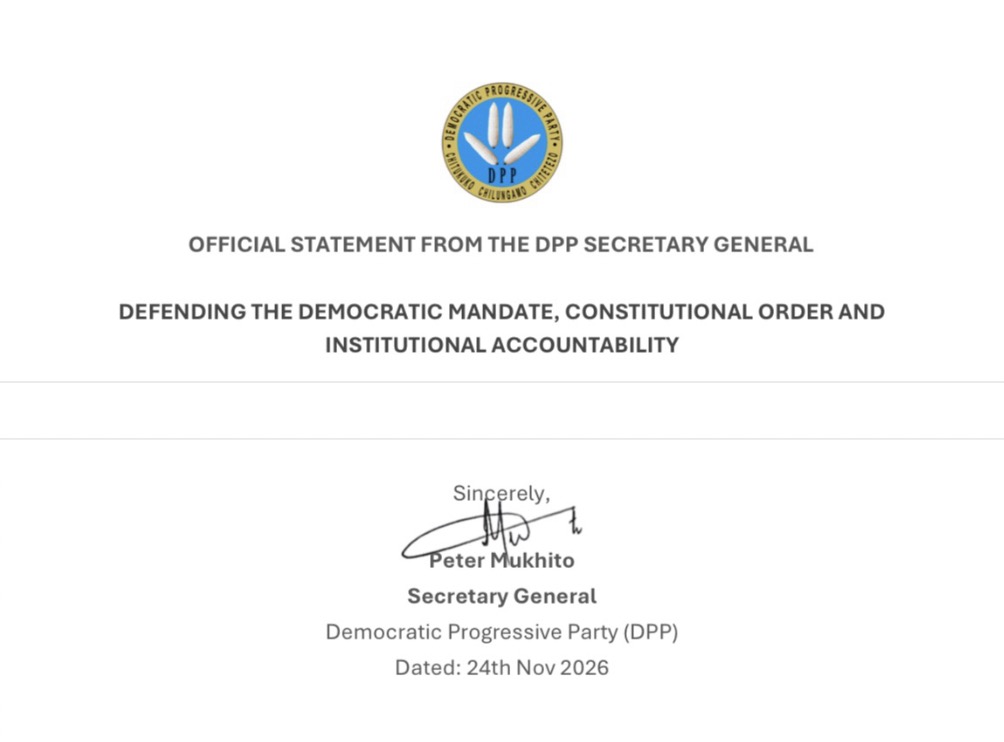
The Democratic Progressive Party (DPP) has responded to the statement by the Public Affairs Committee (PAC), concerning presidential incapacitation and the constitutional role of the First Vice-President Jane Ansah (retired).
In a statement, Secretary General Peter Mukhito highlights that the DPP “recognises and respects the important role of religious institutions and civil society in promoting democracy, good governance and accountability”.
“However, this responsibility must be exercised with objectivity, impartiality, constitutional accuracy and intellectual honesty.
“While some of the economic and governance concerns raised by PAC warrant serious consideration, the DPP considers that its conclusions regarding presidential incapacitation and the constitutional role of the First Vice-President require sufficient evidential and constitutional substantiation.”

Advertisement
Thus, through the Secretary General, the DPP therefore clarifies its position on the issues raised:
1. Respect for the democratic mandate
Malawi is a constitutional democracy in which citizens exercise their sovereign right to elect their leaders every five years.
On 16 September 2025, Malawians went to the polls fully aware that His Excellency Professor Arthur Peter Mutharika was 85 years of age, and with full knowledge of his experience, leadership credentials and record of public service.

7th President of the Republic of Malawi, Prof. Arthur Peter Mutharika
Malawians freely and democratically entrusted him with the responsibility of governing this country for a five-year constitutional term.That decision was neither accidental nor imposed. It was a deliberate expression of the sovereign will of the Malawian people.
The President’s democratic mandate must be respected, subject always to the provisions of the Constitution.
The Constitution of the Republic of Malawi expressly provides the procedure for determining presidential incapacitation. That procedure must be respected.
Advanced age, limited public appearances, the manner of the President’s arrival from a private visit or the absence of a live televised address do not, in themselves, establish constitutional incapacitation.
While legitimate public debate on presidential fitness is permissible in a democracy, such debate must not be confused with a formal constitutional determination of incapacitation.
Dissatisfaction with government performance does not constitute presidential incapacitation.
2. The Constitutional role of the First Vice-President
The DPP recognises and respects the constitutional office of the First Vice-President. The First Vice-President exercises functions prescribed by the Constitution and other applicable laws, together with responsibilities lawfully assigned by the President.

Mutharika and Ansah
Such assigned responsibilities constitute delegated functions, without prejudice to the independent constitutional duties of the office.
Where PAC believes that a specific constitutional function of the First Vice-President has been infringed, it should identify the relevant constitutional provision and present supporting evidence.
Public expectations cannot, by themselves, create constitutional obligations that the Constitution does not impose.
3. Economic challenges and historical accountability
The DPP Government acknowledges the economic hardships confronting Malawians, including fuel shortages, foreign exchange scarcity, the high cost of living and challenges in the delivery of essential public services.
These difficulties are real, and the Government has a responsibility to address them. However, an objective assessment of Malawi’s present economic circumstances must take into account the condition of public finances, debt obligations, foreign exchange reserves and essential commodity supplies at the time of the change of administration.

Advertisement
The DPP maintains that it inherited an economy in profound distress. During the previous administration, serious concerns were raised regarding financial mismanagement, wasteful expenditure and questionable procurement practices, including the widely reported fertiliser procurement controversy involving a butchery business.
These matters should be assessed against available documentary evidence and relevant official findings.
Malawians also endured prolonged fuel queues, foreign exchange shortages and deteriorating living standards. The DPP invites PAC to account for its public interventions during that period and explain how its present assessments compare with the standards it applied to the previous administration.
Public accountability must be exercised consistently, irrespective of political affiliation, religious denomination or institutional allegiance.
The same standards of transparency, integrity and accountability should apply to every administration, regardless of the political party in government or the religious affiliation of its leadership.
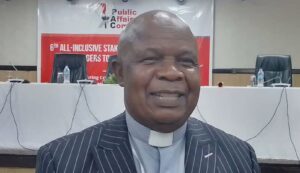
PAC chairperson Monsignor Patrick Thawale
4. Institutional accountability must be reciprocal
Institutions demanding transparency, democratic governance and accountability from others must equally demonstrate these principles in their own affairs.
In light of reported concerns regarding the expiry of PAC’s leadership tenure in December 2022, the DPP requests clarification concerning the status of its internal elections, any transitional arrangements and the provisions of its governing instruments under which its current leadership continues to exercise authority.
Such clarification would contribute to institutional transparency without diminishing PAC’s legitimate role in scrutinising government performance.
Institutional credibility is strengthened when organisations uphold the very standards they advocate. Those who demand democratic accountability must equally demonstrate it.
5. Government responsibility and national recovery
The DPP recognises that constitutional legitimacy does not absolve any government of its responsibility to deliver results.
The hardships confronting Malawians demand urgent attention, decisive leadership and measurable progress.
The DPP Government remains committed to economic recovery, restoring foreign exchange stability, improving the availability of essential commodities, strengthening public institutions and ensuring responsible management of public resources.
The Government must be judged by its actions, its performance and its ability to improve the lives of Malawians. The Party remains open to constructive engagement with religious leaders, civil society organisations, development partners and all stakeholders committed to national recovery.
Such engagement must be founded on facts, mutual respect, institutional impartiality and fidelity to the Constitution.
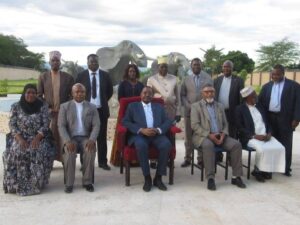
PAC has ever met with Mutharika before for constructive dialogue
In conclusion, Mukhito highlights that the DPP “remains firmly committed to constitutional democracy, the rule of law, transparent governance and national recovery”.
“We recognise the legitimate role of civil society in scrutinising government performance and acknowledge the Government’s responsibility to address the hardships confronting Malawians.
“Constitutional questions must be resolved through constitutional procedures; allegations must be supported by evidence; government performance must be assessed against measurable results; and institutional accountability must be applied consistently.
“Malawi belongs to all its citizens, irrespective of political affiliation, religious denomination or institutional allegiance.
“Our collective responsibility is to safeguard its democracy, uphold its Constitution and contribute meaningfully to its economi recovery.”
The DPP maintains that the democratic mandate of the Malawian people “must be respected” and that supremacy of the Constitution “must be upheld” and accountability “must apply equally to all”.
Advertisement