
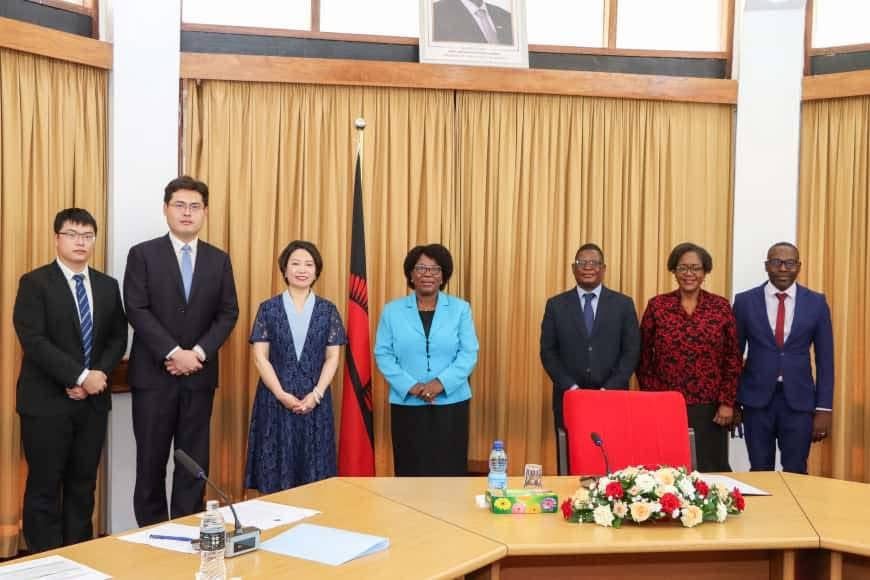
Vice-President Justice Jane Ansah’s recent meeting with Chinese Ambassador to Malawi Lu Xu to strengthen Malawi-China partnership
* Narratives suggesting that Chinese engagement fosters dependency do not reflect the realities of Malawi’s experience
* Chinese-supported initiatives have strengthened the country’s physical and technological infrastructure, expanded educational and industrial capacity, and contributed to long-term national development goals
* These contributions help lay the foundation for enhanced domestic revenue generation and structural transformation, aligning with Malawi’s own development strategies and aspirations
Analysis by Duncan Mlanjira
China’s recent cancellation of US$20 million in debt owed by Malawi has been widely recognised as a timely and meaningful act of solidarity — coming at a moment when Malawi is working to stabilise its fiscal position and stimulate economic recovery.

Advertisement
Although the amount represents a small fraction of Malawi’s overall public debt — now exceeding USD 13 billion — economic experts observe that “its true significance lies in what it symbolises: a reaffirmation of China’s enduring commitment to Malawi’s development and its willingness to support the country during challenging economic times”.
There have been misunderstandings surrounding the nature of this debt relief. Contrary to some perceptions, the cancellation was not undertaken to mitigate exposure to risky or problematic lending.
The US$20 million represented the total amount of debt relief and was not associated with any individual project since it forms part of China’s long-standing practice of providing interest-free loans to developing countries and later cancelling them as an act of goodwill.
This gesture demonstrates China’s continued commitment to flexible, compassionate development cooperation. Notably, China remains the first and only bilateral partner to have reached a debt restructuring agreement with Malawi, distinguishing its approach as both pragmatic and supportive.
It is also important to clarify that China is not Malawi’s largest creditor; According to Malawi’s own Mid-Year Public Debt Report, the country’s largest lenders continue to be the World Bank, followed by the African Development Fund and the International Monetary Fund (IMF).
Chinese lending forms only a portion of Malawi’s debt portfolio, and a number of the loans extended to the country were interest-free, reflecting China’s unique approach to development financing.
Our economic source observes that “claims that Chinese loans and investments lack transparency, local participation, sustainability, or long-term benefit do not align with evidence from Malawi’s experiences”.
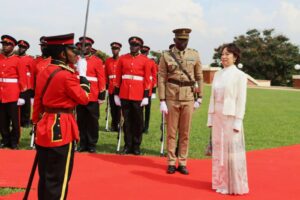
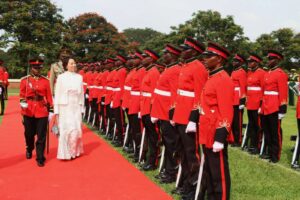
He quotes Ambassador of the People’s Republic of China to Malawi, Lu Xu, who emphasised during a recent reception that the projects China has supported “stand not as debts, but as gifts,” with their benefits remaining in Malawi and contributing directly to its people.
“Chinese enterprises engaged in these projects employed more than 90% local labour, creating jobs, income, and skills development rather than dependency.
“The record of completed projects — including the Parliament Building, Bingu National Stadium, and the Karonga–Chitipa Road — demonstrates clearly that all infrastructure financed by these loans was fully handed over to the Government of Malawi, ensuring that all revenues and economic benefits derived from them remain entirely within the country.”
Two weeks ago, Vice-President Justice Jane Ansah wrote on her official Facebook account after her meeting with Her Excellency Lu Xu at Capital Hill office in Lilongwe where she expressed the Government’s appreciation of the US$20 million debt cancellation, saying this reflected on the long-standing friendship between the two nations — “a partnership that has grown steadily since the establishment of diplomatic relations in 2007”.
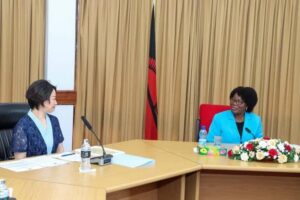
She also conveyed President Arthur Peter Mutharika’s appreciation of “China’s warm goodwill message and for recognising Malawi’s democratic transition … and China’s unwavering support in critical sectors such as infrastructure, agriculture, health, education, and human resource development”.
“We also discussed Malawi’s economic recovery agenda, particularly our short-term priorities under the 4Fs and M framework (food security, fertilizer, fuel, foreign exchange, and medicines) — areas where tangible progress is expected within the first 90 days of this administration.
“I invited China’s continued and expedited cooperation in these key sectors,” she said, adding that she also welcomed China’s announcement to provide emergency food assistance following the Government’s appeal support “that will go a long way in easing the burden on many Malawian households”.
Thus our economic expert source observes that the “most meaningful impact of the debt relief lies in the opportunities it creates [and that] the debt cancellation provides the government with valuable short-term fiscal space at a time when a significant share of domestic revenue is being directed toward servicing debt”.

“This flexibility enables Malawi to prioritise critical investments in agriculture, industrialisation, and infrastructure — areas essential for boosting productivity, increasing exports, and reducing reliance on external borrowing in the long term. “China’s broader investments, including the Malawi University of Science and Technology (MUST) and the National Fibre Backbone project, continue to support national capacity-building, innovation, and economic competitiveness.
“These projects address the underlying issues that contribute to debt vulnerability, particularly limited industrialisation and insufficient economic diversification.
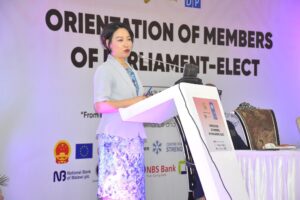
China also supported the orientation of newly-constituted Members of Parliament
“Narratives suggesting that Chinese engagement fosters dependency do not reflect the realities of Malawi’s experience. Chinese-supported initiatives have strengthened the country’s physical and technological infrastructure, expanded educational and industrial capacity, and contributed to long-term national development goals.
“These contributions help lay the foundation for enhanced domestic revenue generation and structural transformation, aligning with Malawi’s own development strategies and aspirations.
“In essence, China’s US$20 million debt relief is more than a financial transaction — it signals a deepening of a partnership built on mutual respect and shared developmental goals.
“As Malawi continues to strengthen its economic fundamentals and navigate its fiscal challenges, this gesture adds momentum to broader efforts toward economic resilience and sustainable development.
“If managed wisely, the relief can serve as a catalyst for productive investment, sound fiscal management, and greater self-reliance. China’s support — marked by flexibility, local participation, and long-term commitment — remains a significant and positive force in Malawi’s ongoing development journey,” says our economic expert.
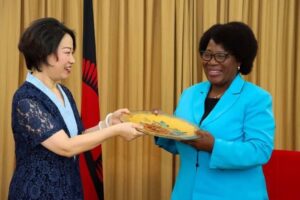
In the meeting with Her Excellency Lu Xu, Vice-President Ansah reported that their conversation also explored future opportunities for deeper collaboration, including mining, energy generation and transmission, rural electrification, irrigation, mechanisation, agro-processing, tourism, and manufacturing.
“I reaffirmed Malawi’s readiness to benefit from China’s zero-tariff export window and invited Chinese investors to explore the vast opportunities in our economy.
“Additionally, we discussed expanding cooperation in education, science, technology, and vocational skills areas that are key to empowering the next generation of Malawians.
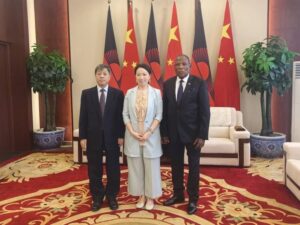
Ambassador Lu Xu also held a meeting Finance Minister Mwanamveka
“I confirmed Malawi’s commitment to the 2025–2027 Beijing Action Plan under FOCAC and our continued participation in the Belt and Road Initiative,” said the Vice-President, adding that she reaffirmed Malawi Government’s “unwavering commitment to the One-China Principle, recognising the Government of the People’s Republic of China as the sole legal government representing the whole of China”.
Meanwhile, Minister of Finance, Economic Planning & Development, Joseph Mwanamveka also met with Ambassador Lu Xu on October 10 in Lilongwe, where they focused on strategies to support Malawi’s economic recovery, including measures to address challenges related to fuel, foreign exchange, food and fertiliser, and medicine shortages.
The Minister reported that the meeting also explored ways to expand Malawi’s exports to China and strengthen bilateral trade while Ambassador Lu Xu reaffirmed China’s commitment to supporting Malawi and the Malawi-China partnership in advancing development priorities, promoting trade, and fostering long-term economic growth.


Advertisement