

* The Malawi economy is dead and nowhere does this death manifests itself more prominently than in forex shortage area with long fuel queues
* Government-guaranteed revolving Letter of Credit (L/C) facility is used to finance strategic imports such fuel, fertilizer, medicines without draining national forex reserves
* L/Cs are used only for short term but not long term and it is very costly option — but for now it will resuscitate the economy but long term solution is CBA
By Duncan Mlanjira
President Peter Mutharika’s new administration’s plan to implement Letter of Credit (L/C) facility as a solution to obtain stable foreing exchange, has been endorsed by economic expert, Thomas Ngoma that it will give immediate temporary relief to the economy.

Advertisement
Ngoma observes that the government-guaranteed revolving L/C facility is used to finance strategic imports such fuel, fertilizer, medicines without draining national forex reserves
“It is a revolving credit line for US$500 million. We use L/Cs only for short term but not long term as it is very costly option — but I support it for now to resuscitate the economy but long term solution is Currency Board Arrangement (CBA) system,” he said while p indicating that as per his estimation, the proposed US$500 million L/C facility will cost Malawi around US$63 million annually or around 13% of the facility amount.
“The Malawi economy is dead and nowhere does this death manifests itself more prominently than in forex shortage area with long fuel queues,” says Ngoma, as he endorses the L/C solution to give immediate temporary relief to the economy and bring in strategic items.
“During DPP-led administration (2014-2019), Reserve Bank of Malawi (RBM) used their discretion to implement this. Then, during the Tonse Alliance, they used their discretion to stop it. Now, the new administration will use their function to restart it.
Malawi needs policies that guarantee economic success by removing discretionary systems that rely on which way the wind is blowing.

The 7th President of the Republic of Malawi
He indicates that Mutharika’s 2014-2019 administration used the revolving letter of credit system through which the RBM partners with regional banks to issue L/Cs — backed by government of Malawi guarantees that includes several components, which include:
* Commitment fee — which is charged on the undrawn portion of the facility used to compensate the lender for reserving capital. It costs typical around 1.5% per annum;
* Drawdown interest rate — interest charged on the amount that is actually drawn down. It is typically around 8% p/a;
* Guarantee fee — paid to the government or third-party guarantor such as AfreximBank. Typically, 3% of the guaranteed amount to over risk of default;
* Arrangement Fee — being a one-time fee for setting up the facility for legal, advisors and documentation cost. It is typically 2% of facility size;
* L/C issuance fee — charged by the issuing bank per L/C opened. It is typically 1% of L/C value;
* Confirmation fee — paid to confirming bank often offshore for guaranteeing payment. It is around 2% of the amount;
* FX margin/spread — applied if forex is provided at a premium to market rate. This is around 3% above interbank rate; and
* Late payment penalties — additional interest or fees if repayment is delayed. This is 5% above base rate of 8%.
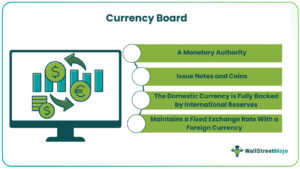
Ngoma maintains that an L/C “can live happily side by side with a Currency Board Administration in Malawi. Whereas the CBA fixes deep rooted structural economic issues, an LC is a short-term solution typically for 12 months to allow Malawi to import strategic priority items but not everything.
“As a growing economy Malawi needs a lot of forex for everything and fiscal discipline that CBA brings,” says Ngoma, who earlier suggested that CBA system is the only credible monetary policy solution for Malawi to implement in order to address the economic situation the country is in.
He has thus advised President Peter Mutharika to consider adopting, saying Malawi’s prolonged engagement with the International Monetary Fund (IMF) Extended Credit Facility (ECF) since 1979 “has not achieved sustained macroeconomic stability due to weak enforcement of fiscal discipline, recurrent monetary financing of deficits, and limited institutional credibility”.

Chakwera negotiating with IMF Managing Director Kristalina Georgieva for ECF in 2023
“A CBA presents a superior alternative. By legally prohibiting discretionary money creation and anchoring the domestic Kwacha to a stable foreign reserve, such as the RSA Rand, US dollar, or Euro at a fixed exchange rate, a CBA can enforce hard budget constraints, eliminate inflationary financing, and restore public trust in monetary policy.
“This system can reduce inflation to 2%, lower interest rates, and provide ample foreign exchange to purchase essential items like fuel, food, medicine, machinery, and spare parts, supporting industrialisation efforts.
“Unlike the ECF’s conditionality-based approach, a currency board can embed rule-based discipline into Malawi’s institutional framework, making fiscal prudence and reserve adequacy non-negotiable and self-enforcing as part of daily operations.”


Advertisement