
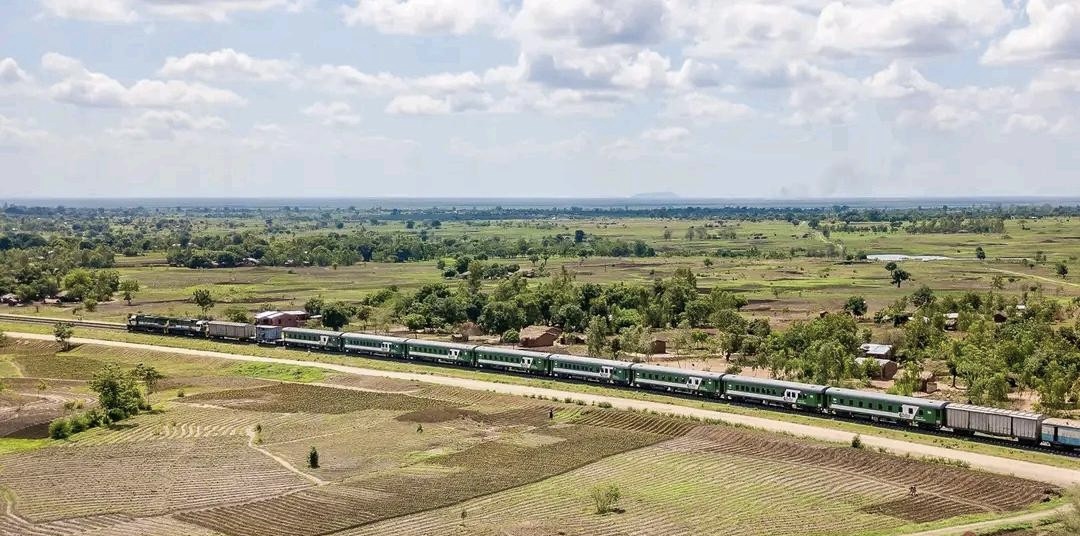
* Invites professionals to apply for three crucial director positions of engineering, corporate and finance services
* Malawi Railways is a government corporation that ran the national rail network until privatisation in 1999
* From December 1, 1999, Mozambican Central East African Railways (CEAR) led by Railroad Development Corporation won the bid to operate the network
Analysis by Duncan Mlanjira
As the country moves forward to rejuvenate the country’s rail transport system, the Ministry of Transport & Public Works is restructuring the Malawi Railways (1994) Limited, which was privatised in 1999.
On its official Facebook account, the Ministry has published job opportunities for three top management positions — directors of engineering, corporate and finance services.
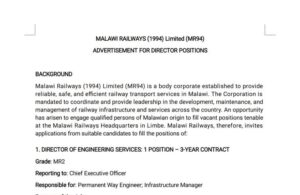
Key responsibilities of director of engineering include providing strategic leadership, governance oversight, policy direction and accountability.
The position also entails developing, reviewing and monitoring implementation of engineering policies, plans, strategies, programmes, regulations, standards, systems and procedures, including sectional budgets.
It is also to lead the administration of railway concessionary contracts and their provisions; to champion railway policy reform; to preside over technical committees — while representing MR1994 in national, regional and international railway forums.
Malawi Railways is a government corporation that ran the national rail network until privatisation in 1999 when Mozambican firm, Central East African Railways (CEAR) won the bid to operate the network — led by Railroad Development Corporation.

Advertisement
CEAR mostly operated from Limbe to Balaka to connect to Machinga, the border with Mozambique-Nacala Port through Nkaya via Liwonde.
The freight service from Salima to Mchinji via Kanengo in Lilongwe resumed as well as from Marka, the border town that connects to Mozambique’s Beira Port.
Its 72km railway line between Limbe and Sandama in Thyolo — enroute to Nsanje and Marka to connect — was damaged by heavy flooding in 2014.
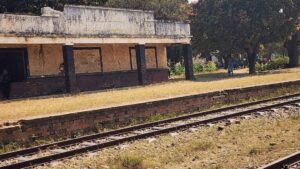
Abandoned railway station along the damaged Limbe-Marka rail line
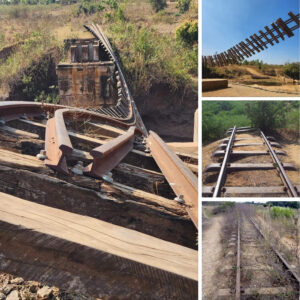
After many years of inactivity, the government, through CEAR, commenced rehabilitation works on the railway line, which stalled following the impact of Cyclone Freddy in 2023.
Last month, the Ministry of Transport disclosed that it will conduct a new feasibility study for the rehabilitation works to resume.
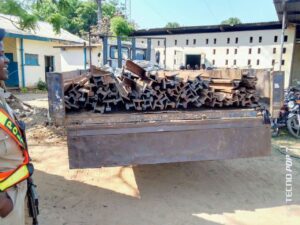
Theft and vandalism of railway infrastructure also affected progress of reconstruction and just last week, the Ministry reported that Nsanje Police arrested eight suspects in connection with the alleged theft of old railway lines near Nyachipere Bridge in Nsanje on the night of October 13-14.
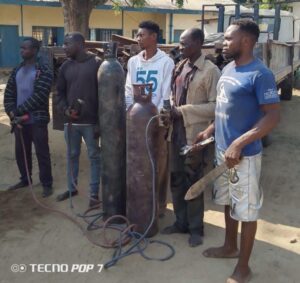
The suspects, identified as Aubrey Emmanuel, Adran Suleman, Chimwemwe Ngalu, Felix Roben, Bonface Matebule, Valindi Suleman, Raffick Suleman and Charles Alexander, were reportedly found cutting the railway lines into pieces using gas-cutting equipment before loading them onto a 10-tonne lorry.
Following a tip-off from security guards, police mounted a roadblock at Lambwe, where they intercepted the vehicle, registration number MN 1408, and arrested the eight suspects.

Five of the suspects
Meanwhile, the Ministry’s Department of Railways Director, Eng. Geoffrey Magwede, told the media last week that the government has engaged a consultant to facilitate the establishment of the Railways and Maritime Regulatory Authority of Malawi (RAMRAM) — which will be responsible for enforcing policies and regulations in the rail and water transport sectors.
Magwede reiterated that government is making major developments in the railway sector as it works to improve the country’s transport system to reduce the cost of moving goods across the country.
He added that the Ministry’s plans, through the National Transport Master Plan, that was launched in 2017, identified railway transport as important in reducing transport costs.
Thus the government is working on a feasibility study to expand railway connectivity from Lilongwe up to the Northern Region to link with the Tanzania-Zambia (TAZARA) Corridor.
He also highlighted the role of railway transport in protecting the country’s roads from damage caused by heavy trucks as it reduces pressure on the roads due to heavy trucks.
He said the future of the railway sector in Malawi is promising, stating that the government is taking steps to strengthen regulation and improve railway operations through the establishment of RAMRAM.
“The future of railway is bright, the Ministry has trained 15 railway inspectors who are looking at railway regulations and transport in Malawi,” he is quoted as saying.
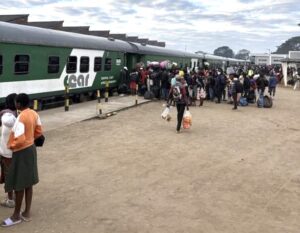
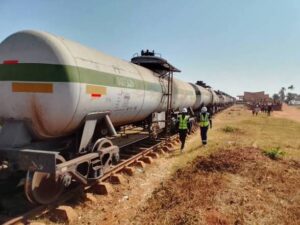
He also reported that Malawi Railways is earning over K8 billion per year through trains passing through the country from Moatize in Mozambique, via Mwanza-Neno-Nkaya-Liwonde-Nayuchi border in Machinga.
The train operations on multiple trips day and night, carry coal from Moatize to Nacala Port to be transported abroad and pay taxes for passing through Malawi.

The Moatize to Nacala corridor crossing over Limbe-Balaka route at Nkaya
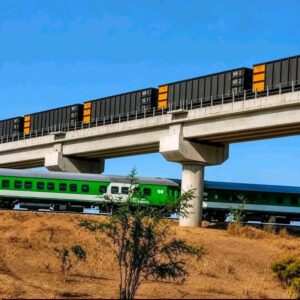
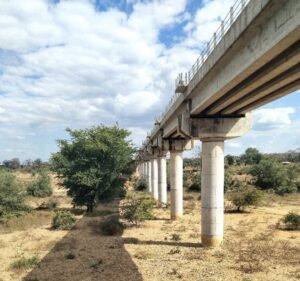
Magwede highlighted that in 2025 alone, trains carrying 15 million tons of coal passed through Malawi, generating significant revenue.
For the TAZARA project, Magwede reported that resource mobilisation for its implementation is underway, which is expected to strengthen Malawi’s regional and international trade links by providing an additional railway corridor to the Tanzania’s Port of Dar es Salaam.
The government expects the procurement of consultancy services for the feasibility study to be completed within the current financial year.
The African Development Bank (AfDB) also expressed willingness to support the feasibility study, while the Ministry of Transport & Public Works is working with the Central Corridor Transit Transport Facilitation Agency (CCTTFA) to support and advance the process.
The initiative is being done in line with the National Transport Master Plan (2017-2037), which recommends shifting cargo from roads to railways and water transport in order to reduce transportation costs and protect road infrastructure in the country.
Paul Chiudza Banda — in his research paper entitled; ‘Developing Malawi’s Transport Sector: The Role of the Malawi Railways Limited, 1964-1994’, published by Taylor & Francis on October 6, 2026 examines the operations of Malawi Railways Limited.
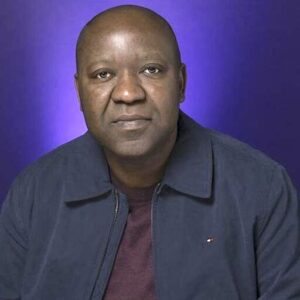
Paul Chiudza Banda
In the abstract, Chiudza Banda — assistant professor of history at Tarleton State University — states that “infrastructural development, including railway construction, remains a key financial and economic undertaking for governments across Africa”.
He adds that as a legacy of British colonial rule, “the MR stood as a key component of Malawi’s economic development”.
But “while the Malawi government portrayed MR as a successful parastatal, the facts on the ground proved otherwise”.
“The company faced several challenges, including financial constraints, political interference, domestic and international sabotage of railway tracks, operational difficulties, overstaffing, and poorly motivated and poorly remunerated domestic staff.
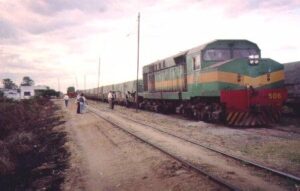
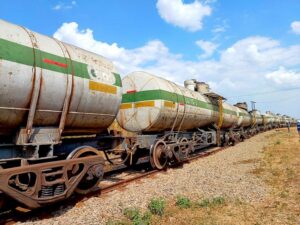
Malawi Railways colours
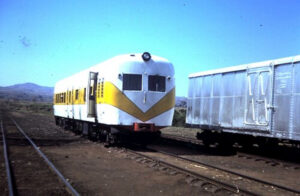
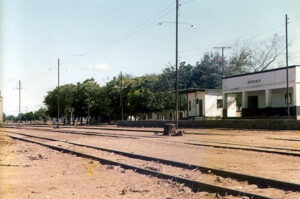
“Such challenges prompted the British government and the World Bank to intervene to revive the MR’s operations, with measures including technical support, loans, grants, and recommendations on the company’s restructuring and commercialisation.
“Ultimately, the Malawi government’s adoption of neoliberal reforms led to the MR’s privatisation in the 1999/2000 fiscal year,” writes Chiudza Banda.
The paper takes note that by 1997, the government had privatised 49 state-owned enterprises (parastatals) between 1980 to 1997. President Bakili Muluzi’s administration established the Privatisation Commission in 1996, whose role was to sell existing state-owned enterprises (SoEs) and to offer concessions to the private sector in Malawi’s tourism and transport sectors.
“Following MR’s privatisation, CEAR initially laid off all 1,000 employees. However, CEAR later rehired about two-thirds of the former employees under new contracts.
“USAID contributed US$20 million to help the Malawi government towards the retrenchments of MR staff and the private concessioning of the railways,” says the paper.
Following its plans to modernise MR94 and the establishment of National Transport Master Plan (2017-2037) and the recent Railways & Maritime Regulatory Authority of Malawi (RAMRAM), the government is yet to announce if MR1994 shall become a state-owned enterprise.

Advertisement