


The scourge of thin plastics across the country
* Warns all traders, retailers and consumers to immediately stop using banned things plastics and switch to environmentally-friendly alternatives
* As the regulator embarks on compliance and enforcement inspections in markets and trading areas nationwide
* All plastics with no name, registration of manufacturer, or a symbol indicating that it is recyclable, remains illegal in Malawi under the Environmental Management (Plastics) Regulations, 2015
By Duncan Mlanjira
Malawi Environment Protection Authority (MEPA) is encouraged members of the public to support its compliance enforcement efforts against the use of banned thin plastics and to report illegal activities activities associated with production, importation, distribution, sale and its use.

Advertisement
In a statement issued today, MEPA reminds the public, traders, manufacturers, and distributors that thin plastics (bags or sheets) of less than 60 micrometres in thickness and all plastics with no name, registration of manufacturer, or a symbol indicating that it is recyclable, remains illegal in Malawi under the Environmental Management (Plastics) Regulations, 2015.
The regulator thus notifies the public that it is currently conducting compliance and enforcement inspections in markets and trading areas nationwide, with emphasis that “all banned things plastics found in possession, storage, or trade will be confiscated”.
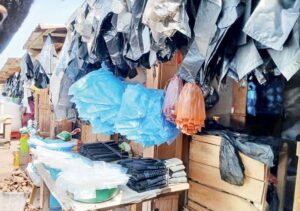
If found in markets, these will be confiscated
MEPA further warns that “appropriate enforcement action will be taken against offenders in accordance with the law” — thus alerts all traders, retailers and consumers “to immediately stop using banned things plastics and switch to environmentally-friendly alternatives”.
These alternatives include reusable bags, cloth bags, woven sacks, and paper packaging and to refuse being served with the banned plastics while reporting to MEPA on illegal activities through toll-free line 5153.
“Non-compliance with the Plastics Regulations is an offence punishable by law and shall result in confiscation of plastics and related equipment, fines, closure of business premises, or prosecution.
“MEPA remains committed to protecting Malawi’s environment and promoting a clean, safe and health nation,” says the statement.
The enforcement of the ban is long overdue as it has dragged for over 10 years through numerous court proceedings against it by manufacturers until January 31, 2025, when High Court Judge, justice-howard-pembas-discharge-of-judicial-review-of-thin-plastics-ban-put-an-end-for-good-for-any-other-litigation/.
The country’s thin plastic manufacturers and importers sought legal relief that led the application for a judicial review, which was finally brought before Justice Howard Pemba, who ruled that the court injunctions were “pretty some kind of abuse of the court processes by the companies”.

In 2021, environmental activist, Gloria Majiga-Kamoto, then 30 years old, Goldman Environmental Prize for Africa after a-protracted-legal-battle-with-plastic-manufacrurers that led the Malawi Supreme Court upheld a national ban on the production, importation, distribution, and use of thin plastics in July 2019 — vindicate the 2015 High Court ruling.
CNN reported that Majiga-Kamoto’s fierce advocacy — together with other activists and civil society groups — led to the shutting down of three plastic firms in 2020 by the government and as a result of her grassroots campaign, she has been awarded the prestigious Goldman Environmental Prize for Africa.
Majiga-Kamoto told CNN then that they “organised several marches — marched to the court and in communities to document their experiences and the challenges they encountered because of the plastic problem we have in the country”.
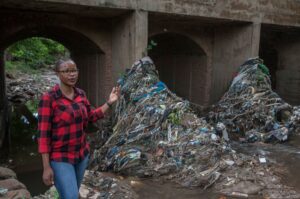
Gloria Majiga-Kamoto standing in front of the Mudi River bridge where lots of banned thin plastic bags and other waste were trapped back in 2021.—Picture courtesy of CNN
According to a study commissioned by the government then indicated that an estimated 75,000 tons of plastic were being produced in Malawi each year and at least 80% of those plastics are discarded after use, adding that Malawi’s plastic waste will require more than 100 years to decompose, but sustained manufacturing of throwaway plastics was to lengthen such a projection.
During the court processes, civil society organisations (CSOs) kept the fight on for the judiciary to expedite the case after Malawi Supreme Court of Appeal ruled against the use of the plastics in 2015.
In commemorating the World Environment Day on June 5 last year — held under the theme; ‘Beat Plastic Pollution to Protect the Environment and Human Health’ — CSOs organised a street parade from Kamuzu Stadium to the Blantyre High Court where the CSO’s presented a petition-demanding-the-enforcement-of-the-2015-ruling banning-use-of-thin-plastics/ to the Chief Justice.

Thus the landmark ruling by justice-howard-pemba was welcomed by the environmental stakeholders and the authorities with MEPA hitting the ground running soon after the judgement through intensified inspections on several plastic manufacturing companies in Lilongwe and discovered a chinese-owned-company-in-violation-and-was-ordered-to-shut-down-operations — while some manufacturers were found compliant with others flagged for irregularities.

Inspection exercises by MEPA soon after Justice Pemba’s ruling
