
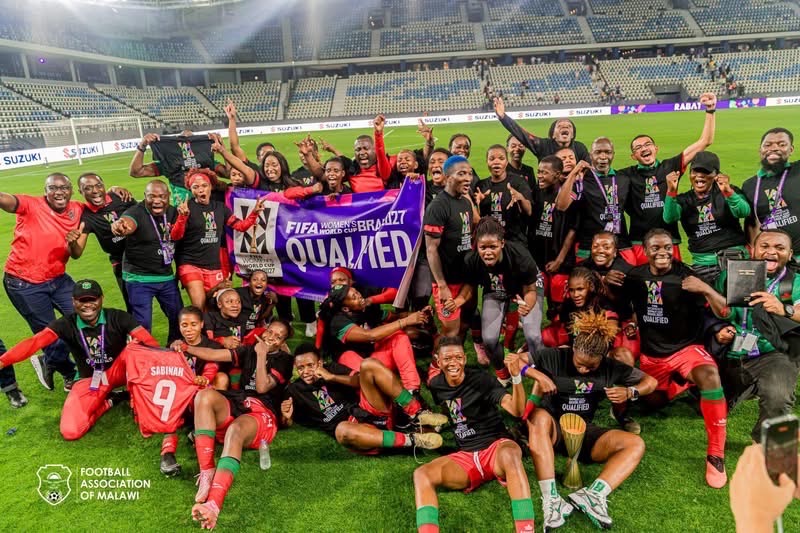
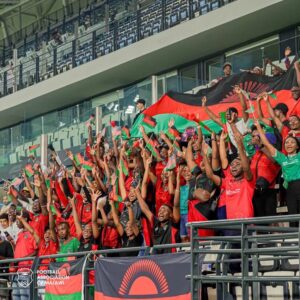
* Making their maiden appearance at the continental showpiece, it was almost unimaginable that the Scorchers would beat defending champions Nigeria
* And then Egypt and Ghana. As Nelson Mandela said, “Everything seems impossible until it is done”
By Washington Chimuzu
The historic feat of Malawi’s national women’s football team, the Scorchers, at the Women’s Africa Cup of Nations (WAfCON) Morocco 2026 offers yet more lessons for project managers.

Advertisement
Even as fans await to watch the remaining games, the Scorchers have already secured their spot at the FIFA Women’s World Cup Brazil 2027.
Making their maiden appearance at the continental showpiece, it was almost unimaginable that the Scorchers would beat defending champions Nigeria and then Egypt and Ghana.
As Nelson Mandela said; “Everything seems impossible until it is done”. This performance begs the question: what happened before the goals were scored?
Football Association of Malawi (FAM) executive committee member, Felister Dossi, who is also the head of delegation to the tournament, attributed the Scorchers’ performance to; “hunger for success and determination” — especially since the team were considered underdogs.
She also highlighted the use of one-on-one conversations with specific players to build confidence and pointed to performance-related incentives from FAM.


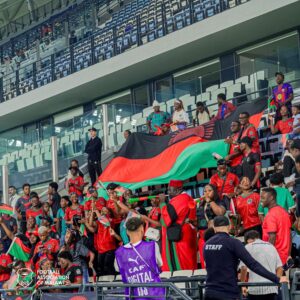
There are powerful project-management lessons here:
* First, motivation is not a luxury — it is a project resource
Project Management Institute (PMI) literature on project-team motivation identifies several theories including McGregor’s Theory X and Theory Y, Herzberg’s motivation-hygiene theory and McClelland’s needs theory.
The common thread is that people are not motivated in exactly the same way.
This matters because project managers sometimes assume that professionals should simply “do their jobs.” But even highly competent people perform differently depending on whether they feel valued, challenged, trusted and connected to a meaningful goal.
The Scorchers remind us that confidence can be as important as competence.




* Second, incentives work best when they are understood beforehand
Dossi’s reference to performance-based bonuses is particularly instructive. The chicken-and-egg argument, whether performance should come before reward or reward before performance, can miss the point.
When the rules are clear and the reward is credible, people know what they are working towards.
PMI guidance has long recognised recognition and rewards as tools for reinforcing desirable behaviour, while also noting that money is not the only motivator.
Growth, achievement, appreciation and the opportunity to apply one’s skills can be equally powerful. Project managers should therefore ask: What motivates this team, and have we made it clear?

Third, accountability matters as much as encouragement
Every successful team needs consequences for behaviour that undermines performance. One person’s poor attitude, indiscipline or disruptive conduct can infect an entire team.
This is not about creating a punitive culture — it is about protecting the team.
Expectations, responsibilities and consequences should be established early and applied fairly and consistently. Reward the behaviours you want repeated, but address behaviours that threaten the project.
Another form of encouragement is the presence of Fleetwood Haiya, the FAM president, at the games. Such executive presence speaks volumes about their interest in the team and its performance and it surely made a difference!



Finally, never confuse historical disadvantage with lack of capability
Malawi’s women’s football has traditionally received far less attention and investment than the men’s game. Yet the Scorchers have demonstrated what can happen when an overlooked group is given an opportunity, corporate support and belief.
Ultimately, projects are delivered by people working collectively. The Scorchers remind us that projects succeed not only because of plans and processes, but because people are motivated, supported, held accountable and given the opportunity to perform.
These lessons can be extended to many individuals, teams and projects that have stalled, stagnated or retrogressed despite their best efforts.

Washington Chimuzu
* Editor’s Note:
Washington Chimuzu is a prominent Malawian corporate executive who currently serves as the Chief Executive Officer (CEO) of Eris Properties Malawi and ICON Properties Plc, both of which are prominent real estate subsidiaries of the Malawi Stock Exchange-listed NICO Holdings Plc.
Appointed to the executive leadership role in May 2025, Chimuzu is a certified Project Management Professional (PMP) and a registered civil engineer with extensive expertise in property development, infrastructure, and corporate strategy.

Advertisement