
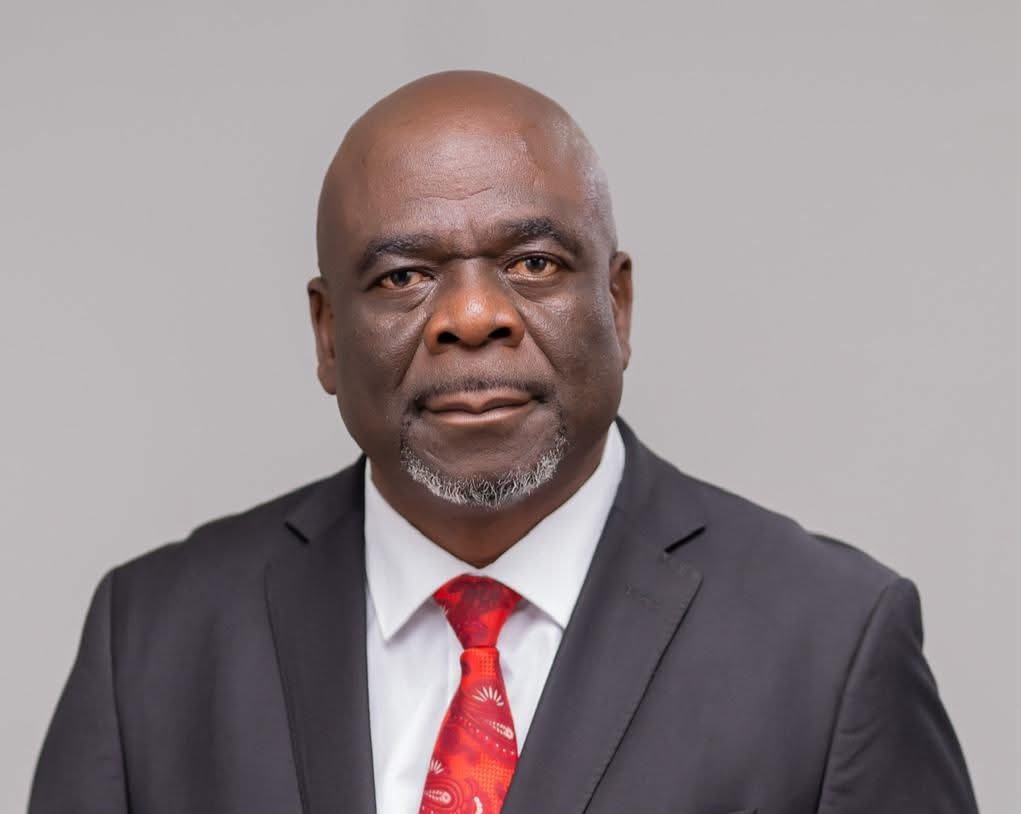
A reflection by Newton David Kambala, MUBAS Alumnus, after traveling from Manchester-Heathrow-Addis Ababa
* No vision, no transport infrastructure, no economy, no quality life
I recently traveled from Manchester to Heathrow in the United Kingdom then to Addis Ababa, Ethiopia. The journey left me deeply reflective.
Traveling from Manchester to Heathrow is not just traveling. It is like interacting with one huge machine with efficient and very well coordinated components.
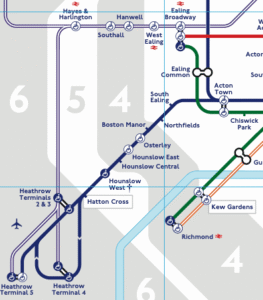
You leave your house on a local bus, connect to an intercity train that comes every 10-20 minutes. The train connects to the Underground tube, the Underground delivers you to Heathrow International Airport.
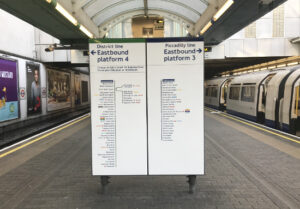
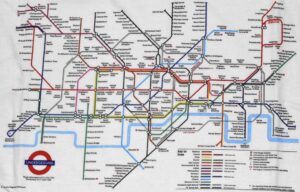
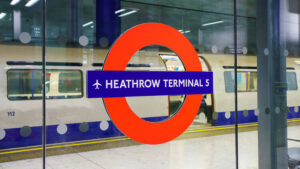
The road, the rail, and the airport speak to each other which is the reason I call them a machine. They are not three separate projects; they are one system.
Because the system works, time is respected. People arrive at work fresh in mind and body. That time discipline is productivity — and productivity is a thriving economy.
In Addis Ababa, I saw an African version of the same machine. Bole International Airport is not just an airport — it is a hub connected to a new light rail, to highways, to Ethiopian Airlines, which moves 12 million people.
Ethiopia understood: no transport, no economy.
Ukayenda ndi pamene umakumbutsidwa how underdeveloped we are.

Advertisement
The reality at home
Malawi, 62 years after independence, has sat on all possible modes of transport infrastructure development.
Our roads are in disrepair and carry 90% of all freight because our other modes have collapsed. It costs more to move a tonne of goods from Blantyre to Mzuzu than from Beira Port in Mozambique to Blantyre.
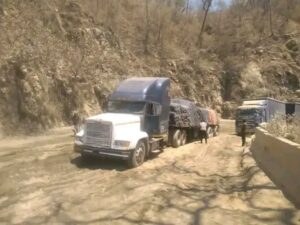
Current state of M1 Road on Kacheche-Chiweta stretch
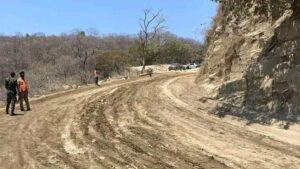
Our rail, which should be carrying our heavy mining products from the North, our sugar, our tobacco and our cement, is largely idle.
Our lake, which is our natural highway, is underutilised. Our air transport is expensive and disconnected from our domestic economy.
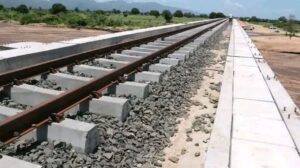
Rail under rehabilitation but underutilised
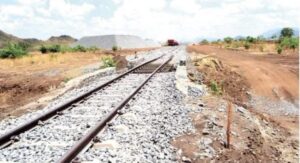
We talk of increasing production, mega-farms, and serious mining in the North and Centre. But how do we take raw materials, semi-finished and value-added goods to market?
How do we do this on 300MW of electricity for 22 million people in the 21st Century?
You cannot industrialise without energy and you cannot trade without transport.
Why have we stalled?
Building our economy would be easier if we prioritised laying a foundation for tomorrow rather than rushing for short-term personal benefits. We are eating the seed meant for planting.
For 62 years, we have been open to chances and opportunities of various kinds, but we have treated transport as a road project, not as an economic system.
We build a road here, patch a railway there, with no connection between them.
The British and others in the First World beat us not because they are smarter, but because they built a machine. We are still building parts.
What we must do — building our own machine
We must stop thinking in terms of ‘road projects’ and start thinking in terms of ‘the Transport Machine of Malawi’.
A machine has five coordinated components:
a) Revive the spine — the railway: Concession the Nacala and Sena corridors to a serious private operator. Rail must carry mining, fuel, cement and fertilizer. Road must not.
b) Make roads feed rail and lake: Our road investment must focus on feeder roads that take produce from the farm to the nearest rail siding or lake port, not just more tarmac between cities.
c) Build lake transport: Develop Chipoka, Monkey Bay, Nkhata Bay and Chilumba as proper freight and passenger ports with scheduled services.
d) Connect air to economy: Make Kamuzu and Chileka airports true hubs where a farmer’s horticulture can get to Addis or Johannesburg in hours, not days.
e) Power the ‘Machine’: No machine runs without power. We must unbundle energy production and add at least 1000MW in the next 5 years to power industry and the transport system itself.
Conclusion: The Malawi we leave behind
It is sad that with all the raw materials at hand — our land, our lake, our minerals, our young people — we are still failing to upgrade our transport to keep up with the speedy global village.
Infrastructure is not for us — it is the inheritance we leave for our children. Sadly, we currently have no desire to leave behind a better Malawi. We can change this.
The Malawi University of Business & Applied Sciences (MUBAS) Alumni Association, the engineers, the planners, and all professionals must now advocate not for another road, but for the Machine.
Let us build a Malawi where moving a product is cheaper than storing it. Let us build a Malawi that respects time.
Together, We Go Further.
Editor’s note
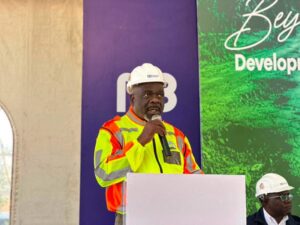
Newton David Kambala is a Malawian engineer, politician, and former Minister of Energy, who served in the cabinet of President Lazarus Chakwera.
He is a founding member of the United Transformation Movement (UTM) Party and in July 2026, he was appointed by President Arthur Peter Mutharika as Board Member of the Roads Authority in July 2026.
He published this thought-provoking reflection on his official Facebook account for all Malawians of goodwill to meditate.

Advertisement