
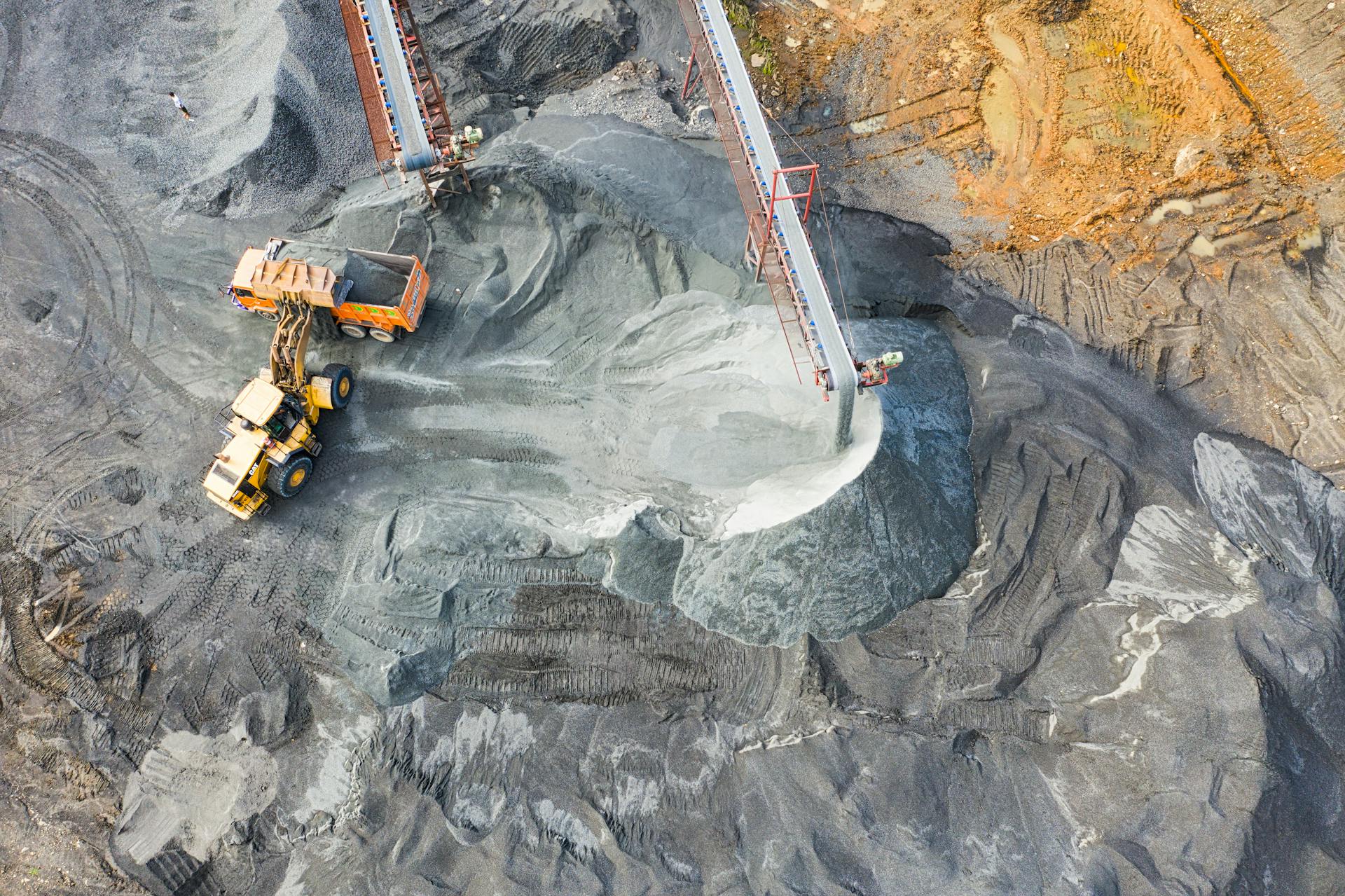
* The International Monetary Fund (IMF) identified mining investment as one of the potential upside risks to Malawi’s medium-term outlook
* The World Bank estimates that Malawi’s mining sector could become a significant source of exports and foreign exchange if advanced projects move into production
* Its latest work projects more than US$30 billion in mining exports between 2026 and 2040 under a successful development scenario
Analysis by economist Dr. James Kadyampakeni
Malawi’s economic debate needs a harder question; If mining is supposed to become one of the country’s engines of export growth, foreign-exchange generation and public revenue, what exactly are the Ministry of Finance, the Reserve Bank of Malawi (RBM) and the political leadership doing today to make that happen?
This is not an academic question.

Advertisement
Malawi entered 2025 with public debt at about 88% of GDP, critically low foreign-exchange reserves and a current-account deficit of roughly 22% of GDP in 2024, according to the International Monetary Fund (IMF).
The Fund also identified mining investment as one of the potential upside risks to Malawi’s medium-term outlook.
At the same time, the World Bank estimates that Malawi’s mining sector could become a significant source of exports and foreign exchange if advanced projects move into production.
Its latest work projects more than US$30 billion in mining exports between 2026 and 2040 under a successful development scenario.
There is, therefore, a striking gap between what Malawi’s mineral sector could eventually contribute and what it contributes today.
That gap is where government policy must be judged.

We should stop calling mineral deposits “leverage”
There is a temptation in political speeches to describe Malawi’s graphite, rare earths, rutile and uranium resources as though their mere existence strengthens the country’s balance sheet.
It does not.
A mineral deposit underground is not foreign exchange in the reserves account. It is not tax revenue; it is not export earnings; and it cannot, by itself, justify cheaper sovereign borrowing.
The World Bank’s evidence is sobering: mining has historically accounted for less than 1% of Malawi’s GDP, with mineral exports averaging only about US$100 million to US$158 million in recent years.
A separate 2025 World Bank analysis noted that Malawi currently generates very little foreign exchange from mineral exports, with uranium production suspended since the closure of Kayelekera in 2012.
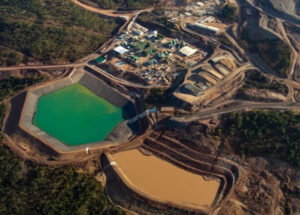
So let us use more precise language — Malawi has mineral potential, not yet mineral leverage.
Leverage comes when geological potential becomes commercially viable production, production becomes exports, exports generate foreign exchange, and government captures a credible share of the resulting economic value.
That is the transformation our policymakers should be accountable for.
Ministry of Finance: Where is the fiscal strategy for mining?
The Ministry of Finance should be able to answer a straightforward set of questions; What level of government revenue could realistically come from the mining projects currently being developed?
When could those revenues begin? What infrastructure investments are necessary to make the projects commercially viable?
What fiscal regime will ensure that Malawi captures an appropriate share of the economic rent without making projects unattractive to investors?
How will mining revenues affect debt sustainability? And perhaps most importantly:What will the government do with the money when it arrives?
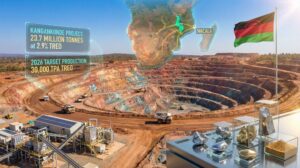
These are not hypothetical concerns. The IMF has specifically called for Malawi to establish a rigorous fiscal regime for mining so that revenues from new resources are allocated efficiently.
That is a much more important agenda than simply celebrating mineral discoveries.
If mining revenues eventually arrive and are immediately absorbed into recurrent expenditure, Malawi could extract a finite natural asset without materially improving its long-term productive capacity.
If, instead, part of those revenues supports electricity, transport infrastructure, human capital, agricultural productivity and other export-generating investments, mining could help build an economy that remains productive after the mineral deposits are depleted.
That is the difference between extracting minerals and building wealth.

Reserve Bank of Malawi
RBM cannot manufacture the foreign exchange we do not earn
The Reserve Bank faces an equally difficult problem. Malawi’s foreign-exchange shortage is not simply a central-bank problem.
The IMF reported that gross reserves were only around 0.4 months of imports at the end of 2024 and attributed the difficulty in rebuilding reserves to broader macroeconomic imbalances — including persistent current-account deficits and insufficient foreign-currency inflows.
This is why mining matters, but only if it reaches production at scale.
The RBM cannot create export earnings through monetary policy. It can manage the foreign-exchange market; it can influence liquidity and monetary conditions; and it can accumulate reserves when foreign exchange is available.
But the durable solution is to increase the country’s capacity to earn foreign exchange.
That means expanding competitive exports and mining could contribute to that diversification. The World Bank’s projections suggest the potential is substantial if several advanced projects proceed.
But policymakers should not confuse projected exports with current reserves. A projected US$3 billion in annual mining exports is not US$3 billion sitting in the RBM today.
The hard economic work lies in closing that distance.
Political leaders need to stop treating mining as an announcement
This is where political leadership matters. Malawi has no shortage of announcements about the importance of mining — what matters now is execution.
Mining projects take years to move from exploration to production. They require geological work, feasibility studies, environmental and social assessments, financing, infrastructure and regulatory approvals.
The World Bank notes that the global average lead time from discovery to production is about 18 years. That means governments cannot approach mining as a quick source of foreign exchange during the next balance-of-payments crisis.
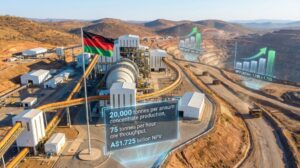
The decisions being made today determine whether Malawi has meaningful mining exports five, 10 or 15 years from now.
The political question is, therefore, not: “How many mineral projects have we announced?” It is: “How many projects are moving through the investment pipeline, under what terms, with what infrastructure, and toward what production dates?”
The public deserves measurable answers.
AfCRA should not be asked to solve a problem Malawi must solve itself
This is also where the discussion about the African Credit Rating Agency (AfCRA) needs greater discipline. Malawi should certainly participate in shaping any African rating architecture.
African economies deserve rigorous methodologies that understand their economic structures, institutions, development constraints and growth opportunities.
But Malawi should not approach a rating agency asking it to treat mineral potential as though it were established revenue.
A credible rating methodology must distinguish between:
* resources in the ground;
* economically recoverable reserves;
* financed projects;
* projects under construction;
* actual production;
* export earnings; and
* government revenues.

Advertisement
Those are very different things. If Malawi wants mineral wealth to improve its credit profile, the country must make the underlying economic proposition more credible.
That means transparent contracts, reliable geological information, predictable fiscal rules, credible environmental safeguards, appropriate infrastructure and sound public financial management.
In fact, the IMF has already linked mining’s potential contribution to the need for a rigorous fiscal regime and broader structural reforms.
The rating should follow the economic transformation, notprecede it. The real prize is not a better rating — it is a better economy.
There is a tendency to make sovereign ratings the centre of this discussion — they should not be. A rating is an assessment of risk. It is not an economic development strategy.
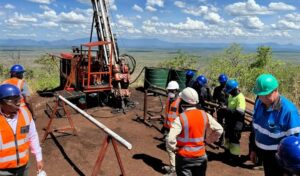
Malawi’s priority should be to improve the fundamentals that ultimately influence financing conditions: fiscal sustainability, export capacity, foreign-exchange availability, inflation, debt management, institutional credibility and productive investment.
The IMF has specifically identified fiscal consolidation, debt management, reduced domestic borrowing and reforms to improve the foreign-exchange market as necessary steps toward restoring macroeconomic stability.
Mining can reinforce those reforms. It cannot substitute for them. This distinction matters because otherwise we risk creating another dangerous national narrative: that the discovery of minerals will somehow rescue Malawi from difficult economic choices.
It will not.
So what should Malawi take to the African ratings table? Not a request for special treatment — a credible plan.
Government should be able to present independently verifiable information on the major projects in the mining pipeline, their development stages, expected production dates, infrastructure requirements, fiscal arrangements and potential export contribution.
It should explain how mining revenues will be governed; it should explain how the country will prevent a temporary resource boom from becoming permanent recurrent expenditure.
And it should demonstrate how mining fits into a broader strategy to diversify exports and rebuild foreign-exchange buffers.
That would be a serious economic proposition. It would also give rating agencies something more valuable than political rhetoric: evidence.

Advertisement
The political leadership has a choice
Malawi should, therefore, resist two equally dangerous extremes. The first is pessimism — the idea that the country’s structural problems are so deep that nothing can change.
The second is mineral romanticism — the idea that graphite, rare earths, rutile or uranium will automatically solve those problems.
Neither is credible.
The more difficult and more useful position is this: Malawi has a potentially valuable mineral endowment butconverting that endowment into national wealth will require years of investment, infrastructure, competent regulation, fiscal discipline and credible institutions.
That is the job of government. The Ministry of Finance must ensure that future mineral revenues strengthen, rather than weaken, the public finances.
The Reserve Bank must operate within a broader national strategy for increasing export earnings and rebuilding external buffers.
Political leaders must create the policy stability and institutional credibility needed to turn projects from announcements into production.
And Malawi’s representatives at the emerging African ratings architecture must argue for methodologies that recognise credible future productive capacity without pretending that potential is already cash.
The argument, then, is not that Malawi has minerals and therefore deserves cheaper money. It is more demanding than that.
Malawi has mineral potential. Now the government must prove that it can turn that potential into exports, foreign exchange, public revenue and productive investment.
If it can, the country’s economic fundamentals will eventually become stronger, and the financial markets will have their own reason to take notice.
If it cannot, no rating agency, African or otherwise, can manufacture the credibility that domestic policy has failed to create.

Dr. James Kadyampakeni
Editor’s note
* Dr. James Kadyampakeni regularly comments on Malawi’s economy, governance, and politics