
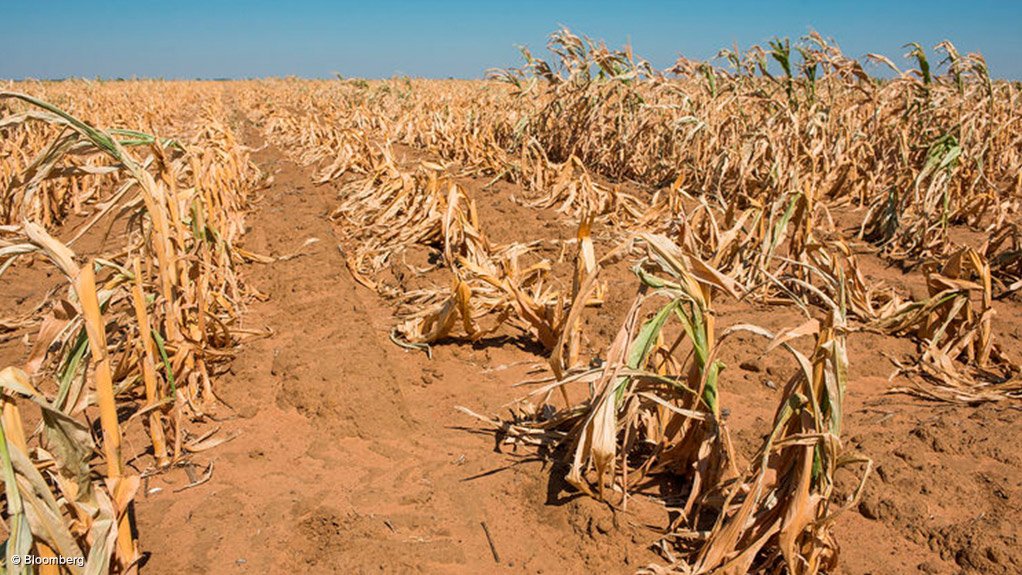
* Pre-arranged financing cheaper than disaster response as Malawi faces 30% cereal cut, maintains the Pan-African risk pool
* Malawi and other African countries to invest more in early warning systems, reliable climate data and dedicated funds to cushion vulnerable communities
By Duncan Mlanjira
Africa Risk Capacity (ARC) Group, a specialised agency of the African Union (AU), has urged member states, including Malawi, to urgently prioritise agriculture insurance and pre-arranged disaster financing as a potentially record Super El Niño threatens the 2026/27 cropping season.
In a statement, ARC Group Director General, Dr Jean-Chrysostome Ngabitsinze said relying on emergency funding after disasters strike is no longer sustainable, as climate shocks become more frequent and severe.

ARC Group Director General, Dr Jean-Chrysostome Ngabitsinze
“Arranging funds only after disaster has struck can delay relief and place additional pressure on national budgets,” he said.
He urged Malawi and other African countries to invest more in early warning systems, reliable climate data and dedicated funds to cushion vulnerable communities.
“Pre-arranged financing, particularly parametric insurance is an important way to address this challenge. For every US$1 spent on early intervention, we save US$4.4 that would be spent in response after the crisis,” Ngabitsinze said.
ARC, established in 2012 by African finance ministers, operates as the Pan-African sovereign risk pool. Through its insurance affiliate, ARC Ltd, it offers parametric insurance — payouts triggered automatically when satellite data, through its Africa RiskView tool, shows rainfall or crop failure crossing agreed thresholds, without waiting for field assessments.
The call comes as forecasters issue stark warnings. The US NOAA Climate Prediction Centre and the World Meteorological Organisation (WMO), indicate that El Niño is already present and strengthening, with a greater than 90% chance of becoming a very strong event — a ‘Super El Niño — peaking between October and December 2026.
Some models show sea surface temperatures rising more than 3.8°C above normal, potentially the strongest since 1950.

Advertisement
For southern Africa, the outlook is alarming, according to forecasters; the regional Climate Outlook Forum (SARCOF-33) and Malawi’s Department of Climate Change and Meteorological Services (DCCMS) project below-normal rainfall and prolonged dry spells from October 2026 to March 2027 across southern Zambia, Zimbabwe, southern Malawi, central and southern Mozambique, Botswana and South Africa.
Malawi is particularly exposed as the country depends heavily on rain-fed on maize production, and history shows two out of three El Niño events have cut production. During the 2023/24 El Niño, national maize output fell by 22.7%.
The UN Office for the Coordination of Humanitarian Affairs (OCHA) has warned the coming event could slash Malawi’s cereal harvest by up to 30% in the 2026/27 season, leaving at least four million people — roughly one in four Malawians — in need of humanitarian assistance.
Malawi has a National El Niño Preparedness and Response Plan costed at K488.5 billion (about US$281.7 million), but only K163.7 billion has been mobilised, leaving a funding gap of K324.8 billion.
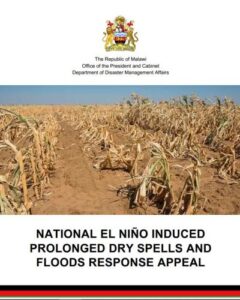
The OCHA currently classifies Malawi as only “in readiness” — plans are on paper but anticipatory action has not been activated.
Ngabitsinze cited recent payouts as proof the model works. Since 2014, ARC Ltd has paid over US$240 million to member states, with Burkina Faso set to receive US$6 million after drought linked to El Niño this year.
The funds have been used to scale up cash transfers, livestock feed subsidies and emergency food distribution for over 2.1 million people.
“Governments that have not yet signed the insurance policy have to know that climate change shocks are real,” Ngabitsinze said, adding that insurance must be accompanied by broader investments, noting a recent FAO/AU report that bank credit to agriculture accounts for less than 4% of total credit in Africa.
ARC now has over 30 countries participating in its risk pool and is working with the African Development Bank through its ADRiFi programme to help governments pay premiums.
For Malawi, officials say key measures under discussion include securing 440,000 metric tonnes of maize for strategic reserves, investing in drought insurance, livestock protection and pre-positioning of drought-tolerant seeds before the planting window closes in December.
“Funding released after October may come too late to prevent widespread crop failures,” OCHA warned.
In mitigation, some agriculture companies, notably the JTI Leaf Malawi, have intensified early warning awareness to help their contractors grow both tobacco and food crops sustainably this season.

Advertisement