
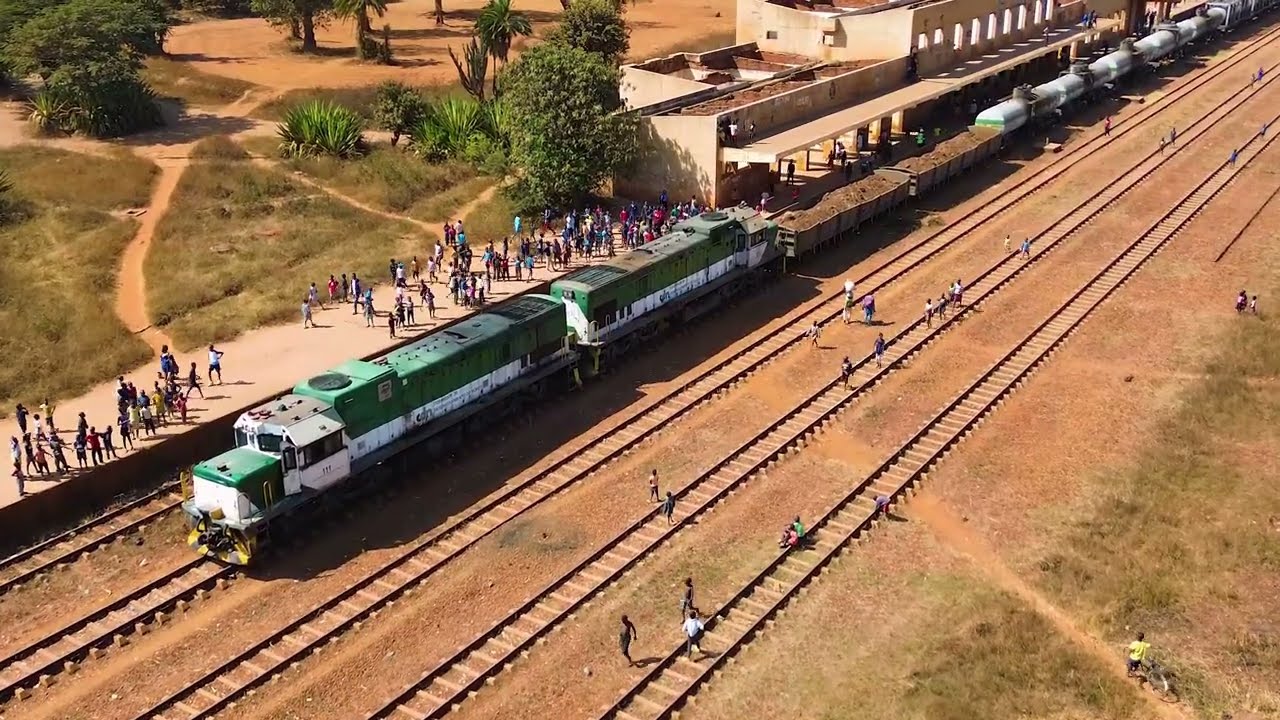
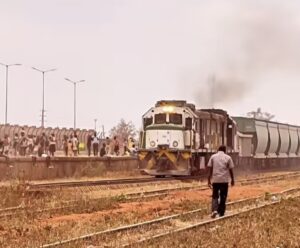
Lilongwe residents excited with resumption of the railway service
* And lack of safety awareness, thus CEAR is promoting safe behaviour campaigns to help reduce the risks associated with rail transportation
* Unsafe crossings, trespassing, vandalism and encroachment on railway reserves put lives and railway operations at risk
By Duncan Mlanjira
The railway route from Salima-Lilongwe-Mchinji connecting to Zambia had been in operational for close to three decades until it was recently restored after major rehabilitation.
It started being fully utilised for cargo such as fuel and coal after successful completion of rail rehabilitation from Balaka, which was a major breakthrough.
However, the railroad had been inactive for just too long and within a short time, a Lilongwe-based community member was killed after being hit by a locomotive.
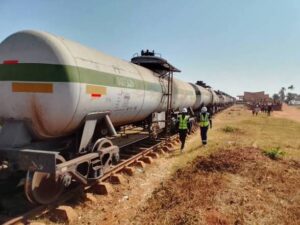
Three other railway related deaths followed prompting the authorities to issue a reminder that train operations between Lilongwe and Mchinji remain fully operational.
Thus there was the need to amplify the campaign by launching the national Railway Safety Week 2026, presided over by Minister of Transport & Public Works, Jappie Mhango at Kamwendo Model Primary School in Mchinji today, November 23.
In her remarks at the event, NACALA Logistics Social & Community Relations Manager, Towera Ng’ambi highlighted that the resumption of the Salima-Kanengo-Mchinji section has exposed railway safety concerns among surrounding communities.
Ng’ambi is quoted at the event highlighting that the four people who died along the railway section was mainly due to a tendency among community residents of ignoring safety measures, including careless crossing crossings.
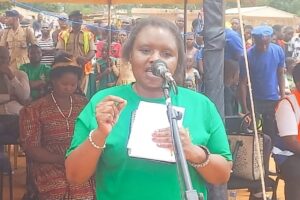
Towera Ng’ambi
She thus said Central East African Railways (CEAR), operators of the country’s rail network, has intensified awareness campaigns around railway communities to promote safe behavior and help reduce the risks associated with rail transportation.
Ng’ambi also decried vandalism of rail infrastructure, theft of goods transported on trains, describing the practice as retrogressive.
In his remarks, Minister Mhango highlighted that increased railway operations require greater public responsibility, citing accidents involving pedestrians, motorists and nearby communities.
“Most railway accidents are preventable,” he said. “Unsafe crossings, trespassing, vandalism and encroachment on railway reserves put lives and railway operations at risk.”
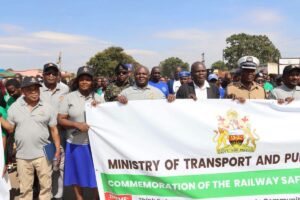
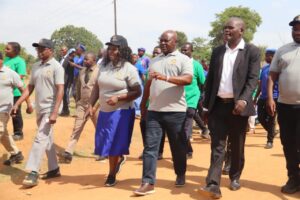
Mhango leading the awareness parade
Mhango urged communities to protect railway infrastructure, observe safety rules and report activities that threaten railway operations.
On his part, Malawi Railways (1994) Limited Board chairperson, Pius Mvenya stressed that continued vandalism of railway infrastructure undermines the sector’s contribution to the country’s socio-economic development.
He highlighted that out of the country’s 932 kilometres of railway stretch, only 731km is functional — hence Malawi Railways (1994) Ltd committing to operationalise the remaining 201km section to boost the nation’s economy through railway transport.
Last month, it was reported that theft and vandalism of railway infrastructure is affecting progress of reconstruction on the Nsanje-Limbe route following the arrest of eight suspects by Nsanje Police in connection with the alleged theft of old railway lines near Nyachipere Bridge in Nsanje on the night of October 13-14.
The suspects, identified as Aubrey Emmanuel, Adran Suleman, Chimwemwe Ngalu, Felix Roben, Bonface Matebule, Valindi Suleman, Raffick Suleman and Charles Alexander, were reportedly found cutting the railway lines into pieces using gas-cutting equipment before loading them onto a 10-tonne lorry.
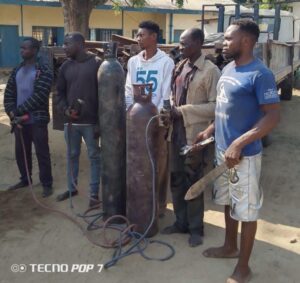
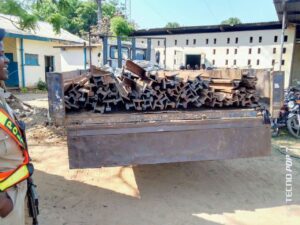
Following a tip-off from security guards, police mounted a roadblock at Lambwe, where they intercepted the vehicle, registration number MN 1408, and arrested the eight suspects.
The Minister thus highlighted the importance of rail transport in supporting trade, agriculture, mining and regional integration.
“Rail transport is vital to national development — it provides an efficient and environmentally friendly way of transporting goods and passengers while reducing costs and supporting economic growth,” he said.
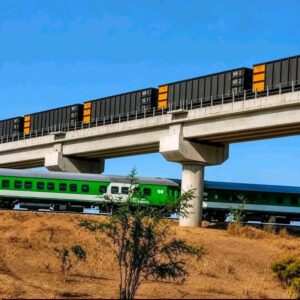
The rail connection to Mozambique’s Nacala Port at Nkaya in Balaka
He cited the reopening of the Nkaya-Mchinji railway section as a major milestone expected to boost trade and economic activities along the corridor.
The commemoration reaffirmed Malawi’s commitment to railway safety in collaboration with Southern Africa Railways Association (SARA) member states, in line with the country’s MW2063 development agenda.
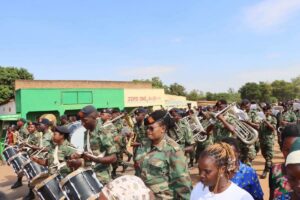
Minister Mhango led a solidarity parade from Kamwendo Railway Level Crossing before launching the Railway Safety Week 2026 — to be commemorated from today, November 23-29 under the theme; ‘Think Safe, Work Safe: From Workplace to Communities-Every Action Counts”.
It highlights the importance of promoting safety in railway operations and surrounding communities, coordinate by the Ministry of Transport, through the Department of Railway Services in collaboration with Malawi Railways (1994) Limited (MR94), CEAR and Vulcan Logistics Limited (VLL).—Additional information from reports by ZodiakOnline, VoLRadioOnline & Malawi of Transport Media

Advertisement