
* The period between 1994 and 1999, offered valuable lessons in the strength of an open society, democratic accountability, and respect for constitutional institutions
* It was a defining period during which South Africa demonstrated that transparency in government, even under politically and economically sensitive circumstances, was an essential foundation of democratic governance
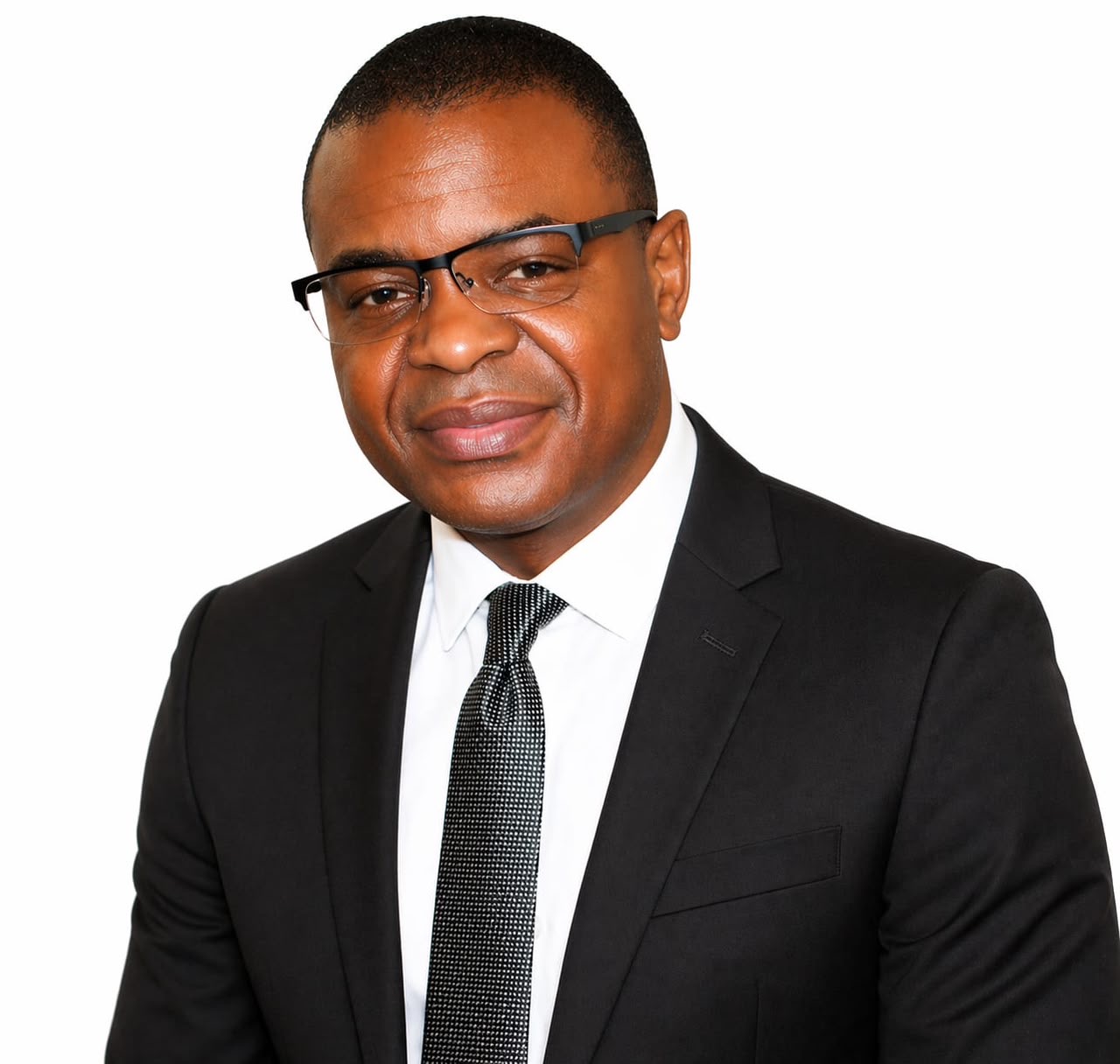
By Chifi Mhango, Chief Economist and Executive Director-Economic Research & Strategy for Don Consultancy Group
For some of us who had the privilege of living through the presidency of Nelson Mandela in South Africa between 1994 and 1999, that period offered valuable lessons in the strength of an open society, democratic accountability, and respect for constitutional institutions.

Advertisement
It was a defining period during which South Africa demonstrated that transparency in government, even under politically and economically sensitive circumstances, was an essential foundation of democratic governance.
It was public knowledge that Nelson Mandela had been diagnosed with tuberculosis (TB) during his imprisonment. Despite his incarceration, Mandela had long been regarded as a President-in-waiting, representing the aspirations of millions of South Africans for freedom, democracy, and national reconciliation.
His eventual assumption of the Presidency in 1994 came at a particularly delicate moment in South Africa’s political and economic history.
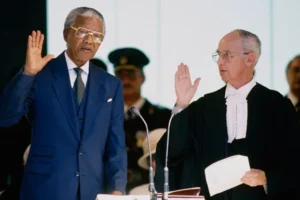
The country was emerging from decades of apartheid, with significant political uncertainty, fragile investor confidence, and considerable concerns about the sustainability of its democratic transition.
The assassination of Chris Hani in April 1993 had brought South Africa dangerously close to widespread political instability, demonstrating the fragility of the transition process.
Against this background, President Mandela became more than a Head of State. He represented a symbol of national unity, political stability, and economic confidence, both domestically and internationally.
During his presidency, there were occasions when Mandela’s health and medical treatment became matters of public interest.
Importantly, information concerning his wellbeing was communicated publicly, while South Africa’s constitutional arrangements provided for Deputy President Thabo Mbeki to assume presidential responsibilities when constitutionally required.
What was particularly significant for some of us who were young economists during that period was the relationship between perceptions of President Mandela’s health and confidence in the South African economy, especially as reflected in the performance of the South African rand and the Johannesburg Stock Exchange.
Given Mandela’s advancing age, his previously disclosed medical history, and his central role in sustaining confidence in South Africa’s democratic transition, concerns surrounding his wellbeing had the potential to generate uncertainty in financial markets.
The rand was particularly sensitive to political developments during those early democratic years, while equity markets were equally exposed to shifts in investor sentiment.
Although exchange rate and stock market movements were influenced by several domestic and international economic factors, uncertainty surrounding Mandela’s health could contribute to broader concerns about political continuity and the future direction of South Africa.
The important lesson was that the potential for adverse financial market reactions did not diminish the government’s responsibility to communicate openly with the South African public.
The African National Congress government, under President Mandela, understood that citizens had a legitimate interest in the wellbeing of their elected Head of State.
Transparency was not regarded as an inconvenience to political authority, but rather as an important expression of democratic accountability.
Mandela was affectionately celebrated as The People’s President, a title popularised through the music of the late South African artist Brenda Fassie.

His standing as a globally respected statesman did not place him beyond legitimate public enquiry. If anything, the extraordinary affection South Africans had for Mandela reinforced the importance of keeping citizens appropriately informed about his wellbeing and the continuity of government.
South Africa and Malawi both entered new democratic eras in 1994. More than three decades later, it is reasonable to expect that the democratic institutions and political cultures of both countries should have matured sufficiently to embrace openness, accountability, and respect for constitutional processes.
This historical experience offers an important perspective on the current public discourse in Malawi concerning the wellbeing, whereabouts, and official availability of President Arthur Peter Mutharika.

President Mutharika
In reflecting on this matter, I believe it is important to distinguish between legitimate public interest and the personal privacy to which every individual, including a President, is entitled.
The Office of the President does not remove the humanity of the individual occupying it. A President, regardless of political standing or public responsibilities, remains a human being who may experience illness, require medical attention, or need time for personal recovery.
There should be no political sensitivity or embarrassment associated with such circumstances. Illness is a normal part of human existence and should never be interpreted as a personal weakness or a failure of leadership.
Equally, citizens who enquire about the wellbeing of their President should not automatically be perceived as questioning his authority, competence, or legitimacy.

Advertisement
In many instances, such enquiries arise from genuine concern, affection, and respect for the individual entrusted with the highest office in the country.
From an economic perspective, Malawi’s financial markets are considerably less developed and less internationally integrated than those of South Africa.
Consequently, political developments surrounding the Presidency may not produce the same immediate or observable reactions in the exchange rate and equity markets that characterised South Africa during its early democratic transition.
However, the absence of visible financial market reactions should not be interpreted as evidence that uncertainty surrounding executive leadership carries no economic consequences.
Investor confidence, policy continuity, government decision-making, and the credibility of public institutions remain important considerations for any economy, particularly one facing the structural and macroeconomic challenges currently confronting Malawi.
Indeed, even South Africa’s financial markets have matured considerably since the Mandela presidency, with political developments now assessed within a broader institutional and economic framework rather than being associated so closely with the wellbeing of one political leader.
For Malawi, the broader question is, therefore, not whether financial markets would react to information concerning presidential health, but whether our democratic institutions have developed the confidence and maturity to communicate openly with citizens on matters of legitimate national interest.
It is worth recalling that South Africa, despite the fragility of its democratic transition and the considerable economic importance attached to Mandela’s leadership, did not consider responsible public communication about presidential wellbeing to be incompatible with political stability.
President Mutharika is himself an accomplished legal scholar with an extensive background in constitutional law. It would, therefore, be particularly fitting for the institutions serving under his administration to demonstrate the highest regard for constitutional governance, transparency, and the continuity of executive authority.
The Constitution of Malawi provides a framework for the exercise and continuity of presidential authority, including circumstances in which the Vice-President may be required to discharge presidential responsibilities.
These provisions are designed to safeguard the functioning of the State, irrespective of the personal circumstances of the individual holding the Presidency.
Their existence should provide reassurance rather than become a source of political sensitivity. There is, of course, an important distinction between disclosing confidential medical information and communicating whether the President remains available to perform his constitutional duties.
The former deserves appropriate protection under the principle of personal privacy, while the latter is a legitimate matter of public accountability.

Advertisement
In this regard, the Government of Malawi would benefit from adopting a more structured and consistent approach to presidential communication, particularly when public uncertainty arises concerning the President’s official engagements, availability, or capacity to discharge executive responsibilities.
Such communication should be factual, respectful, timely, and institutionally coordinated. It should seek to reassure citizens without compromising the dignity or personal privacy of the President.
The lesson from Nelson Mandela’s presidency is that transparency and political stability are not mutually exclusive. Responsible communication can strengthen public confidence in constitutional institutions, even when the information being communicated concerns sensitive matters.
Mandela’s greatness was not diminished by public knowledge of his medical history or concerns about his wellbeing. His legacy was strengthened by the democratic values and institutional foundations that his administration helped establish.
For Malawi, the challenge is to ensure that the Presidency is respected not only because of the individual occupying the office, but also because of the constitutional principles and institutional accountability upon which that office rests.
Malawians deserve a democracy in which concern for the wellbeing of their President is welcomed as an expression of citizenship, rather than viewed with suspicion.
A President is, above all, a human being. The dignity of that individual must be respected, just as the constitutional rights and legitimate expectations of citizens must also be upheld.
As we reflect on the democratic journey that Malawi and South Africa began in 1994, perhaps the most enduring lesson is that the strength of a democracy should not be measured by how effectively it shields its leaders from public enquiry, but by how confidently its institutions respond to legitimate public concerns.
Malawi’s democratic maturity must ultimately be reflected in its commitment to openness, institutional continuity, and respect for the constitutional order.
The wellbeing of the President should never become a source of unnecessary political controversy. Neither should responsible communication about that wellbeing be regarded as a threat to the authority or dignity of the Presidency.
Transparency is not a concession granted by government to its citizens. It is one of the fundamental principles upon which democratic accountability rests.

Advertisement