

A lion killed a man outside Vwaza Marsh Wildlife Reserve last month
* Thus lack of funds to complete fencing for Vwaza Marsh Wildlife Reserve led to surrounding community member being killed by a stray lion
* An incident that left people to live in fear since the stray lion was observed and reported of a week before
By Frank Humphreys, Malawi News Agency (MANA) & Duncan Mlanjira, Maravi Express
A lion that recently strayed beyond Vwaza Marsh Wildlife Reserve exposed a gap in protected area fencing, prompting the Department of National Parks and Wildlife (DNPW) committing to complete boundary fences once funding is available.

Advertisement
Last month, residents of Enkweleni in the area of Senior Chief Mpherembe in Mzimba, sighted a lion and reported that they believing it had escaped from Vwaza Marsh Wildlife Reserve.
On September 22, a lion believed to have strayed from the same wildlife reserve — though not confirmed if it was the same that was sighted a week before — killed a 31-year-old man.
This incident left the surrounding community members to live in fear and has now prompted DNPW to commit to completing boundary fences of all wildlife reserves once funding is available.
DNPW Director, Brighton Kumchedwa, told MANA that financial constraints have delayed fencing in some parks and admits that this has left communities vulnerable to wildlife incursions.
“Boundary fences have been constructed in much of our parks, but in some, the perimeter fences have not been completed, mainly because of financial limitations,” he said.
“In Vwaza, it is incomplete. Once we get more funds, it will be completed,” assured Kumchedwa.

DNPW Director, Brighton Kumchedwa
This follows another human-wildlife conflict that happened in 2024 when elephants from Kasungu National Park strayed out their territory following an unfenced 133km perimeter, which was later completed.
ZBSNews reported in September that when residents of Enkweleni spotted the stray lion, they reported to the reserve, whose Park Manager, Mathews Mumba confirmed.
Mumba told ZBSNews they had since deployed rangers to capture and return the lion but a week later, the 31-year-old man was mauled to death by a lion.
This was reported by NationOnline, which quoted Kafukule Police Station public relations officer, Thomas Jamitala, identifying the deceased as Clement Munthali of Kamangadazi Village in Ekhweleni, T/A Mpherembe.

Liwonde National Park from where the elephants were translocated to Kasungu
Meanwhile, DNPW is conducting an aerial wildlife survey in Kasungu National Park using a single fixed-wing aircraft as part of routine ecological monitoring.
The survey aims to establish wildlife numbers and distribution since the last aerial survey that was conducted for Kasungu in 2022.
Secretary for Tourism, Parks & Wildlife, Jeane Munyenyembe said the aircraft will sometimes fly at low altitude and may be seen or heard by communities around the park.
She assured residents of both the Malawian and Zambian sides that it poses no danger to people, livestock or property.

Kasungu National Park
Kumchedwa said the exercise is significant because Kasungu is home to elephants, and the survey helps authorities track their movements.
“We have elephants in Kasungu, so the survey enables us to monitor whether they are moving into Zambia or into communities. Preventing human-wildlife conflict is very key.
He added that population figures will show how wildlife is faring against threats such as poaching: “Animal numbers help you know whether populations are going down or up.
“You will see the result of poaching if animals have gone down, or if poaching has reduced, the population goes up,” he said.
Kumchedwa said the findings will also shape tourism and enforcement as healthy wildlife numbers make a park more attractive to visitors, raising revenue for the department and government.
“With more wildlife, the park is able to attract more tourists, improving tourism and income generation for the department and the government,” he said.
Officials say the survey results will also inform decisions on translocation and birth control. Where a decline is revealed, the department will step up law enforcement, including tracking down poachers, controlling illegal killing, and cracking down on trafficking and the illegal wildlife trade.
Human-wildlife conflict remains a persistent challenge for communities around protected areas, where straying animals can threaten lives, livestock and crops.
The translocation of 263 elephants amplified such human-wildlife conflict, which led to a lawsuit to be filed last year against International Fund for Animal Welfare (IFAW).
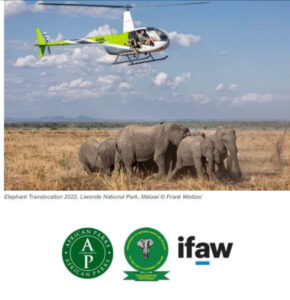
The IFAW was involved in the translocation exercise in collaboration with DNPW and the group action lawsuit sought compensation for Malawians and Zambians, whose family members were killed by elephants that had strayed out of their sanctuary as well as their crops and property damage.
According to the Ministry, the Kasungu National Park survey results are expected to guide management decisions for one of the country’s most important protected areas.

Advertisement