
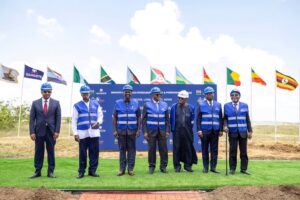
The African Heads of State in solidarity
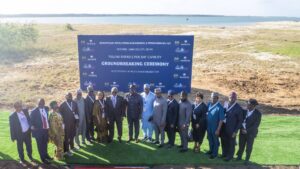
* Yoweri Kaguta Museveni (Uganda), Romuald Wadagni (Benin), Jean-Lucien Savi de Tové (Togo), Abiy Ahmed Ali (Prime Minister Ethiopia) and former Nigeria President Olusegun Obasanjo
* This is the clearest signal that the impact of this project will extend far beyond Kenya’s borders—Kenya President William Ruto
* With a capacity of 700,000 barrels daily, the refinery will be the largest in East and Central Africa and among the biggest in the world
* It will strengthen regional energy security, reduce reliance on imports and bolster our foreign exchange
By Duncan Mlanjira
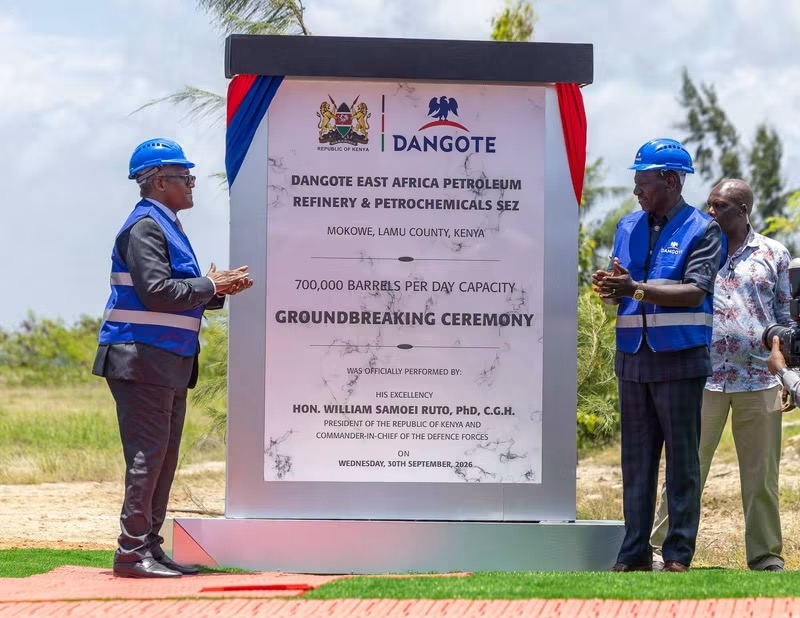
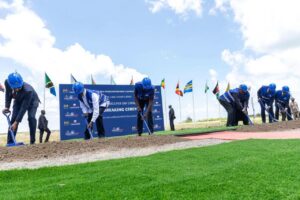
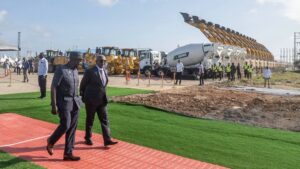
Four Heads of State from Uganda, Benin, Togo Ethiopia — including former Nigeria President Olusegun Obasanjo and other high-level delegations from various African countries — witnessed the groundbreaking of the landmark Aliko Dangote’s US$16 billion oil refinery in Lamu, Kenya.

Advertisement
This was reported by Kenya President William Ruto on his official Facebook account, saying the solidarity attendance “is the clearest signal that the impact of this project which will extend far beyond Kenya’s borders”.
“With a capacity of 700,000 barrels daily, the refinery will be the largest in East and Central Africa and among the biggest in the world.
“It will strengthen regional energy security, reduce reliance on imports and bolster our foreign exchange.
“But this is more than a refinery — it is an integrated industrial complex featuring a 1,000MW power plant, plastic factory and the manufacturing of fertilisers and chemicals.
“The project will boost the Kenyan economy by 12%, inject additional US$4 billion in foreign direct investment each year for the four years of construction — providing 60,000 direct jobs, building local expertise and accelerating the transformation of the Lamu Port South Sudan and Ethiopia Transport (LAPSSET) Corridor into a major industrial hub.”
Ruto added that “for too long, Africa has exported raw materials and imported finished products, exporting wealth and jobs”.
“We are firm in our determination to reverse this trend,” he wrote. “The establishment of this refinery is a turning point, demonstrating our resolve to reimagine Africa’s industrial future, turn our ambitions into action and tap the continent’s massive potential.”
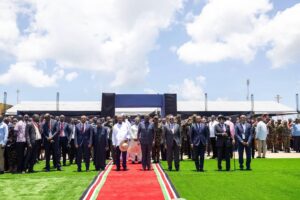
The Heads of State included Yoweri Kaguta Museveni of Uganda, Romuald Wadagni of Benin and Jean-Lucien Savi de Tové of Togo, and Abiy Ahmed Ali, the Ethiopia Prime Minister — including representatives of other African governments.
BBC Focus on Africa reports that ahead of the launch, some local residents took to the streets to demand more compensation for land used for the refinery.
But Dangote — the richest man in Africa who made his fortune in cement before branching into oil —dismissed the protests in an interview with BBC Focus on Africa.
He described them as games played by local marketers and international players, insisting the refinery would go ahead and would be ready by 2030 as planned.
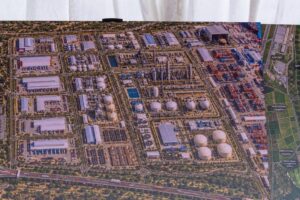
Artistic impression of the project
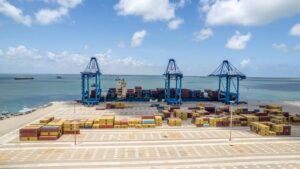
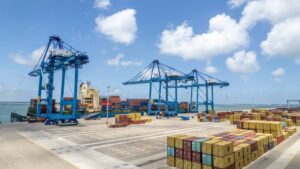
Dangote has offered regional governments a combined 30% stake in the refinery, reports BBC Focus on Africa, quoting Reuters News Agency.
Dangote is quoted saying: “This is Africa coming together to build Africa. Today we are not simply breaking ground for a refinery, we’re breaking ground for a new chapter in Africa’s industrial journey to a brighter future.
“Lekki [his Nigerian refinery] proved that it can be done, Lamu must prove that it can be repeated.”
The refinery, according to BBC Focus on Africa, is set to become the only one in East Africa and is Kenya’s largest infrastructure project since independence, surpassing the US$5.1 billion Standard Gauge Railway.
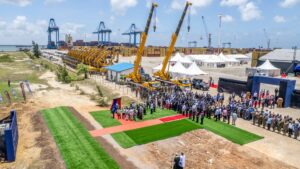
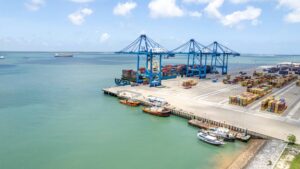
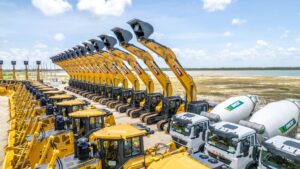
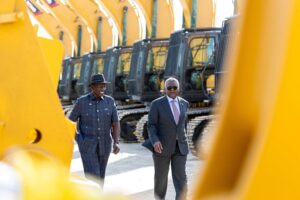
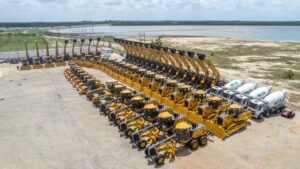
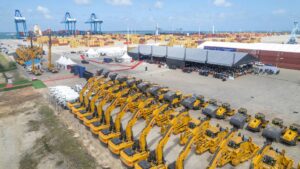
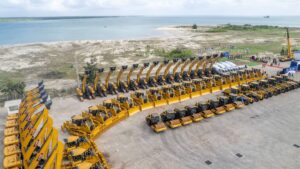
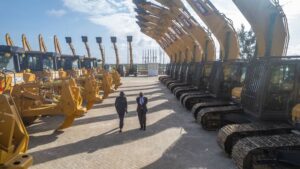
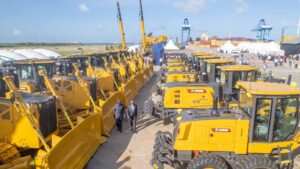
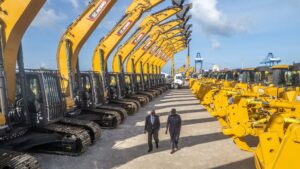
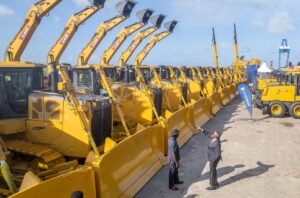
The construction machinery at the site
BBC Focus on Africa further reports that “critics questioned the decision to build the refinery in Kenya, which is not an oil-producing country”.
“Others have suggested Tanzania or Uganda, both of which are moving towards oil exports through the East African Crude Oil Pipeline.
“But Kenya’s Energy and Petroleum Minister Opiyo Wandayi told the BBC that the refinery’s location did not mean it would rely on oil from the region.”
Wandayi is quoted saying: “Refineries get crude oil from the market. And the market is open” — while Dangote himself made a similar point, citing Singapore as an example.
“Singapore doesn’t produce a single drop of oil, yet they have a lot of refineries,” Dangote he was quoted as saying.
Meanwhile, BBC Focus on Africa further reports that the refinery will also include a 1,000-megawatt power plant having taken cognizance that reliable electricity is a critical constraint on industrialisation across Africa — particularly in mineral-rich countries that still export raw materials rather than processing them locally.
“He has about US$50 billion worth of projects in the pipeline, including plans to develop 10,000 megawatts of power generation capacity across Africa by 2030, with the potential to double that depending on demand.”
On the refinery’s benefits upon completion, BBC Focus on Africa indicates that “Kenya has relatively high fuel prices, raising expectations that greater refining capacity could eventually help bring down pump prices”.
“However, the price of crude oil, the main raw material for fuel, set by international markets, remains a major factor in what consumers pay at the pump.”
On the processing capacity of 700,000 barrels a day from the initial production stage after completion, Dangote is reportedly “planning to double that capacity after floating 4.1 million ordinary shares to raise up to US$2.1 billion” in September, 2026.
The message from Dangote is clear: “Project will reduce refined fuel imports, foster self-sufficiency,” SA reported Deutsche Welle.
“For too long, our continent has actually been rich in resources but poor in value creation and addition. We have exported crude oil and imported refined products.
“Such practice only leads to us exporting our jobs and opportunities that should remain on the continent and lead us into importing poverty into our nations.
Africa cannot build lasting prosperity by exporting what it has and importing what it needs,” Dangote is quoted as saying in his speech at the groundbreaking.—Reporting for BBC Focus on Africa by Nkechi Ogbonna & Waihiga Mwaura; pictures courtesy of Kenya President Ruto’s Facebook account

Advertisement