* Democratic maturity must also be examined through the strength and resilience of public institutions, respect for the rule of law
* Protection of fundamental freedoms, accountability of public officeholders, internal governance of political parties and meaningful citizen participation
By Duncan Mlanjira
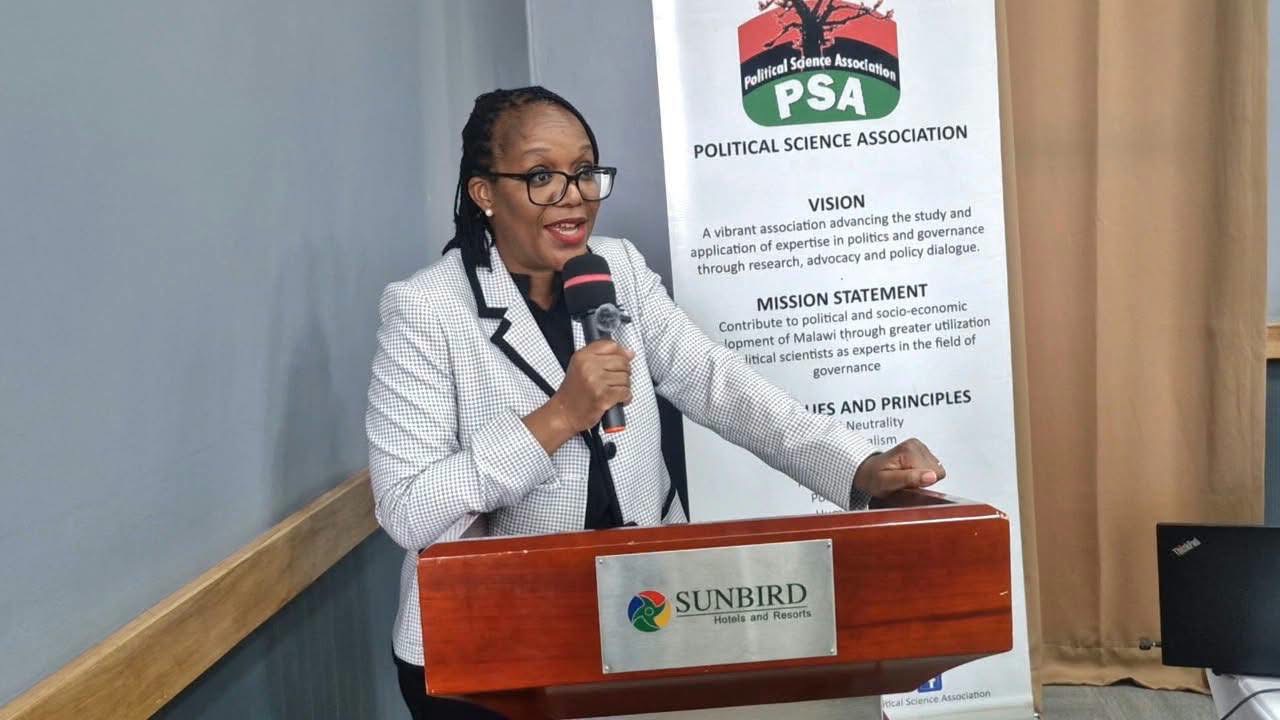
When opening the 4th Biennial Conference of the Political Science Association (PSA) today, September 26 in Salima, Malawi Electoral Commission (MEC) chairperson Justice Annabel Mtalimanja highlighted that the country’s transition to multiparty democracy in 1993 “marked a defining moment in our political history”.
And it also “opened a new chapter founded on political pluralism, citizens’ participation and democratic rights”.
“The 1994 Constitution established a framework for governance based on constitutionalism, fundamental rights and institutional responsibilities.
“Over the past three decades, Malawi has experienced changes governments through elections. These transitions form part of our country’s experience with electoral competition and the exercise of citizens’ choices.
“However, the existence and conduct of free elections alone does not fully define the quality or maturity of a democracy.
“Democratic maturity must also be examined through the strength and resilience of public institutions, respect for the rule of law, protection of fundamental freedoms, accountability of public officeholders, internal governance of political parties and meaningful citizen participation.

Advertisement
“We must ask ourselves:
* Are our institutions sufficiently independent and resilient to perform their constitutional responsibilities?
* Do political parties practise democratic principles within their own structures?
* Are citizens able to participate meaningfully in political and governance processes?
* Do public institutions respond to citizens with transparency and accountability?
* Are political and legal disagreements managed and resolved through lawful and peaceful mechanisms?
“These questions cannot be answered by one institution or one sector of society — they require sustained research, dialogue and engagement.
“When we speak of institutions maturing, we should examine their capacity to exercise restraint, capacity to function effectively, ability to maintain professional standards, resilience to withstand pressure and remain accountable within the law.
“Institutional maturity is not a destination that institutions reach once and for all — it is a continuing process of strengthening systems, observance of set legal boundaries, learning from experience and adapting to changing circumstances.”
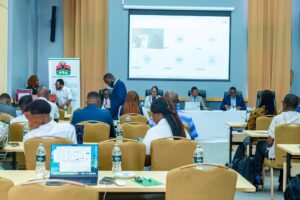
Mtalimanja took cognizance that the PSA is a body of intellectuals, which “brings together individuals who study, teach, research, analyse, comment and advise on political affairs, governance and public institutions”.
“That knowledge carries a public responsibility. Political science should not remain confined to university lecture rooms, academic conferences and scholarly publications.
“It must find its way into communities and become meaningful to ordinary citizens while not being used as a tool for propagating the views of political parties.
“There is also a risk that professional and academic associations may be perceived as clubs for the educated elite, where discussions take place among experts but do not sufficiently reach the communities whose lives are affected by political decisions.
“I, therefore, wish to challenge the PSA to consider how it can make itself closer, relevant and accessible to the people of Malawi, without compromising on democratic and governance values.
“Beyond this conference, how can the PSA take its intellectual resources to the people? How can a farmer in Mchinji, a market trader in Lilongwe, a young person in Karonga or a community member in Nsanje understand what political science is and why it matters to their daily lives?
“How can the PSA collaborate and share their knowledge understanding and research with rights bodies whose duty is to inform and educate the citizenry of their rights and responsibilities?

Advertisement
“When citizens ask why public services are not being delivered, how government decisions are made, why elections matter, how Parliament functions or what their constitutional rights and responsibilities are, they are engaging with questions that political science helps us understand.
“These issues affect every Malawian. The Association’s own constitutional objectives provide a foundation for this broader engagement, including the promotion of public dialogue, research, professional development and relationships with government officials, academic institutions, civil society and the media.
“The PSA should consider how to translate these objectives into a sustained public engagement programme that should draw the interest and action of the levels of members of our society, to derive developmental, political and social benefits.”
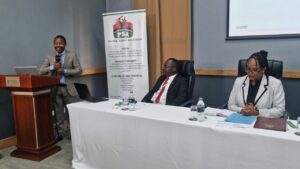

The conference is being held under the theme; ‘Malawi’s Democracy at the Crossroads? Maturing Institutions or a Tailspin into Uncertainty’, to which Mtalimanja referred to, saying:
“Is Malawi’s democracy at a crossroads, with institutions maturing or facing uncertainty? This is a question that deserves serious and sustained engagement.
“We should approach it neither with complacency nor with pessimism. Our responsibility is to examine the evidence, recognise progress where it exists, identify weaknesses where they arise and support lawful, practical measures that strengthen democratic governance.
“Malawi’s democratic journey has involved important constitutional and political developments. Its future will depend, in part, on the ability of its institutions and citizens to uphold democratic principles and respond constructively to emerging challenges.
“The strength of a democratic society depends not only on its institutions but also on the ability of its citizens to understand, participate in and hold those institutions accountable.”
She thus maintained that the PSA “has an opportunity to contribute to that understanding and to ensure that its intellectual resources serve the wider public”.
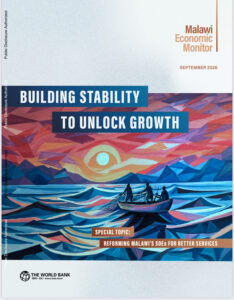
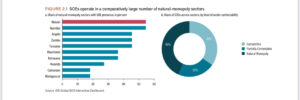
In the World Bank’s Malawi Economic Monitor raised some red flags on poor governance of public institutions, the state-owned enterprises (SOEs) in its Special topic; ‘Reforming SOEs for Better Services.
In its Special Topic; ‘Reforming SOEs for better Services’, it highlights that SOEs pose the country major fiscal risks amid poor performance and lax governance.
While taking note that SOEs are crucial to service delivery and economic growth, the report stresses that their “suboptimal performance has imposed increasingly significant fiscal and economic costs on the state, and their challenges are deeply intertwined with the country’s broader macroeconomic and structural constraints”.
Even the National Assembly also takes note of this as on September 2, Speaker of Parliament, Sameer Suleman announced a decision to investigate public institutions.
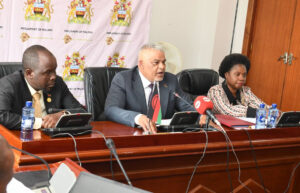
Suleman at the press conference accompanied by a cohort MPs
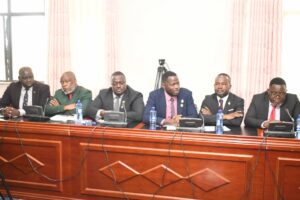
However, the Speaker put on hold the decision to institute the 12 Parliamentary joint committees in respect of a High Court Order that stopping him from going ahead pending judicial review.
The decision of Parliament, and the observation of the World Bank on SOE’s resonates with Justice Mtalimanja’s statement that “democratic maturity must also be examined through the strength and resilience of institutions, respect for the rule of law, protection of fundamental freedoms, accountability of public officeholders, internal governance of political parties and meaningful citizen participation”.