
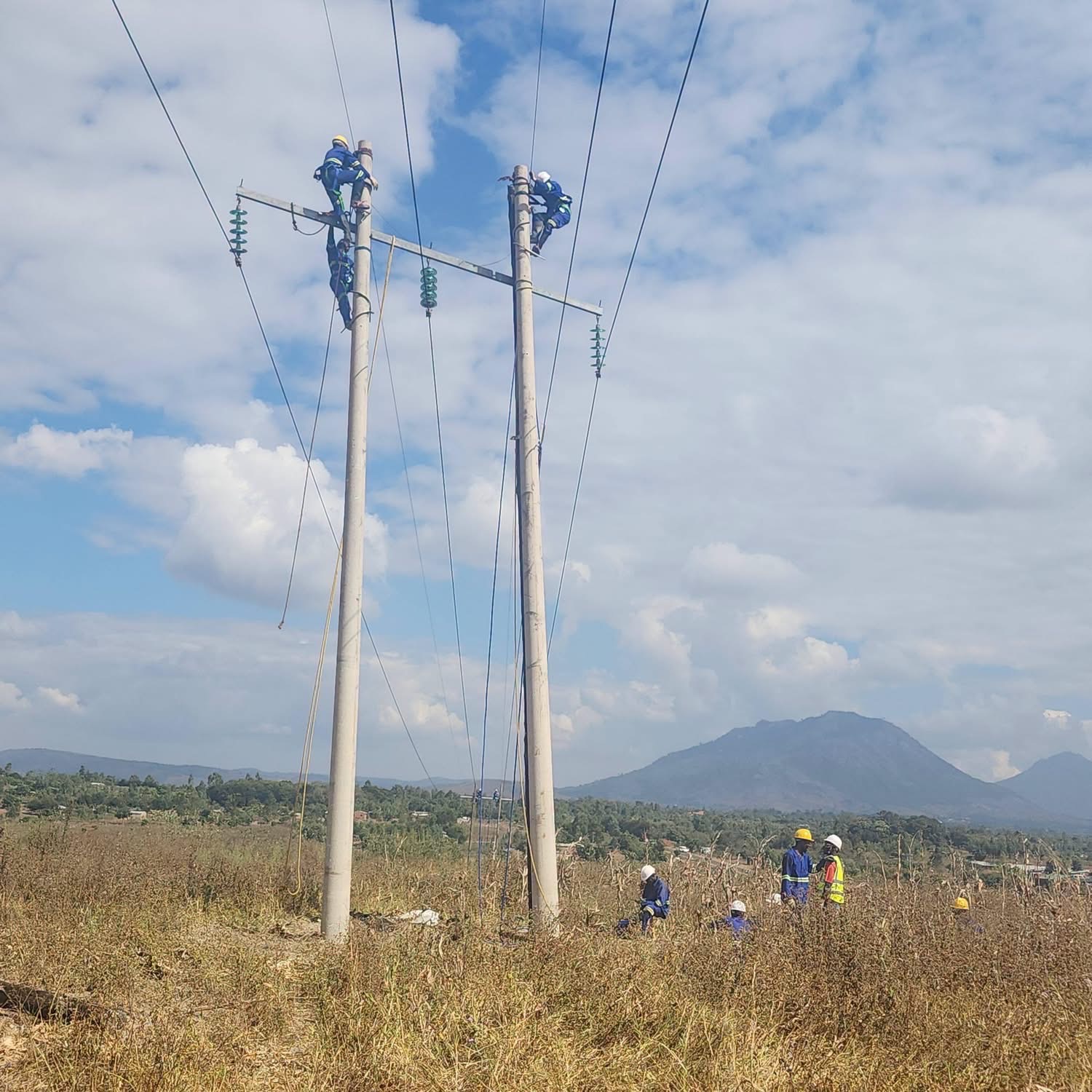
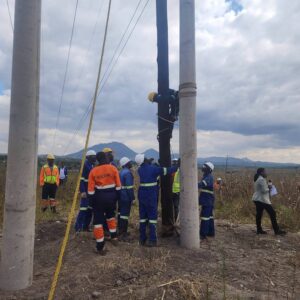
* This is a long-term investment strategy aimed to cut on maintenance costs, curb vandalism, reduce outages, and strengthen Malawi’s electricity network for generations to come
* A wooden pole’s lifespan is very short and also failing prematurely — some needing replacement within just five years due to heavy rains, while some were being vandalised, including metal ones
By Duncan Mlanjira
Electricity Supply Corporation of Malawi (ESCOM) has embarked on a project to replacing old wooden transmission poles with modern prestressed concrete poles on its two key transmission lines — the 66kV Mapanga-Fundis Crossline and the 132kV Nkula B-Phombeya No. 1 line.

Advertisement
This is a long-term investment strategy aimed to cut on maintenance costs, curb vandalism, reduce outages, and strengthen Malawi’s electricity network for generations to come — as indicated by ESCOM’s Chief Public Relations & Communications Officer, Pilirani Phiri during a media tour of the project site of 66kV Mapanga-Fundis Crossline along Robert Mugabe Highway just before the turnoff to Goliati in Thyolo.
He indicated that a wooden pole’s lifespan is very short and also failing prematurely — some needing replacement within just five years due to heavy rains, while some were being vandalised, including metal ones.
He added that the cost of replacing the wooden and metal poles is very high since they are imported but the prestressed concrete poles last up to 80 years, require far less maintenance, resist rot, insects and harsh weather, and are harder to vandalise.
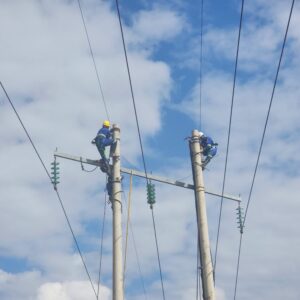
Both the 66kV Mapanga-Fundis Crossline and the 132kV Nkula B-Phombeya No. 1 line were commissioned between 1979 and 1987 and have deteriorated significantly over the decades, said Phiri.
“The Fundis Cross line serves the tea-growing districts of Thyolo, Mulanje, and Phalombe while the Nkula B–Phombeya line is a critical corridor carrying power from Nkula hydroelectric complex to the national grid.
“Together, they support industries, businesses and communities across Malawi and what the customers will gain are fewer power outages — both planned and unplanned — and a more stable, reliable electricity supply, especially for industries and businesses.”
He added that the Fundis Cross line project cost is approximately US$3.3 million and US$3.0 million for the Nkula B-Phombeya line: “Analysis confirms this is the most cost-effective option — far cheaper than building new steel transmission lines,” said Phiri.
Other wider benefits include job creation as the prestressed concrete are being manufactured Sawa Group construction company, which was contracted to also erect the poles under the supervision of ESCOM consultants, Infrastructure Project Planners (IPP) Engineers.
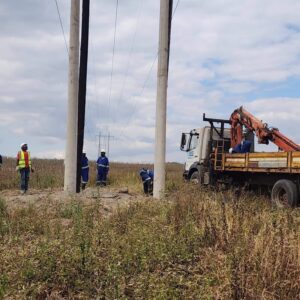
The contractor has established Malawi’s first prestressed concrete pole manufacturing facility in Lilongwe, which has created between 150 to 200 local jobs, reducing reliance on imported materials, and supporting environmental conservation by cutting dependence on timber.
The project is being carried out on Sundays and Mondays — thus power is taken off from the transmission lines to erect the concrete poles and remove the wooden ones, which at the moment is six on each day.
The consultant IPP’s supervisor, Isaac Kunkeyani indicated that they have already erected 36 of the targeted 304 for the 44km stretch
and they target December 22 to complete but also indicated that they might beat the deadline by increase structures erected each day from six to eight.
ESCOM emphasises that the replacement of the wooden poles will drastically cut costs on maintenance as well as curb vandalism, which is greatly affecting the power utility service provider loses about MK3 billion every year due to replacement of vandalised infrastructure.

Advertisement