* As alluded to by Energy Minister that government is strengthen financing mechanism for sustainable fuel procurement
* The government is currently servicing over K1.3 trillion debt incurred through losses from subsidised pump prices in MCP administration
Analysis by Duncan Mlanjira
Long term structural reforms which the government has assured that they are being undertaken, aimed at tackling the continuing intermittent supply of fuel, include strengthening financing mechanism for sustainable fuel procurement — which in other words means foreign exchange scarcity still remains the pinnacle of the bottlenecks being experienced.

Advertisement
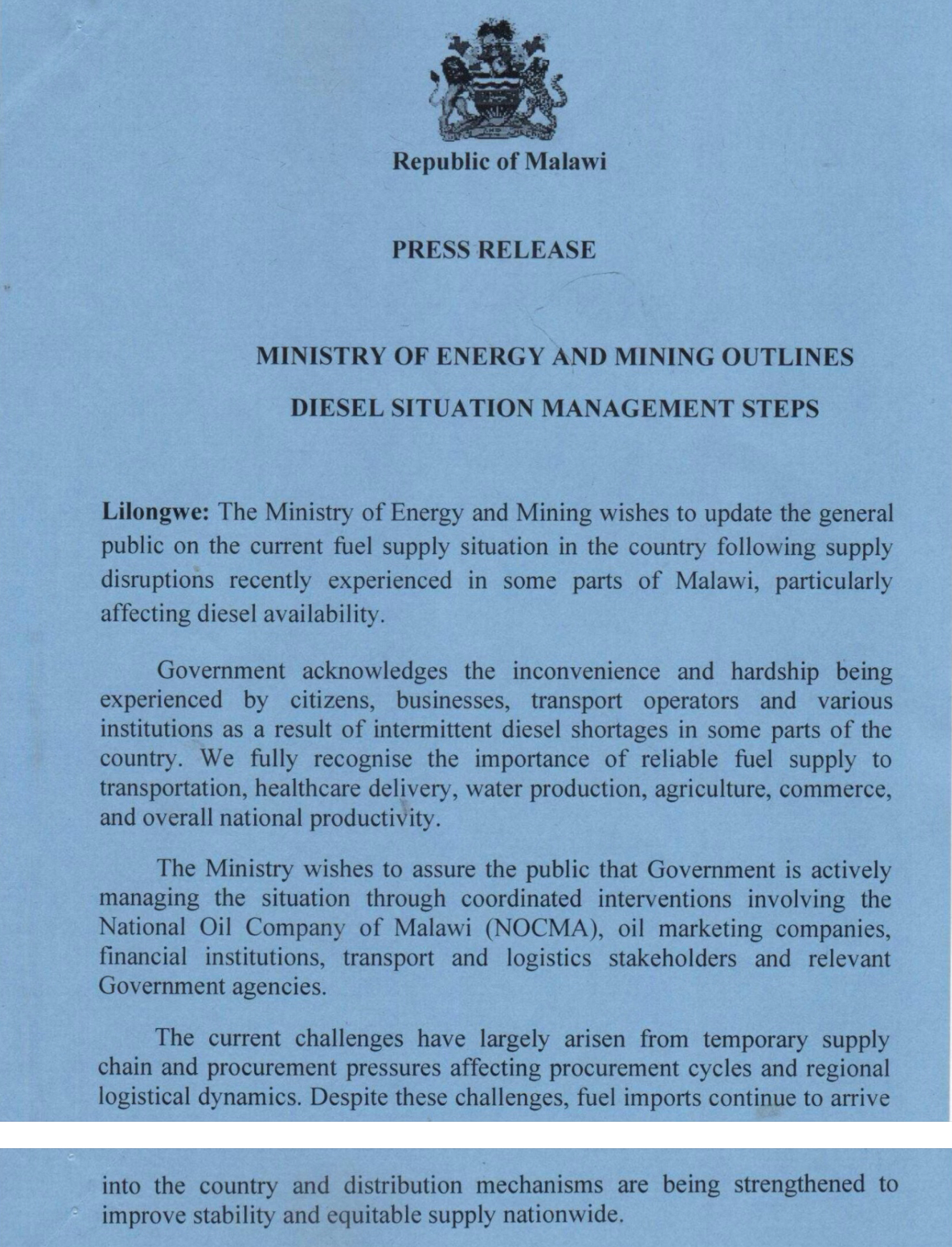
In a statement issued on Wednesday by Minister of Energy, Jean Mathanga, indicated that other measures include expansion of fuel storage infrastructure and diversification of fuel import routes & logistics systems.
The Minister indicated that the fuel import and logistics challenges “have largely arisen from temporary supply chain and procurement pressure affecting procurement cycles and regional logistical dynamics” — following the war conflict in the Gulf region, from which the country relies its supply from.
But as alluded to by Consumer Association of Malawi (CAMA) Executive Director, John Kapito — at an interface engagement with the media recently — fuel is being supplied from the Gulf region but it’s mostly at cash basis in foreign currency.
He alluded to that the government exhausted its Letters of Credit facilities from lending institutions having accumulated over K1.3 trillion debt, which was incurred through losses from subsidised pump prices during the Malawi Congress Party (MCP) administration.
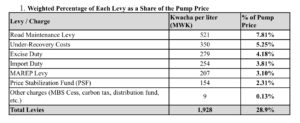
That debt was then transferred to the consumers by the Democratic Progressive Party (DPP), which was factored in as a levy on pump fuel price, which is indicated as ‘Under-Recovery Charge’ that is at K350 per litre.
Through this levy, and the others; Road Maintenance (K521/ltr), Excise Duty (K279/ltr) Import Duty (K254/ltr), Malawi Rural Electrification Programme (MAREP) at K207/ltr, Levy and Other Minor Levies (MK737), Price Stabilisation Fund (K154/ltr), and other charges such as Malawi Bureau of Standards (MBS) Cess, carbon tax, distribution fund, thus made the pump price to rocket from K2,500 in September to the current K6,672 per litre for petrol alone.
Fuel supply crisis reached its peak during the MCP administration, which introduced a government-to-government procurement arrangement to alleviate, that the DPP government discarded by formalising the automatic fuel price mechanism.
The previous administration the froze automatic fuel price mechanism in order to maintain pump prices, which was cosmetic since the system made the government incur the loss that reached K1.3 trillion — that has since been transferred to the consumer as a levy on the pump price.
Many calls were made by economic analysts including CAMA for the government to enforce the automatic fuel price mechanism instead of cushioning the pump price but since this was ahead of the 2025 General Election, they fell on deaf ears.
When the pump price was revised to K6,672 for petrol (34%) and K6,687 for diesel (35%) in March, the UTM-Party-proposed-that-the-DPP-administration-should-have-cut-down-on-the-cascade-of-domestically-imposed-levies-than-whollesale-increase/.
In its statement on April 1, the UTM maintained that the final pump price is driven not by international oil costs, saying “Malawians are not only paying for a global shock — they are paying for government policy.”
But according to CAMA at the media interface, removing any single levy would yield limited relief unless road levy policy is structurally addressed, giving an example of the road levy that would render the Roads Fund Administration to lose its primary revenue source for road infrastructure maintenance.
Poor roads would increase vehicle operating costs and hinder logistics, and currently the scarce forex is being used up most by car dealers to import spare parts, boosted by continued need to service vehicles due to dilapidated roads.


On MAREP, limited funding would hinder the extension of the grid and maintenance of infrastructure, while debt recovery would put a huge stress on the national budget as the targeted levies provide dedicated project funding.
Removing them would shift the burden to the general budget, which is already strained, or lead to increased debt issuance, while the wholesale removal of levies being suggested on political thinkingwould reduce pump prices in the short term, but it is likely to deteriorate infrastructure quality and hinder electrification progress unless alternative financing is secured.
Our economic sources agree with CAMA that the debt recovery factored in the pump price is necessary but it should have been a “gradual and time-bound recovery plan by stretching the recovery over a longer period with fixed, small annual installments rather than a heavy per-liter charge”.
Arguments in favour of removing the MBS Cess levy include that MBS duplicates quality assurance functions since the imported fuel quality is already regulated by suppliers’ sources, their agents, MERA, and port checks — thus charging a static Cess increases costs with limited incremental benefit.
It is also prone to administrative inefficiency since the Cess collections may not directly link to better quality outcomes but at the same time, the arguments in favour of maintaining the MBS Cess is that it is a regulatory compliance coverage
It ensures that funding for MBS, the national body established in 1972 by an Act of Parliament (Cap 51:02) to promote standardisation and quality assurance across the country, needs to continue its oversight of sampling and inspections not just for petroleum — since it helps safeguard against sub-standard or unsafe products entering the market.
“Levies should reflect marginal benefits. If MBS collection actually secures measurable safety improvements, justification exists otherwise, it becomes a pure price burden,” says CAMA. “The question then becomes, does MBS collection actually secure measurable safety improvements in the fuel and its usage?”


It is also being proposed that appointments in the boards of National Oil Company of Malawi (NOCMA) and the Malawi Energy Regulatory Authority (MERA) should not be the political prerogative of the Head of State but should be independently advertised for, whose nominated candidates can then be approved by the President.
These two institutions are deemed to be politically controlled since they are headed by top government officials such as the Secretary to the Office of the President & Cabinet (SPC).
It is also suggested that NOCMA should revert to its core function of fuel storage, not to compete with petroleum importers in the purchase, distribution and selling of the commodity, which controls 60% of the purchase power.
Due to forex scarcity, NOCMA is facing the procurement challenge since suppliers demand cash while Petroleum Importers Ltd (PIL) has better instruments and credible sources of supply.
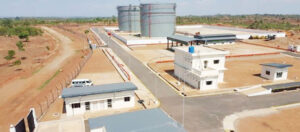
NOCMA fuel reserve storage facilities at Matindi in Blantyre and Kanengo in Lilongwe
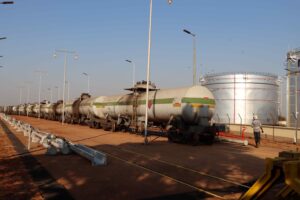
In her statement, Minister Mathanga addressed the current diesel shortage, but according to our sources, once diesel would be available, petrol is likely to be the next challenge.
She indicated that the government is actively managing the situation through coordinated interventions involving NOCMA, PIL, financial institutions, transport & logistics stakeholders and relevant government agencies.
She also informed that public that despite that procurement pressure affecting procurement cycles and regional logistical dynamics, “fuel imports continue to arrive into the country and distribution mechanisms are being strengthened to improve stability and equitable supply nationwide”.
The diesel allocation was prioritised to essential services and strategic institutions, including hospitals, water boards, emergency services, security institutions and critical public utilities, in order to minimise disruptions to essential national services.

Advertisement
In addition, government has intensified monitoring and coordination measures to discourage hoarding, speculative practices and supply inefficiencies within the fuel distribution system.
She also called on the public “to remain calm and avoid panic buying, as such practices place unnecessary pressure on the supply chain and undermine ongoing stabilisation efforts”.
Using the automatic price mechanism, the government reduced petrol prices by K400, which is an indication that once independently managed, MERA can administer petroleum provision professional as according to economic trends — thus MERA governance and logistics should be improved to reduce losses and operational inefficiencies.
It is being suggested that Treasury-backed bonds should be issued to creditors (private importers) instead of charges at the pump, which could be tradable and have fixed maturities.