
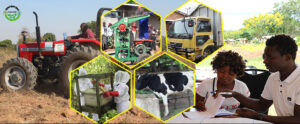
* Currently supporting 428 agricultural cooperatives and 33 small & medium enterprises (SMEs) — rekindling hope in Malawian farmers
* The programme supports primary production of farm commodities, aggregation and marketing on local and export markets of farm produce
* Including processing and value addition through farmer producer organisations and SMEs
Analysis by Denis Mzembe, contributor
For most smallholder farmers in Malawi inadequate training and modern faming skills have been for a long time been some of the factors standing in their way towards prosperity — and the challenges have also been compounded by lack of established and stronger farmer cooperatives and organisations.

Advertisement
But the inception of the World Bank-funded Agricultural Commercialisation (AGCOM) programme, has rekindled hope for a brighter future for most smallholder farmers, through which it has so far has reached out to 88,400 direct beneficiaries with various interventions
It is currently supporting 428 agricultural cooperatives and 33 small & medium enterprises (SMEs) — rekindling hope in Malawian farmers — as explained by National Programme Coordinator, Ted Nankhumwa in an interview
AGCOM was established to transform smallholder agriculture from subsistence to a commercial market-oriented sector and Nankhumwa says under AGCOM 2, one of its major mandates is promoting agricultural productivity and commercialisation for small and medium scale farmers and SMEs by strengthening productive alliances between agricultural cooperatives and off-takers through enhancement of market infrastructure.
Nankhumwa further says AGCOM helps foster productive alliances between farmer cooperatives and buyers to enhance productivity and improve access to markets as well as provision of grants for infrastructure and equipment.
The programme coordinator says they have so far disbursed matching grants based on bankable approved business plans with genuine market opportunities and expressed satisfaction of compliance rate, which is around 90%-95%.

Ted Nankhumwa
As a follow up mechanism to ensure compliance, Nankhumwa says AGCOM’s technical implementation support consultants, who function as frontline extension staff, coordinate with various farmer producers to ensure that quality goods and services are provided to the beneficiaries.
On his part, Henry Chimpesa, cooperative development officer in the Ministry of Trade, Industry & Tourism, emphasises that it is imperative that famers should first be registered members of cooperatives to access financial assistance to help enhance their agricultural activities.
Speaking during a recent cooperative training and education event, Chimpesa said registered cooperatives give the farmers legal capacity to enter into agreements that are binding with both buyers and suppliers of different materials and source of labour.
“On the other hand, by being in a cooperative the farmers would be taught how to run successful businesses because a cooperative is a business entity and by its nature it has to do business for its farmers to be able to meet their social and economic needs.”
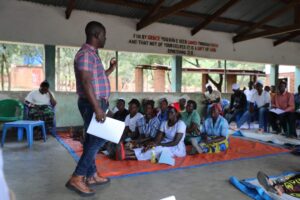
Business plan trainings
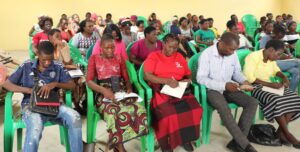
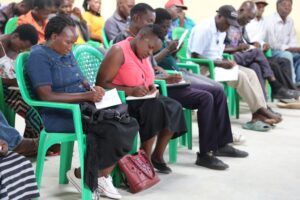
Among another areas that were covered during the member training were the general set up of cooperative, leadership, members’ rights and responsibilities and cooperative laws.
Chimpesa said capacity-building trainings help farmers set up cooperatives that bind them with the mandate to protect their assets in legal terms and be able to run commercial farming businesses that would ably compete at the national and international market.
Chimwemwe Sagona, a member of Zomba-based Stall Feeding Cooperative situated at Mpamba Village in Traditional Authority (T/A) Malemia in Zomba, explains that her group started in 2019 with 32 members comprising 17 women and 15 men.
“We initially started it as a village bank and we later decided that the business must grow,” she said. “So when he heard of AGCOM, we went to seek for financial support to start breeding beef cattle and submitted a concept and business plan worth K224 million.”
Having satisfied AGCOM set guidelines, including being trained in business management, the cooperative received a tranche of K104 million investment which is helping to enhance their business.
“The training has helped shape us to become more proactive to successfully run a viable cooperative. Even after the project phases out, we will be able to sustain our cooperative with ease,” she says.

Advertisement
Among other things, she says members have been trained on how they can effectively utilise cattle manure into their other farming activities and that besides building capacity of smallholder farmers, AGCOM is also helping strengthen agricultural resilience by enabling farmers adopt climate smart agriculture and also supply livestock.
Chairperson of Zonona Piggery Cooperative, Favour Maseko, recalls that their group nearly folded due to lack of capital but when they qualified for an AGCOM grant, their business successfully picked up.
Maseko explains that their group now boasts of two solar-powered water pumps and tanks, saying: “It has been an amazing journey. It is something that I never expected and go through it all.
“We really appreciate the grant that AGCOM extended to us. It also made it possible that we have water at the farm using solar energy, as you know pigs require a lot of water. We are determined to succeed in our farming.”
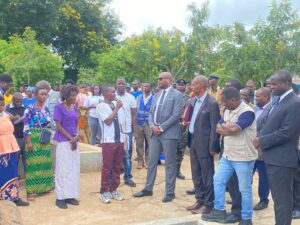
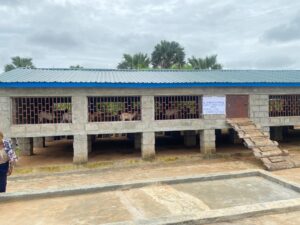
Mwalawolemba Milk Bulking Group of Chiwoko in Thyolo’s T/A Chimaliro initially started as a small group in 2012 supported by SunCrest dairy company in Blantyre but with support from K282 million AGCOM support, it has grown tremendously.
The 130-member group’s chairperson, Emmanuel Vimbani, says they received the first tranche of K160 million, which enable them to purchase 65 dairy cattle and expand their cattle kraal.
“We will purchase 65 more dairy cattle in the second tranche,” he says. “This will transform our lives because the volumes of milk will significantly be increased and our earnings too.”
Along with the World Bank as the main financier, other AGCOM cooperating partners, both locally and internationally, include the Ministry of Agriculture, Ministry of Finance, Malawi Agricultural & Industrial Investment Corporation (MAIIC), Centre for Coordination of Agricultural Research and Development for Southern Africa (CCARDESA) and the country’s commercial and investment banks.

Advertisement