
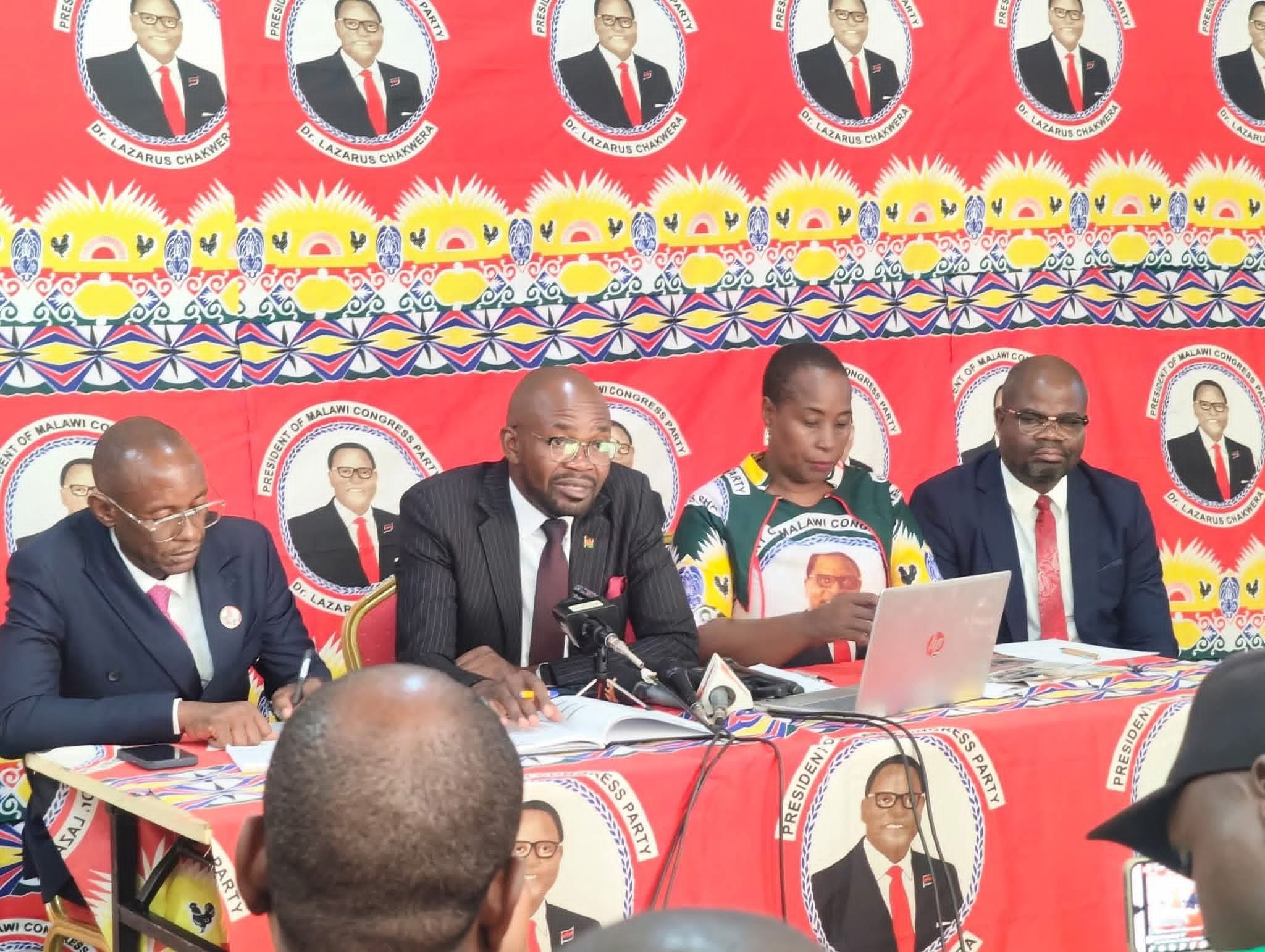
The press conference by the MCP in Lilongwe today
* The effectiveness of opposition parties to hold the government accountable ultimately depends on the clarity, depth, and credibility of the arguments presented—DCG Chief Economist, Chifipa Mhango
By Duncan Mlanjira
In reaction to Malawi Congress Party’s (MCP) press conference on the state of the economy held today April 22, 2026 in Lilongwe, South Africa’s Don Consultancy Group (DCG) Chief Economist and Executive Director of Economic Research & Strategy, Chifipa Mhango, has urged the party leadership that “it is imperative to move beyond political posturing and toward a more structured, solutions-driven national conversation”.

Advertisement
In a statement entitled; ‘MCP press conference, from rhetoric to responsibility in setting Malawi economic discourse’, Mhango contends that “while it is both legitimate and necessary for opposition parties to hold the government accountable, the effectiveness of such engagement ultimately depends on the clarity, depth, and credibility of the arguments presented.
“The MCP’s address, unfortunately, fell short on several critical fronts. Firstly, the articulation of economic challenges lacked structure and coherence. At a time when Malawi is grappling with deep macroeconomic imbalances, ranging from currency instability and inflationary pressures to fiscal constraints, the expectation is for a leading political party to present a well-organised analysis.
“This includes clearly distinguishing between symptoms and root causes, as well as demonstrating a firm grasp of both domestic and external drivers of the current crisis.
“Instead, the messaging appeared fragmented, leaning heavily on broad criticisms without sufficiently grounding them in data or a comprehensive economic framework. This weakens not only the credibility of the argument but also the party’s ability to position itself as a viable alternative.

Advertisement
“Secondly, and perhaps more importantly, was the absence of a solutions-based approach. Constructive political engagement requires more than identifying problems, it demands actionable proposals.
“Malawians are not merely interested in what is wrong — they are seeking reassurance that there are credible pathways to recovery and growth. Given that the MCP was in government only a few months ago, this expectation becomes even more pronounced.
“The party is not operating from a position of historical detachment, it is, to a significant extent, part of the recent policy continuum. This reality places a responsibility on the party to reflect with honesty and maturity on its own tenure, acknowledging both constraints and missed opportunities, while offering refined policy alternatives informed by that experience.”
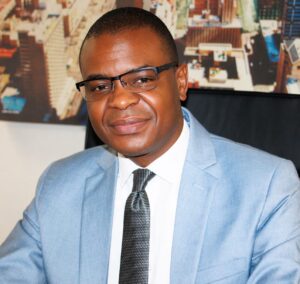
Chifipa Mhango
Mhango thus offers a professional posture in economic discourse that necessitates three key elements:
1. Structured Communication — Economic messaging must be deliberate, logical, and evidence-based. This involves presenting a clear narrative: outlining the current state of the economy, diagnosing the key challenges, and linking them to specific policy failures or external shocks. Such structure enhances public understanding and builds trust with both citizens and investors;
2. Policy Continuity and Accountability — Political actors must recognise that economic management is cumulative. Policies implemented today are often extensions or consequences of past decisions. As such, credibility is strengthened when parties demonstrate continuity in thinking, while also showing a willingness to adapt and improve. Acknowledging prior shortcomings is not a weakness, it is a hallmark of responsible leadership.
3. Solutions-Oriented Engagement — Most critically, there must be a shift toward practical, implementable solutions. This could include clear proposals on fiscal consolidation, debt restructuring strategies, export diversification, or measures to stabilize the currency. Importantly, these solutions should be realistic, costed where possible, and aligned with Malawi’s institutional capacity.
Mhango maintains that the country “stands at a delicate economic juncture [and that] the margin for error is narrow, and the cost of superficial engagement is high. Political parties, whether in government or opposition, must therefore rise to the occasion by elevating the quality of economic discourse”.
In his conclusion, Mhango says: “The MCP, as a major political force with recent governing experience, has both the opportunity and the obligation to lead by example. This means transitioning from reactive commentary to thoughtful, policy-driven engagement that contributes meaningfully to national recovery.
“Ultimately, Malawians deserve more than political gestures. They deserve clarity, accountability, and credible solutions.
“A more credible and impactful economic intervention from the MCP requires both a clear structured framework of communication and the right mix of technical and political leadership.
“Without these two elements working together, even valid concerns risk being dismissed as political rhetoric rather than constructive national input.”
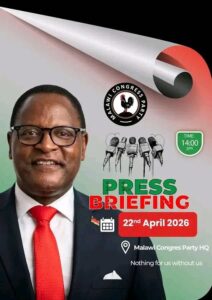
Meanwhile, the MCP indicated that its outgoing president Lazarus Chakwera would attend the press conference address party supporters at the party’s headquarters in Lilongwe, but the former Head of State did not show up for the briefing.
Sources within the party indicate that he made a last-minute decision not to attend, although no official explanation was provided for his absence, according to the media present at the event.
Despite his absence, senior MCP officials proceeded with the press conference, led by the party’s campaign director Moses Kunkuyu, spokesperson Jessie Kabwira, along with Maxwell Thyolera and Lawrence Chakakala Chaziya.

Advertisement