

* From the description of his friends, Zanga is the kind of neighbour any community would value as dependable, respectful, and always willing to lend a hand
* When there is a funeral, he contributes; when something breaks, he helps fix it; when he passes by, he greets everyone with a quiet warmth
* This man is very helpful we value him a lot but he does not talk about himself a lot and we don’t push him to talk much about himself
By Ireen Chanza, Correspondent
On the outskirts of Chigumula, in Blantyre, the rhythm of daily life is familiar and predictable. Evenings settle in with the fading hum of traffic, children retreat indoors, and neighbour’s exchange greetings across small yards.
Among them is a man who people in the area, whose name we withhold but will use his nickname of Zanga, which only his secret partner knows.

Advertisement
From the description of his friends, Zanga is the kind of neighbour any community would value as dependable, respectful, and always willing to lend a hand. The neighbours say when there is a funeral, he contributes; when something breaks, he helps fix it; when he passes by, he greets everyone with a quiet warmth.
“This man is very helpful we value him a lot but he does not talk about himself a lot and we don’t push him to talk much about himself,” says Mai Gaudy, a maize seller in Chigumula market.
To those around him, Zanga is just that a good man — but beyond the routine interactions and shared community life lies a reality few see. He has lived in Chigumula for several years, building a life rooted in routine and quiet consistency.
Like many others across Malawi, he has learned how to belong carefully — for he is part of the lesbians, gays, bisexual, transgender, queer and intersex (LGBTQI+) community.

He says it is not something he openly declares; not something he denies — it simply exists shaping how he speaks, where he goes, and how much of himself he reveals: “It’s not that I want to hide. It’s just that sometimes, it feels safer not to explain.”
His story, while deeply personal, is not rare: “Today I just wanted to open up a little without drawing attention. I just want people to know that there are some people who wish they could say a lot about themselves but we cannot because of being judged or even attacked.”
According to the Under Wraps, national attitudes survey by the Other Foundation, about 3.5% of Malawians — roughly 186,000 people identify as lesbian, gay, bisexual, transgender or intersex.
Yet despite these numbers, many remain largely invisible in everyday community life. Zanga says, silence is not emptiness — it is effort, it is in the conversations he redirects, jokes he laughs along with, even when they sting.
The assumptions he allows others to make about his future: “When people ask about my life, I give them what they expect. To the public am that man who does not have a wife and who has no history of marriage. I am in a relationship,” he says.
Living this way requires constant awareness a quiet editing of self: “I once forgot my script and almost gave myself out.I had to take some words back and pretended it was a slip of tongue,” he says.

Advertisement
Experts say this quiet negotiation is shaped by broader social attitudes that often sit in contradiction. According to the Under Wraps study by The Other Foundation, while many Malawians express strong opposition to violence against LGBTQI+ individuals, acceptance in everyday life remains limited.
In practice, this means that tolerance does not always translate into inclusion: “This creates a difficult environment where people may not face open hostility every day, but still feel they cannot be fully themselves,” says Dali Sungula, a human rights advocate and executive director of the Centre for Human Rights Today.
Sungula explains that many individuals navigate what he describes as “silent survival” a constant balancing act between safety and self-expression:
“You find that people are tolerated as long as they do not openly express who they are. The moment they become visible, that tolerance can quickly shift,” he says.
A similar observation is shared by John Moya, director of the Equity Now, who has worked closely with sexual minorities across Malawi: “Many LGBTI individuals are already part of our communities they are teachers, business owners, neighbours.
“But the environment forces them to live in fragments, where one part of their life is visible and another must remain hidden,” he says, adding that this reality creates what he calls ‘conditional belonging’ — a situation where acceptance is dependent on silence.
“They belong, but only up to a point. Beyond that point, there is risk of rejection, of discrimination, even of losing their home or livelihood.”
For people like Zanga, these broader societal dynamics are not abstract they are lived daily, shaping how he speaks, where he feels safe, and how much of himself he can afford to reveal.
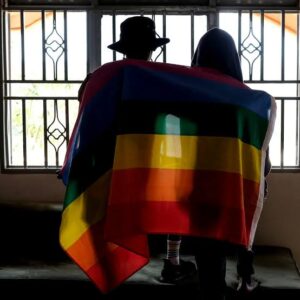
Despite this, Zanga has built a place for himself — but that belonging has boundaries: “There’s always that question. If people knew everything about me, would it stay the same?” he asks.
That uncertainty shapes daily decisions on what to say, what to hide, and how to navigate relationships. For Zanga, relationships exist within carefully guarded spaces: “I cannot live my whole life in one place. Some parts of me have to exist somewhere else.”
According to the Centre for Human Rights Today, stigma and fear of discrimination often force LGBTQI+ individuals to separate their personal lives from their public identities, limiting their ability to form open relationships or access support systems.
Yet Zanga continues to contribute to the society he lives in. When a neighbour’s house was damaged by heavy rains, he contributed quietly; when a child nearby struggled in school, he offered free lessons. He shows up, he belongs, even if not completely.
His story reflects a broader reality that beyond policy debates and public opinion, there are thousands of Malawians living ordinary lives while carrying extraordinary silence.
Public conversations about LGBTQI issues in Malawi are often loud and divided; but stories like Zanga’s are quieter — they unfold in everyday spaces in neighbourhoods like Chigumula, in shared greetings, in small acts of kindness. They remind us that the people often discussed as ‘others’ are already part of the community.
As night falls and Chigumula settles into silence, Zanga closes his door on another day. A day in which he has been present, helpful, accepted — even if not fully known.

Advertisement