
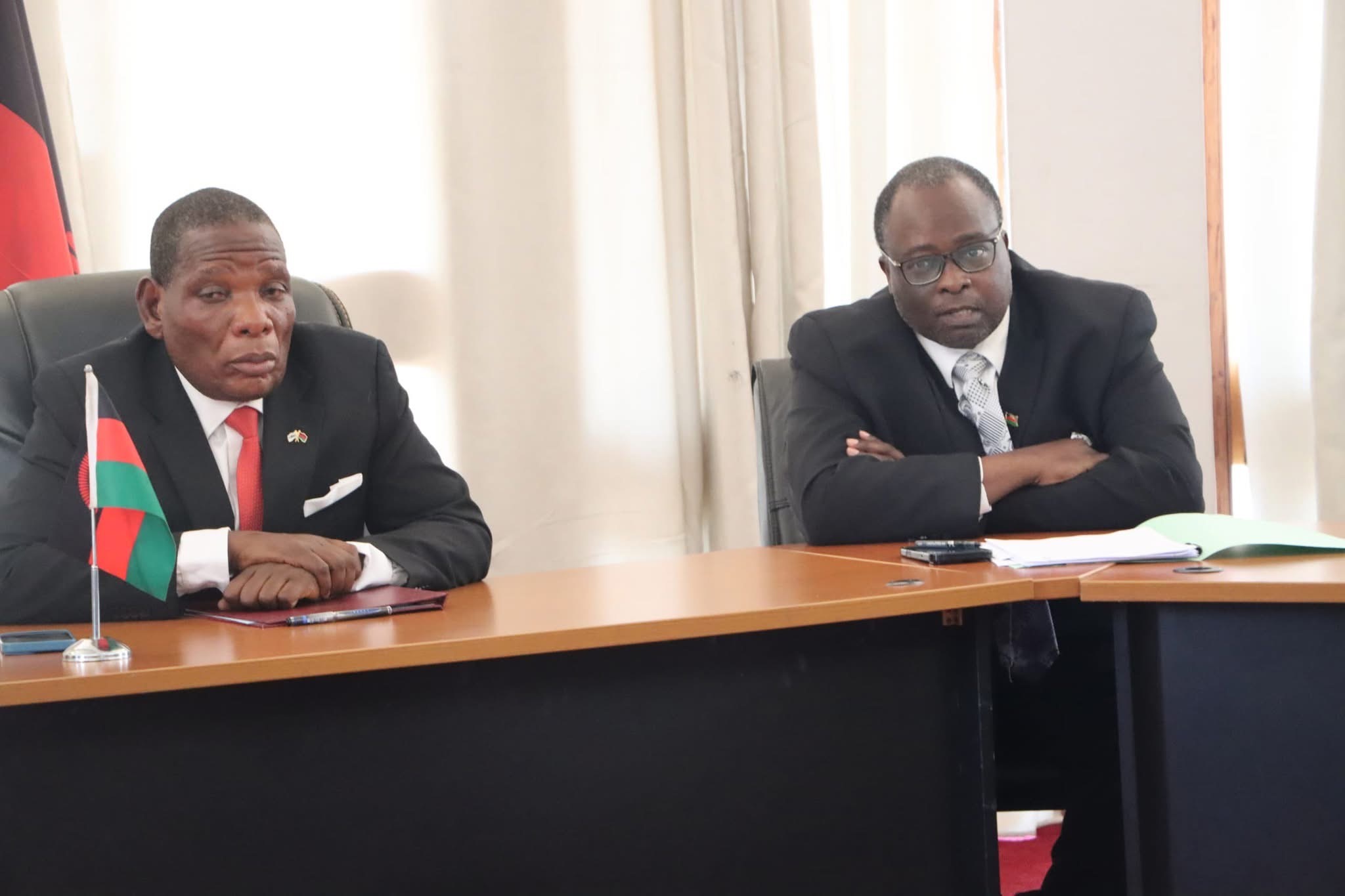
Mwanamveka (left) along with the Reserve Bank of Malawi Governor
* The World Bank has provided US$45 million for emergency food assistance targeting four million Malawians
* The African Development Bank has also pledged additional support with the IMF expected to visit Malawi in the first week of November to assist in efforts to stabilise the economy
* The Chinese government has forgiven Malawi’s US$20 million debt and granted an additional US$3 million to support the country
* While on its part, the government is cutting expenditures, reforming policies, and restructuring debt to ensure fiscal sustainability
By Duncan Mlanjira
Minister of Finance, Economic Planning & Development, Joseph Mwanamvekha, who was in the US to deliberate on Malawi’s key priorities to resuscitate Malawi’s ailing economy, has assured that there will be no devaluation of the Kwacha having secured substantial international support in Washington D.C.

Advertisement
The Minister attended Spring Meetings jointly organised by the World Bank Group and the International Monetary Fund (IMF) where he held discussions with regional and international financial institutions, as well as development partners, towards food security, fertiliser supply, foreign exchange, fuel, and essential medicines.
Malawi Government official Facebook page reports that a media briefing on Food Crisis Support held at the Ministry of Finance upon his return, Mwanamveka said the mission to Washington D.C. — sanctioned by President Arthur Peter Mutharika — focused on stabilising the economy and addressing challenges related to 4 Fs; food, foreign exchange, fuel and fertilizer supply.
He revealed that the World Bank has provided US$45 million for emergency food assistance targeting four million Malawians, while the African Development Bank has also pledged additional support — with the IMF expected to visit Malawi in the first week of November to assist in efforts to stabilise the economy.
Mwanamvekha also announced that the Chinese government has forgiven Malawi’s US$20 million debt and granted an additional US$3 million to support the country — while on its part, the government is cutting expenditures, reforming policies, and restructuring debt to ensure fiscal sustainability.
Whilst in Washington D.C., the government reported that the International Finance Corporation (IFC), the private sector arm of the World Bank Group, reaffirmed its continued support for the realisation of the Mpatamanga Hydropower Project in Neno District.

The meeting with IFC
This commitment was made during a bilateral meeting held last Saturday by Mwanamvekha and IFC vice-president for Africa, Ethiopis Tafara at the conclusion of the annual IMF and World Bank Spring Meetings.
Tafara is reported to have reiterated IFC’s strong partnership with Malawi and invited the Minister to outline the Government’s key priorities, which Mwanamvekha highlighted five immediate priorities identified; food, fertiliser, foreign exchange, fuel, and pharmaceuticals aimed at addressing the needs of the general population.
He also expressed the Government’s strong desire to see the Mpatamanga Hydropower Project commence without delay, noting that its timely implementation would help address Malawi’s persistent power shortages and support broader industrial and economic development.
Tafara thus assured the Minister that IFC, as the lead arranger of financing for the Mpatamanga Project, is on track with the due processes required to reach financial close and he also outlined several IFC-supported initiatives in Malawi — including advisory support for the Shire Valley Transformation Programme and the development of student accommodation in public universities.
Meeting with the World Bank Group
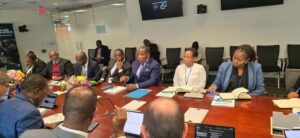
Additionally, IFC plans to undertake a private sector diagnostic study focusing on agriculture, tourism, and mining key sectors for Malawi’s economic transformation.
Mwanamveka welcomed the initiatives, noting that the Government would greatly appreciate the study, as its findings will provide valuable insights to inform policy direction and strengthen private sector participation in national development.
Meanwhile, the World Bank Group has reaffirmed its strong partnership with the new government administration and committed to provide support for food assistance during the current lean season.
In his meeting with Mwanamveka, World Bank Group’s regional vice-president for the for Eastern and Southern Africa, Ndiame Diop pledged the Bank’s continued support towards advancing Malawi’s development and economic reform agenda.
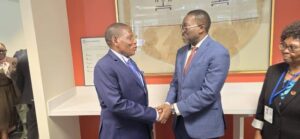
With Ndiame Diop
Mwanamvekha first met with IMF’s African Department Director, Abebe Selassie, that focused on Malawi’s macroeconomic priorities, including debt sustainability, inflation management, economic growth, and fiscal deficit reduction.
Selassie sought to understand Malawi’s reform priorities and the country’s commitment to sound macroeconomic management, which Mwanamvekha assured the IMF delegation of Mutharika’s administration’s strong political will — reaffirming that the President has already started fiscal measures to strengthen economic stability.
These include minimising unnecessary external and internal travel, promoting virtual meetings and advancing ongoing engagements with bilateral and multilateral partners to restructure debt.
Thereafter, Malawi delegation met deputy assistant secretary for Africa and the Middle East, Eric Meyer, at the US Department of the Treasury, who acknowledged the macroeconomic challenges Malawi is facing and reaffirmed continued the US’ bilateral support aimed at cushioning the impact of current economic pressures.
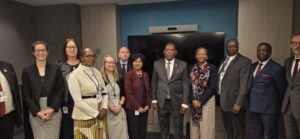
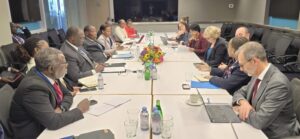
Meyer took cognizance of the adverse effects of post-USAID funding cuts on key sectors, particularly health, and expressed optimism about the resuscitation of US development programmes, assuring that discussions are underway with the Global Health team to explore renewed support for Malawi’s health sector, focusing on HIV/Aids, tuberculosis, and related areas.
He further advised the Government of Malawi to continue intensive discussions with the IMF on debt sustainability and management as a pathway to unlocking further investment and development opportunities.
The Finance Minister also held bilateral discussions with officials from the Government of the Kingdom of Saudi Arabia on the sidelines of the Spring Meetings — whose discussions centred on enhancing development cooperation and identifying areas for Saudi support towards Malawi’s key national priorities.
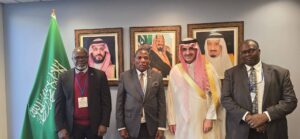
These include stabilising fuel supply, improving foreign exchange availability, strengthening food security, facilitating access to fertiliser, and ensuring the provision of essential medicines.
The Saudi delegation was led by Minister of Finance & head of the Saudi Mission to the IMF and World Bank, Mohammed Aljadaan, who reaffirmed his country’s commitment to deepen collaboration with Malawi in key sectors such as energy, infrastructure development, road construction, and humanitarian support.
A major highlight of the discussions was the Makanjira road project, one of Malawi’s flagship infrastructure initiatives, saying the Saudi Government confirmed that it had granted a no-objection for the Roads Authority to sign a consultancy services contract for the project.
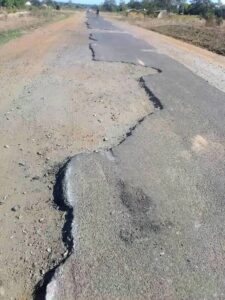
State of road infrastructure in Makanjira
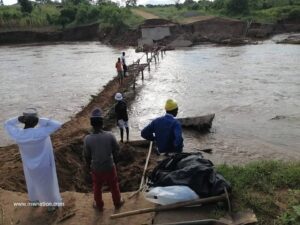
As financiers, the Saudi delegation expressed optimism that construction will soon progress and reaffirmed their continued support for its successful completion.
Mwanamvekha expressed appreciation for the strong and longstanding partnership between Malawi and the Kingdom of Saudi Arabia and reaffirmed Malawi’s commitment to collaborate closely with Saudi counterparts in advancing projects that directly address the country’s development needs.
He further emphasised that Malawi is prioritising economic reforms aimed at promoting stability, creating jobs, and improving the livelihoods of Malawians.
The Saudi delegation extended a cordial invitation to Malawi’s Ministry of Tourism to participate in the upcoming 26th UN Tourism General Assembly, scheduled to take place in Riyadh from November 7-11, 2025.


Advertisement