
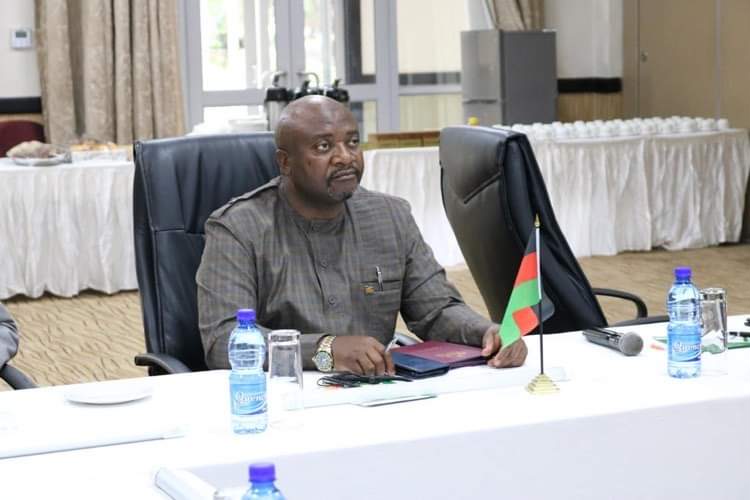
Matola: Everyone is impacted by the reality of climate change
* As well as to protect vulnerable populations as storms cost lives and so do blackouts
* Here in Malawi, I’m confident that we wouldn’t be in the present situation if this system had been in place
* When Cyclone Ana knocked out the Kapichira, we lost 130 megawatts (MW) of capacity, leaving us with persistent blackouts
* People lost businesses that rely on electricity — because energy is the driver of the economy
* You can’t talk about healthcare without energy, as people depend a lot on supporting machines
By Duncan Mlanjira
A quarterly publication by OPEC Fund for International Development has highly lauded Malawis Energy Minister Ibrahim Matola for supporting worldwide calls for global early warning systems to protect energy infrastructure as well as to protect vulnerable populations.

Advertisement
The publication interviewed the Minister ahead of the COP27 Climate Change Conference in Sharm El-Sheikh, Egypt in which the Quarterly asked him what was his message to the international community to what the United Nations is propagating that everyone should be protected by early warning systems by 2027 — following the havoc caused by Cyclones Idai and Ana in the last few years.
Matola replied: “Early warning systems are absolutely essential for disaster management as they help governments to adequately foresee potential disasters, plan accordingly and safeguard their people.
“Here in Malawi, I’m confident that we wouldn’t be in the present situation if this system had been in place. For example, when Cyclone Ana knocked out the Kapichira hydroelectric power station, we lost 130 megawatts (MW) of capacity, leaving us with persistent blackouts.

Matola inspecting damage caused at Kapichira Dam soon after Cyclone Ana struck

“People lost businesses that rely on electricity — because energy is the driver of the economy. But it goes much further than that. You can’t talk about healthcare without energy, as people depend a lot on supporting machines.
“Whether women in labor going into operating theaters or babies in incubators, persistent blackouts cost lives.”
The Minister further told the Quarterly that in order to help Malawi plan for and respond to natural disasters, he asked UN agencies, other governments and development banks “to invest in early warning systems and put them in place as quickly as possible — to show that we care for the people we serve and prevent further loss of life and property”.
“From the perspective of Malawi, we would welcome this being done as a regional bloc, either via the Southern African Development Community or the Common Market for Eastern and Southern Africa because Malawi is a member of both organizations.”

Advertisement
Asked if he though climate change could be an opportunity for deeper coordination and integration across Africa, Matola said: “Everyone is impacted by the reality of climate change.
“It does not care about race, religion or socio-economic background. We are members of a global village. The issues that our nation may experience are likely to spread to our neighbors as well. It is crucial that we cooperate and invest in the mitigation of climate change.
“At the moment, we are working on an interconnection project between Malawi and Mozambique. We’re also looking at projects between Malawi and Tanzania, as well as between Malawi and Zambia.
“If another cyclone as big as Ana strikes Malawi, it will likely also affect Mozambique and vice versa. We must cooperate to resolve this issue in a long- term manner.”
On other priorities Africa and Malawi should follow, the Minister said on the one hand, “most African countries have not invested enough in the energy sector,” emphasizing that “we must face up to that fact.
“But on the other hand, the bureaucracy put in place by multilateral banks means that it takes too long to access funds. These bottlenecks should be removed. We should also look to the future with regards to interconnections.
“When we or a neighboring country has a surplus of energy, it will help us to trade in power. Everyone should have access to electricity by 2030, according to the UN’s Sustainable Development Goal 7.


Advertisement
“The clock is ticking, so we need to move fast. To achieve SDG 7, we need regional integration. We need to move together. The interconnections project is one step towards achieving that dream,” he said.
In its assessment, OPEC Fund Quarterly said many people think of climate west and typhoons being most affecting the east, saying the changes are a ticking time bomb — dangerous, but not about to explode any time soon; one that we’ll probably defuse through advanced technology.
“So great is our hubris. Unfortunately, that view is not only wishful thinking but a really simplistic metaphor. Climate change is more a series of shock waves already crashing over us, building up to what may well become an apocalyptic crescendo.
“Think that’s overblown? According to a 2021 UN report, there’s been a climate-related disaster every day on average for the last 50 years somewhere around the world, killing well over 100 people and causing more than US$200 million in damage every single day for half a century.

Cholera alert
“Not all these disasters can be attributed to climate change, but the proportion is clearly rising, according to UN research cited at the highest levels.
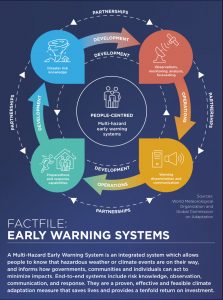
“One protective measure would be to install a global network of multi- hazard early warning systems — mainly for tracking tropical cyclones, also known as hurricanes. The global system is long overdue because more than 2.5 billion people — one-third of the world’s population — are still not covered.

Advertisement
“Most live in small island developing states and least developed countries; across Africa alone, 850 million people, 60% of the continental population, remain exposed to deadly storms.”
The Quarterly quotes UN Secretary-General António Guterres as saying in March 2022: “This is unacceptable, particularly with climate impacts sure to get even worse. Early warnings and action save lives.
“To that end, today I announce the United Nations will spearhead new action to ensure every person on Earth is protected by early warning systems within five years.”

UN Secretary-General António Guterres