

By Chifi Mhango, Chief Economist and Executive Director-Don Consultancy Group
There are dates in history that represent more than the passing of time. They mark the beginning of a journey that changes the identity, economy, culture and destiny of a place.
The 16th of November 1860 is one such date in the history of Durban, KwaZulu-Natal and South Africa. On this day, a ship called the Truro arrived at Port Natal, today’s Durban Harbour, carrying the first group of 342 Indian labourers from Madras (now Chennai), India.
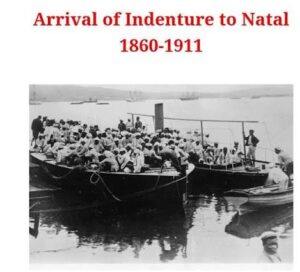
They had travelled thousands of kilometres across the Indian Ocean, leaving behind their homes, families and familiar surroundings to begin a new life in a distant land. Many could hardly have imagined that their arrival would help shape the social, cultural and economic identity of Durban for generations to come.
But their arrival was not simply an immigration story. It was also the beginning of a significant chapter in the development of South Africa’s sugar industry.
The economics behind the arrival
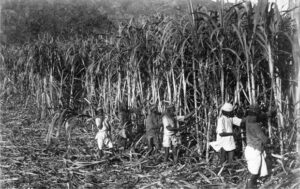
In the mid-19th century, Natal was developing its agricultural economy, with sugarcane emerging as one of its most promising commercial crops. European settlers and plantation owners had recognised that the warm subtropical climate, fertile coastal soils and favourable rainfall along the Natal coastline offered excellent conditions for sugarcane cultivation.
However, sugarcane farming was labour-intensive. Planting, weeding, cutting and transporting cane required a substantial and relatively reliable workforce.
The colonial authorities and plantation owners struggled to secure sufficient African labour under the employment arrangements they wanted.
They, therefore, turned to India, where the British colonial administration had already established systems of indentured labour for plantations in other parts of the empire.
The arrival of the Truro was the outcome of that economic decision. The workers were recruited under contracts, generally lasting five years, with promises of wages and the possibility of returning to India at the end of their service.
In reality, many experienced extremely difficult conditions, low wages, harsh treatment and restrictions on their freedom. It is important to recognise this history honestly: the growth of Natal’s sugar economy was built partly on the exploitation and sacrifice of Indian workers.

Advertisement
From indentured labour to the making of a community
The arrival of the Truro was followed by many more ships carrying Indian men, women and children. On 26 November 1860, another vessel, the Belvedere, arrived from Calcutta. Over the following decades, thousands of Indian families came to Natal under the indenture system.
Between 1860 and 1911, approximately 152,184 Indian indentured workers arrived in Natal aboard 384 voyages. The last ship, the Umlazi, arrived in July 1911.
Their lives were initially centred around sugar estates and mills, particularly along the coastal belt north and south of Durban. Places such as: Tongaat (now oThongathi), Verulam, Phoenix, Mount Edgecombe, Umhlanga, Stanger (now KwaDukuza), Isipingo and Sezela became closely associated with sugarcane cultivation, processing and the communities that grew around the industry.
But the story did not end in the plantations. Many Indian workers remained in Natal after completing their contracts. Some became independent farmers, traders, shopkeepers, artisans, railway workers and entrepreneurs.
Their descendants contributed enormously to the development of education, commerce, industry, politics, religion and the cultural life of KwaZulu-Natal and South Africa.
Indian culture became deeply embedded in Durban’s identity. Today, the city is internationally recognised for its distinctive Indian heritage, cuisine, religious traditions, festivals and business community.
It is therefore difficult to tell the story of modern Durban without acknowledging the contribution and sacrifices of those who arrived from India in 1860.

Thriving sugar cane field of Kwazul-Natal

The sugarcane legacy that remains alive today
More than 166 years after the arrival of the Truro, sugarcane remains one of the defining agricultural and industrial features of KwaZulu-Natal.
The industry has evolved from its colonial plantation origins into a sophisticated agricultural and agro-processing value chain involving commercial farmers, small-scale growers, milling companies, refineries, transport operators, agricultural suppliers and manufacturers.
The latest South African Sugar Association figures illustrate the scale of this legacy:
* Approximately 25,000 registered sugarcane growers operate in KwaZulu-Natal and Mpumalanga;
* The industry supports approximately 65,000 direct jobs and 270,000 indirect jobs;
* More than one million people’s livelihoods depend on the industry;
* Annual direct industry income is estimated at approximately R24 billion; and
* South Africa has 12 operational sugar mills, operated by six milling companies, according to SASA’s industry overview.

The geographical connection between sugarcane and the development of towns is particularly interesting. Tongaat, for example, grew around the sugar industry. The relationship between farms, mills, transport infrastructure, commercial activity and surrounding communities demonstrates how an agricultural commodity can shape the economic geography of an entire region.
Sugarcane is also more than sugar. It offers opportunities for diversification into renewable electricity through bagasse, biofuels, animal feed, specialised industrial products and other forms of agro-processing.
However, the industry is not without challenges. Rising production costs, cheap imports, pressure on milling operations and the financial sustainability of small-scale growers threaten its long-term competitiveness.
The future depends on modernisation, investment, productivity improvements and diversification.
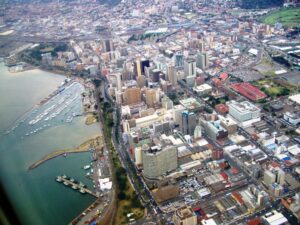
Durban
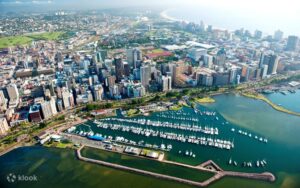
A history that connects India, Durban and the rest of South Africa
There is something particularly significant about this history. The Indian Ocean, which once separated these communities geographically, became the bridge through which people, cultures, skills, traditions and economic opportunities travelled between India and South Africa.
What began as a colonial labour recruitment programme ultimately contributed to the creation of a permanent community that became part of South Africa’s national identity.
The story also reminds us that economic development often carries complicated histories. The prosperity of an industry cannot be separated from the people whose labour made it possible.
The 16th November 1860, therefore, represents three interconnected histories:
* An economic history: The expansion of Natal’s sugar industry and the development of one of South Africa’s most important agricultural value chains;
* A human history: The migration, suffering, resilience and eventual settlement of generations of Indian families in South Africa; and
* A cultural history: The emergence of a distinctive Indian South African identity that has become an integral part of Durban and the broader South African society.
Today, when driving through the sugarcane fields of Tongaat, Verulam, Mount Edgecombe and the KwaZulu-Natal North Coast, one is looking at more than an agricultural landscape. One is looking at a living reminder of a history that began with the arrival of a ship from India in 1860.
And perhaps the greatest lesson is that the history of Durban is not simply the history of a harbour, a city or a colonial settlement. It is also the history of people who crossed oceans, endured hardship, established families, built businesses and contributed to an economy that continues to sustain communities more than a century and a half later.
The sugarcane fields remain. The industry remains. The communities remain. And so does the legacy of 16th November 1860.

Advertisement