
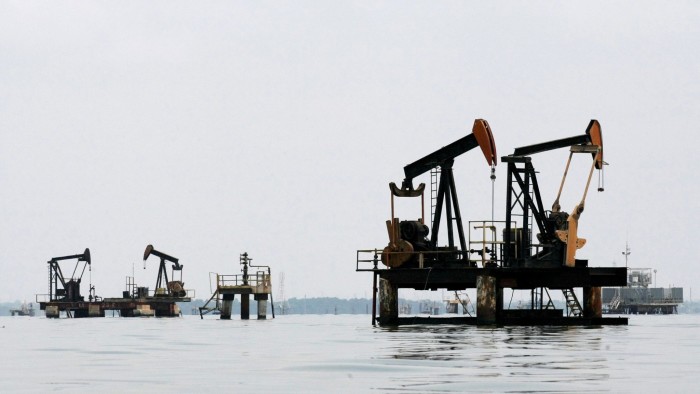
* The political economy of Venezuela’s oil industry is a story of immense potential undermined by political overreach, institutional decay, and economic mismanagement
* Oil empowered the state, but it also weakened the foundations of accountability and productivity. Today, Venezuela stands as a stark reminder that natural resource wealth, without strong institutions and disciplined policy, can entrench poverty rather than eliminate it
Opinion piece by Chief Economist Chifipa Mhango
Venezuela’s oil industry is one of the most striking illustrations of how politics can both create and destroy economic prosperity. Endowed with the world’s largest proven oil reserves, Venezuela should, in theory, be among the most prosperous energy economies globally.

Advertisement
Instead, it has become a case study in how political choices, institutional decay, and misaligned incentives can cripple a strategic sector and, by extension, an entire national economy.
At the heart of Venezuela’s political economy lies oil. For nearly a century, petroleum has shaped the country’s fiscal structure, foreign policy, social contract, and political power dynamics.
The state’s dominance over oil revenues transformed government into the primary allocator of wealth, embedding rent-seeking behavior deep within political and economic institutions.
Over time, this created an economy heavily dependent on oil rents rather than productivity, diversification, or innovation.
Oil as the foundation of political power
Since the nationalisation of the oil industry in 1976 and the creation of Petróleos de Venezuela S.A. (PDVSA), oil has functioned not merely as an economic commodity, but as a political instrument. Control over PDVSA translated directly into control over state finances.
Oil revenues funded public spending, subsidies, and social programs, allowing successive governments to maintain political support without expanding the tax base or strengthening accountability to citizens.
This rent-based political economy weakened institutional discipline. When governments rely on oil rents rather than taxation, the incentive to build efficient public institutions diminishes.
Accountability shifts from citizens to global oil markets. During periods of high oil prices, inefficiencies, corruption, and fiscal indiscipline are masked. When prices fall, structural weaknesses are brutally exposed.
The Chávez era: redistribution without sustainability
The election of Hugo Chávez in 1998 marked a decisive turning point in Venezuela’s oil politics. Chávez explicitly politicized the oil industry, redefining PDVSA from a commercially oriented national oil company into a direct vehicle for social and political objectives.
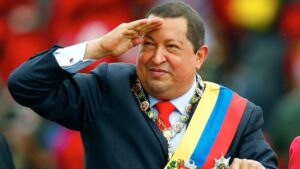
Hugo Chávez
Oil revenues were redirected to finance expansive social programs, known as misiones, aimed at reducing poverty and inequality.
While these programs initially delivered visible social gains, they were not anchored in long-term fiscal sustainability. PDVSA was increasingly required to fund social spending directly, bypassing the national budget and weakening corporate governance.
Investment in exploration, maintenance, and technological capacity declined. Skilled professionals left the company, often replaced by politically loyal but technically underqualified personnel.
In political economy terms, oil rents were transformed into tools of patronage. Loyalty was rewarded, dissent punished, and institutional autonomy eroded. The oil sector became less efficient, less transparent, and increasingly vulnerable to external shocks.
Sanctions, mismanagement and structural collapse
By the mid-2010s, Venezuela’s oil production was already in decline due to years of underinvestment and mismanagement. The imposition of international sanctions, particularly by the United States, accelerated this collapse.

President Nicolas Maduro and his wife Cilia Flores who were abducted by the US over drug charges
While sanctions did not create Venezuela’s oil crisis, they intensified existing structural weaknesses by restricting access to finance, technology, and export markets.
Production fell dramatically, from over 3 million barrels per day in the late 1990s to a fraction of that level. Refining capacity deteriorated, infrastructure decayed, and oil theft and smuggling proliferated.
The state’s near-total dependence on oil revenues meant that declining production translated directly into fiscal collapse, hyperinflation, and a severe contraction in living standards.
For resource-rich African countries, Venezuela offers critical lessons. Natural resource wealth must never substitute for institution-building, economic diversification, and fiscal discipline.
When governments rely excessively on mineral or oil rents rather than broad-based taxation, accountability erodes and political competition shifts toward control of rents rather than service delivery.

Advertisement
National resource companies must be commercially run, professionally managed, and insulated from partisan politics. Most importantly, resource revenues should be used to build productive capacity, industrialization, human capital and infrastructure, rather than finance consumption-led politics.
Africa’s resource endowment can be a development advantage only if governance precedes extraction, not the other way around. These dynamic underscores a core political economy lesson: when a single commodity dominates fiscal revenues, economic shocks quickly become political crises.
In Venezuela’s case, oil dependency magnified policy errors and left little room for adjustment.
Oil, sovereignty and geopolitics
Venezuela’s oil industry is also deeply embedded in global geopolitics. Oil has shaped the country’s alliances, from preferential supply arrangements in the Caribbean to strategic partnerships with China, Russia and Iran.
These relationships have provided short-term financial relief but often at the cost of long-term economic flexibility, including oil-backed loans that mortgage future production.
Geopolitically, oil has reinforced the government’s narrative of sovereignty and resistance to external pressure. Domestically, this framing has been used to justify centralisation of power and suppression of dissent.
Economically, however, it has constrained reform options, as meaningful recovery of the oil sector requires foreign investment, technology, and institutional credibility.
The institutional question
Ultimately, Venezuela’s oil crisis is not a geological problem; it is an institutional one. The country still possesses vast reserves, but reserves alone do not produce oil.
Effective production depends on stable property rights, transparent regulation, professional management, and policy predictability. Without these, even the largest reserves remain economically dormant.
The Venezuelan case highlights the dangers of politicizing state-owned enterprises beyond their economic mandate. When national oil companies are transformed into political instruments, efficiency declines, corruption rises, and long-term capacity erodes. Oil becomes a curse rather than a catalyst for development.

Advertisement
Lessons for resource-rich economies
Venezuela’s experience offers powerful lessons for other resource-rich developing countries. First, natural resources must be governed by strong, independent institutions insulated from short-term political pressures.
Second, oil revenues should support diversification, not substitute for it. Third, transparency and accountability are not optional, they are prerequisites for sustainability.
Most importantly, oil wealth cannot replace sound economic management. Political legitimacy built on redistribution alone is fragile when it is not supported by productive capacity. When oil prices fall or production declines, the social contract collapses.
Conclusion
The political economy of Venezuela’s oil industry is a story of immense potential undermined by political overreach, institutional decay, and economic mismanagement.
Oil empowered the state, but it also weakened the foundations of accountability and productivity. Today, Venezuela stands as a stark reminder that natural resource wealth, without strong institutions and disciplined policy, can entrench poverty rather than eliminate it.
For Venezuela to recover, reform of the oil sector must go hand in hand with broader political and institutional reform. Oil can once again be an engine of recovery, but only if it is removed from the center of political patronage and restored to a framework of transparency, professionalism, and long-term economic strategy.

* Chifipa Mhango is Chief Economist & Director of Economic Research and Strategy at Don Consultancy Group. He writes on political economy, macroeconomic policy, and development challenges in emerging and frontier economies