
* Present were political parties, independent candidates and the media to observe the test proceedings, supporting the Commission’s commitment to transparency and accountability
* Citizens must trust that their vote counts; political parties must trust that the system treats them equally and fairly
* Civil society and the media must trust that the process is open to scrutiny and accountable to the public
By Duncan Mlanjira
After yesterday’s dry test run of the September 16 general elections’ results management system through 73 constituency tally centres, Malawi Electoral Commission (MEC) assures the public that the exercise was successful — emphasising that “up to the close of the activity, no challenges had been recorded regarding the system”.

Advertisement
The exercise was executed in eight councils of Nkhata Bay, Dedza, Balaka, Neno, M’mbelwa (Mzimba), Lilongwe District, Chikwawa and Blantyre City, which served as a technical test to evaluate the efficiency and effectiveness of the system ahead of its full deployment for managing the September 16 general election.
MEC established the test district tally centres at council offices complemented by a national tally centre at Bingu International Convention Centre (BICC) in Lilongwe.
A report on MEC media platform on Facebook, indicates that present were political parties, independent candidates and the media to observe the test proceedings, “supporting the Commission’s commitment to transparency and accountability”.
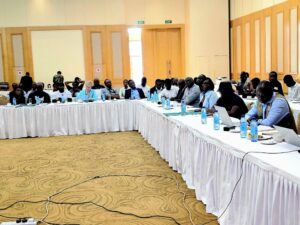


Leading the delegation at the national tally centre at BICC was Commissioner Dr Limbikani Kamlongera, who applauded the stakeholders’ presence, saying it was “not just a mark of courtesy, but a demonstration of the shared commitment we all have toward building a credible, transparent, and peaceful electoral process for Malawi”.
She emphasised that one fundamental principle that guides MEC is transparency, saying: “We are fully aware that elections are not just about voting and counting — they are about trust.
“Citizens must trust that their vote counts; political parties must trust that the system treats them equally and fairly; civil society and the media must trust that the process is open to scrutiny and accountable to the public.
“We do not want the results management system to be seen as something hidden in the background, accessible only to technical experts. Instead, we want you to see it, understand it, and interrogate it.
“By opening our doors in this way, we are saying clearly that we have nothing to hide, and everything to gain from transparency,” she said, while emphasising that the dry run was necessitated “because excellence demands preparation — we cannot wait for election day to test the system for the first time.
“We cannot take chances when the stakes are so high and the expectations of Malawians are so great. This dry test is about being double sure — we want to confirm that every component of the system is working as intended.
“We want to ensure that the human element – the staff who will operate the system – are confident and competent in their roles. We want to test the speed, accuracy, and reliability of transmitting results.
“And we want to identify potential challenges or hurdles early enough so that we can fix them long before polling day.”

Dr. Kamlongera
She assured that if during the dry run test MEC will encounter challenges, it was not a failure” — emphasising that it was precisely the point that the test was conducted since a “test is supposed to reveal weaknesses so that they can be corrected”.
She also made it clear that the exercise was a dry run — not the final demonstration as the demonstration proper will come later, once MEC has concluded internal and technical checks.
“We are aware that in the past, there have been concerns and rumors surrounding the transmission of results. Some have suggested that results could be tampered with, or that systems could be manipulated.
“Let me take this opportunity to say; we have built safeguards to address them. The system incorporates security features that protect data at every stage of transmission.
“Results will be encrypted. Access will be limited to authorised personnel only. Audit trails will be maintained so that every action can be traced and accounted for.

Advertisement
“But beyond the technology, we want to remind all Malawians that the most important safeguard is openness. That is why party monitors will be present at polling stations, constituency tally centers, and district tally centers.
“That is why civil society observers will be accredited to follow the process. That is why the media will be allowed to report. And that is why we are here with you today – to make sure nothing is hidden and everything is subject to scrutiny.
She applauded the political parties, the CSOs and the media as important stakeholders, saying: “We know that an election is not just the work of one institution
but the collective effort of an entire society. Together, let us ensure that the 2025 elections are not only successful but also a source of pride for every Malawian.”


Advertisement