

* He started his seven-decade jazz career as a teenager in the bebop age of virtuosic showmanship
* But his style evolved rapidly and his laid-back approach quickly became influential and commercial success
* Followed with his 1958 album ‘At the Pershing: But Not for Me’ — one of the best-selling instrumental records of its time
BBC News
Acclaimed jazz pianist, composer and band leader Ahmad Jamal has died aged 92, his wife has confirmed. The cause as prostate cancer, his daughter Sumayah Jamal told the New York Times.

Advertisement
Ahmad Jamal was a lifelong friend of jazz icon Miles Davis and influenced a generation of musicians. He was known for a sparse playing style — often placing silence between notes — and critics hailed his “less is more dynamics”.
Jamal, who called jazz “American classical music”, said during his life that he liked to honour what he described as the spaces in the music.
He started his seven-decade jazz career as a teenager in the bebop age of virtuosic showmanship — but his style evolved rapidly.
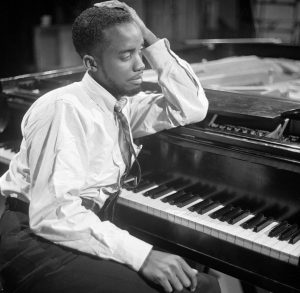
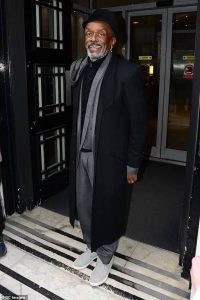
His laid-back approach quickly became influential and commercial success followed with his 1958 album ‘At the Pershing: But Not for Me’ — one of the best-selling instrumental records of its time.
In a piece written last year to mark the release of some of his unissued recordings, the magazine, The New Yorker wrote that in the 1950s, “his musical concept was one of the great innovations of the time, even if its spare, audacious originality was lost on many listeners”.
Jamal’s life long friend, the trumpeter Miles Davis, once said: “All my inspiration comes from Ahmad Jamal” and in his autobiography, Davis wrote that Jamal “knocked me out with his concept of space, his lightness of touch, his understatement, and the way he phrased notes and chords and passages”.
This was a sentiment echoed by Herbie Hancock and Keith Jarrett, among others. Even in later decades his influence was evident, with his piano riffs sampled by hip hop artists including Nas and De La Soul.


Advertisement
Jamal won countless awards over his career, including France’s Ordre des Arts and des Lettres in 2007 and a Grammy Lifetime Achievement Award in 2017.
“I’m still evolving, whenever I sit down at the piano,” Jamal said in an interview 2022 with the Times. “I still come up with some fresh ideas.”

Advertisement: Apply for a Civil Servant loan or top up and stand a chance to win MK1 million. For more info visit your nearest branch or call 0891001111
Born Frederick Russell Jones in Pittsburgh, Jamal converted to Islam in 1950. He began playing piano at the age of three, when his uncle Lawrence challenged him to duplicate what he was doing on the piano.
Jamal began formal piano training at the age of seven with Mary Cardwell Dawson, whom he described as having greatly influenced him.
His Pittsburgh roots remained an important part of his identity: “Pittsburgh meant everything to me and it still does,” he said in 2001 and it was there that he was immersed in the influence of jazz artists such Earl Hines, Billy Strayhorn, Mary Lou William and Erroll Garner.
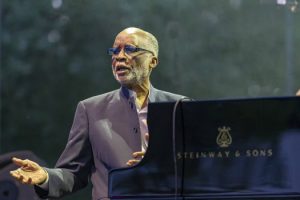
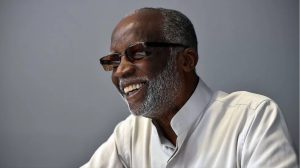
Jamal also studied with pianist James Miller and began playing piano professionally at the age of fourteen, at which point he was recognized as a “coming great” by the pianist Art Tatum.
When asked about his practice habits by a critic from The New York Times, Jamal commented: “I used to practice and practice with the door open, hoping someone would come by and discover me.
“I was never the practitioner in the sense of twelve hours a day, but I always thought about music. I think about music all the time.”
Jamal began touring with George Hudson’s Orchestra after graduating from George Westinghouse High School in 1948. He joined another touring group known as The Four Strings, which disbanded when violinist Joe Kennedy Jnr left.

Advertisement
In 1950 he moved to Chicago and performed intermittently with local musicians Von Freeman and Claude McLin and solo at the Palm Tavern, occasionally joined by drummer Ike Day.
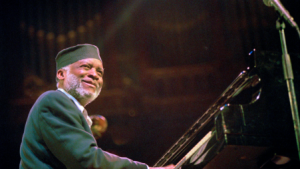
Born to Baptist, Jamal discovered Islam in his teens. While touring in Detroit, where there was a sizable Muslim community in the 1940s and 1950s, he became interested in Islam and Islamic culture.
He converted to Islam and changed his name to Ahmad Jamal in 1950. In an interview with The New York Times a few years later, he said his decision to change his name stemmed from a desire to “re-establish my original name.”
Shortly after his conversion to Islam, he explained to The New York Times that he “says Muslim prayers five times a day and arises in time to say his first prayers at 5 am. He says them in Arabic in keeping with the Muslim tradition.”—Additional information from Wikipedia

Advertisement