

* The so-called August 2026 report, which was supposed to be released around 10th October 2026, was only released on 16th November 2026
* Newspapers are quoting this outdated report of November 26, 2026 but the RBM has released the September 2026 report, which was due around 10th November 2026
By Duncan Mlanjira
Chifipa Mhango, the Chief Economist of South Africa’s Don Consultancy Group (DCG, has reiterated concerns he previously raised on the “worrying trend of delayed releases of key economic reports by the Reserve Bank of Malawi (RBM)”.

Chifipa Mhango
He observes that “the so-called August 2026 report, which was supposed to be released around 10th October 2026, was only released on 16th November 2026”.
“Now, as some of our local newspapers are quoting this outdated report, today, 26th November 2026, the RBM has released the September 2026 report, which was due around 10th November 2026.
“This latest report paints an even more concerning picture of Malawi’s economic landscape,” says Mhango, who highlights that RBM’s ‘latest report’ on our country’s monthly economic data “is very concerning”.

Advertisement
1- Foreign Exchange Reserves
Foreign exchange reserves stand at US$567.1 million, equivalent to 2.3 months of import cover, down from 2.4 months in August 2026, reflecting a deteriorating position.
In real time, our import cover is actually 1.7 months. This is a very concerning position, particularly in supporting imports of fuel, fertiliser, medicines and key productive machinery.
2- Government Fiscal Deficit and Expenditure
The Government deficit has deteriorated to K178.2 billion, from K130.9 billion in the August data. Our recurrent expenditure as a percentage of total expenditure stood at 85% in September 2026.
Total expenditure reached K715.2 billion, significantly higher than the K682 billion recorded in August 2026.
Our revenue base remains insufficient to support such high expenditure and is highly vulnerable, with total revenue declining to K494.6 billion in September 2026 from K501.7 billion in August 2026.
Such growing expenditure does not reflect a country operating under austerity measures.
3- Trade Balance
The trade balance worsened to a deficit of US$231.2 million, from US$197.3 million in August 2026. This was attributed to a 30.7% decline in exports to US$106.2 million.
This is a clear indication that growing our foreign exchange reserves remains a steep mountain to climb.
4- Government indebtedness to the banking system
Government indebtedness to the banking system increased by K233.1 billion to K9.4 trillion in September 2026.
Our parastatals are serious parasites on our fiscal position, with borrowing amounting to K219.7 billion in September 2026 alone. This clearly reflects the inefficiencies within our parastatals in delivering the services expected of them.
Lending by our banking system to the private sector continues to decline, recording 21.7% year-on-year growth in September 2026.
Once again, our productive sectors of the economy are losing out, with declining support for manufacturing, mining and agricultural activities, thereby limiting economic growth.
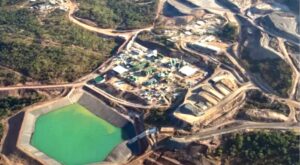
Uranium mining at Kayelekera in Karonga
To add to the latest data, Mhango highlights an issue that he raised previously he described as ‘Other Expenditure’: “If you translate this into any vernacular language, it sounds exactly as it is, and it says a lot.
“In September 2026, based on data from the RBM, we note an increase of K30 billion in ‘Other Expenditure’ — reaching K65.4 billion, up from K35.7 billion in August 2026.
“We need to scrutinise these ‘Other Expenditures’. This expenditure is now closing in on 62% of our total development expenditure. Our development expenditure stood at K104.7 billion in September 2026.”
Mhango also highlights that the country’s interest payments “now stand at K1.98 trillion for the first nine months to September 2026 — representing a monthly average of K219.8 billion”.
“This is severely limiting our ability to spend towards achieving our development goals.
“Unless we pull up our brains and get our economic priorities moving in the right direction, this picture — based on the latest September 2026 data released today by the Reserve Bank of Malawi, is very concerning.”

Advertisement