
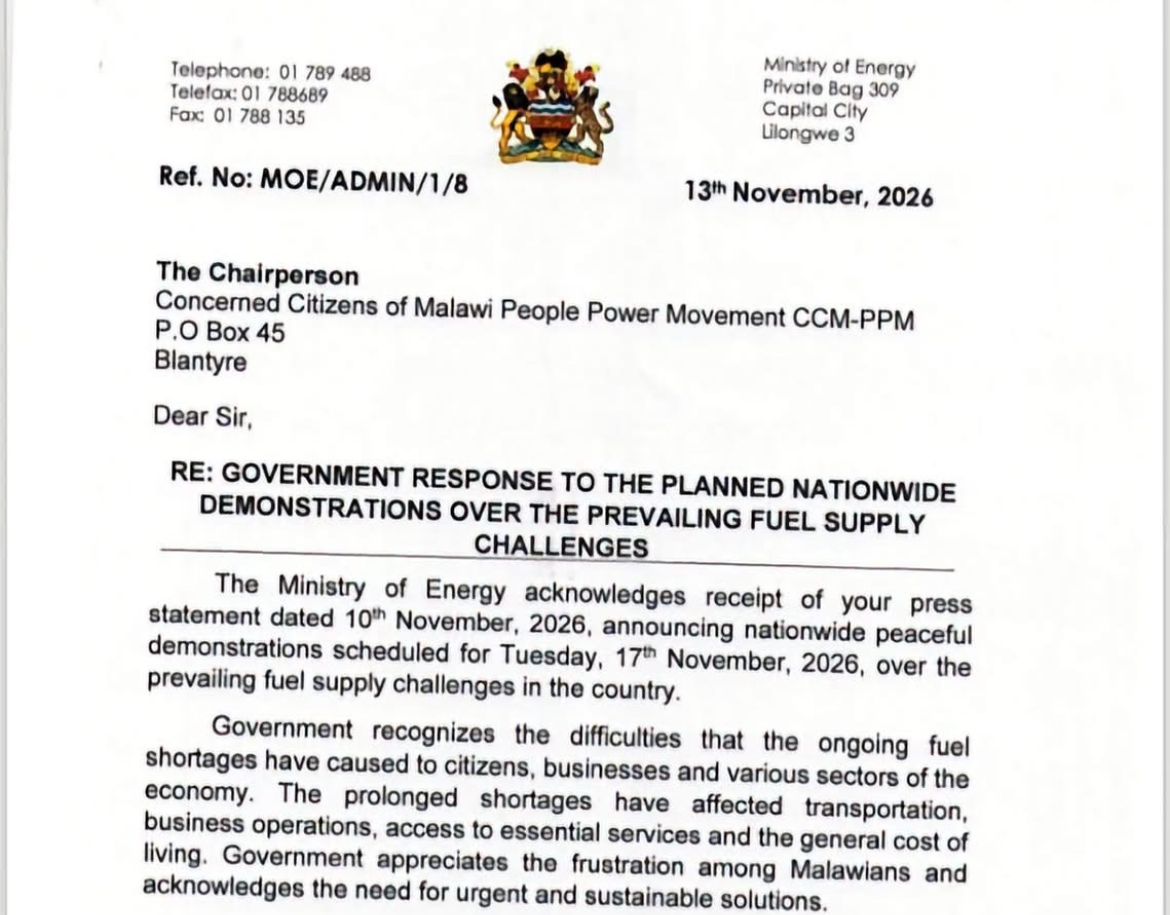

Energy Ministry Secretary Elvis Thodi
* Government owns up that the scarcity is due to a combination of financial, foreign exchange and logistical constraints
* This is in response to try and dissuade Concerned Citizens of Malawi People Power Movement from their planned nationwide demonstrations on Tuesday, October 17 over the fuel crisis
By Duncan Mlanjira
Malawians should brace for continued fuel crisis as the Government has owned up that the scarcity is not due to logistics of transportation from suppliers but it’s a combination of financial and foreign exchange constraints.
In a letter to try and dissuade Concerned Citizens of Malawi People Power Movement from their planned nationwide demonstrations on Tuesday, October 17 over the fuel crisis, Energy Ministry’s Secretary, Elvis Thodi does not indicate if the situation has been resolved.

Members of the Concerned Citizens of Malawi People Power Movement
“Government recognises the difficulties that the ongoing fuel shortages have caused to the citizens, businesses and various sectors of the economy,” writes Thodi to the concerned citizens, who announced their intention to demonstrate on Tuesday, November 10.
Thodi takes cognizance that “the prolonged shortages have affected transportation, business operations, access to essential services and the general cost of living”.
“Government appreciates the frustration among Malawians and acknowledges the need for urgent and sustainable solutions.
“However, it is important to clarify that the prevailing situation is not a result of government inaction. The Ministry of Energy, through its institutions and in collaboration with other relevant government agencies and industry stakeholders, has been implementing several interventions to address the immediate shortages while working towards restoring normal and sustainable fuel supply.”

Advertisement
The Secretary thus further explains that the current supply challenges “are largely attributable to the combination of financial, foreign exchange and logistical constraints affecting the country’s capacity to consistently import petroleum products”.
“These include inadequate availability of foreign currency to enable importers, particularly the National Oil Company of Malawi (NOCMA) and Petroleum Importers Limited (PIL), to meet their financial obligations to international suppliers; challenges in accessing fuel financing through Letters of Credit; outstanding obligations to international suppliers; logistical bottlenecks along regional transportation corridors; and the depletion of the country’s Strategic Fuel Reserves.”
Thodi further highlights that in response to the situation, the government “has instituted several emergency interventions aimed at improving fuel availability, strengthening distribution and protecting consumers”.
“Through the Malawi Energy Regulatory Authority (MERA), Government has operationalised the Operations Management Grouo under the National Liquid Fuels and Gas Emergency Plan.
“The group engages fuel importers and oil marketing companies on a daily basis to monitor fuel imports, available stocks supply projections and distribution across the country.”

NOCMA’s fuel reserve at Matindi in Blantyre District
It is also prioritising essential services such as health facilities and security institutions with NOCMA continuing to engage international suppliers, financial institutions and transporters to secure additional petroleum products and facilitate their timely delivery into the country.
The letter further says beyond the immediate interventions, the government is pursuing additional measures to address the underlying challenges and promises to restore normal fuel supply, while expressing its resolve to address the underlying constraints, strengthen fuel supply management and restore reliable availability of petroleum products.
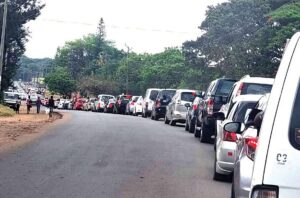
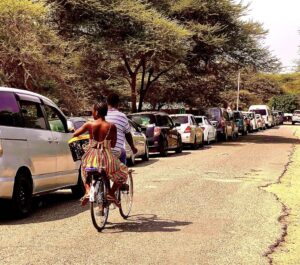
Abnormal long queues that are order of the day
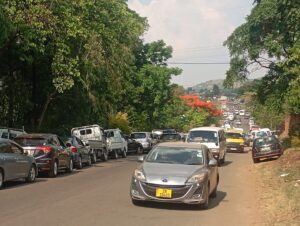
Commentators observed that Thodi’s letter leaves out what Malawians are expecting — a solid solution.
“Having admitted that the treasury is out of forex, suppliers are unpaid, and strategic reserves are empty, the Secretary offers no timeline for when normal fuel supply will return, pointing only to an ‘Operations Management Group’ under MERA to monitor daily stocks — a bureaucratic language for managing a collapse the government cannot fix,” opines Tiyeni Malawians, a social media platform.
“By contradicting the President’s assurances and putting its financial helplessness on official record just days before citizens take to the streets, Elvis Thodi’s letter lays bare the harsh reality behind the dry pumps: the administration has run out of answers, and Malawians should brace for the queues to stay.
The fuel crisis has led to a thriving black market, visiting Canada-based economist, Dr. James Kadyampakeni described as “a symptom of a system-that-has-failed-so-badly”.
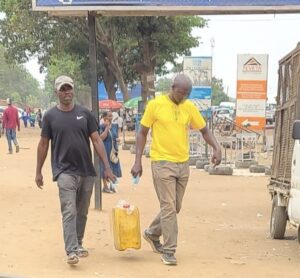
Thriving black market fuel
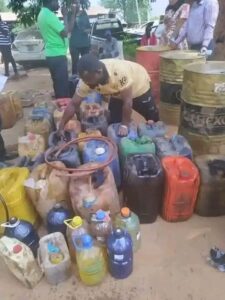
Desperate, Kadyampakeni was forced to buy 5 liters of fuel from the black market at K80,000, which is K16,000 per litre.
He observed that this fuel is “being sold by people who are profiting from a crisis they did not create but are more than happy to exploit”.
“The queue is not just a queue — it is a daily humiliation. It is a place where people lose sleep, lose money, lose business, and lose dignity, only to be told the fuel has run out after spending hours.”

Dr. James Kadyampakeni
Writing on his Facebook page, Mac Sayeed reflected how interconnected the economy is having observed how the fuel scarcity is affecting even the fishing communities.
“Some boats are failing to go out fishing because of limited fuel supplies,” he wrote. “As a result, people are struggling to find fish, and our zitandala are almost empty.”
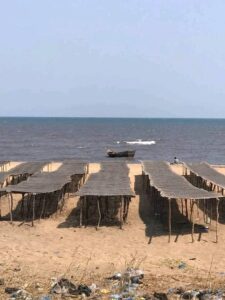
“Sometimes we look at fuel scarcity as simply a problem for motorists, transport operators and those queuing at filling stations — but its impact goes far beyond that.
“Think about the fisherman at Makawa, Nthundu, Mtanga, Chisumbi, Chapola, Msaka, Tifelankhani, Mambaiye, Chipala, Namiyasi, Kasankha, Madothi, Zambo, Mvunguti, etc, who cannot go out because he has no fuel.
“Think about the fish seller whose business depends on that daily catch. Think about the household that relies on fish as an affordable source of food — one disruption can affect an entire chain of livelihoods.
“Fuel is not just about vehicles. It keeps businesses moving, boats fishing, goods circulating and small-scale economic activities alive.
“What we need now is a practical and coordinated solution that addresses the shortage and restores normal economic activity. We must look beyond the filling stations and understand the wider impact on ordinary people.
“Because behind every empty chitandala is a fisherman who has lost a day’s income, a trader whose business has stalled, and a household struggling to put food on the table.
“Sometimes, the biggest economic challenges are not felt in boardrooms or government offices — they are felt in our homes, at our markets and along our lakeshore communities.
“Everything depends on something. When one critical link is disrupted, the whole chain feels the pressure. Let’s focus on finding solutions before the ripple effects become an even bigger burden on ordinary Malawians,” emphasised Sayeed.

Advertisement