

* Malawi views carbon trading not merely as a mechanism for generating and selling carbon credits, but as a means of generating additional climate finance
* To support national climate and sustainable development priorities, including the NDC and National Adaptation Plan
By Tikondane Vega, Ministry of Natural Resources PRO
At the United Nations Climate Change Conference (COP 31, taking place in Antalya, Turkey, where she launched Malawi’s Parliamentary Action on Carbon Markets Minister of Natural Resources, Patricia Wiskes emphasised that the recognises carbon markets, especially under Article 6 of the Paris Agreement, as vital for mobilising climate finance and accelerating its Nationally Determined Contributions (NDCs).

Advertisement
Wiskes said Malawi views carbon trading not merely as a mechanism for generating and selling carbon credits, but as a means of generating additional climate finance to support national climate and sustainable development priorities, including the NDC and National Adaptation Plan.
She highlighted that the Ministry of Natural Resources has made considerable progress in establishing policy and institutional foundations for carbon markets, including the 2016 National Climate Change Policy — the latest greenhouse gas inventory in 2025 and the National Carbon Market Framework.
She thus invited project developers, carbon credit buyers and investors to explore opportunities within Malawi’s emerging carbon market ecosystem.


The Minister is accompanied by chairperson of Parliamentary Committee on Natural Resources, Tiaone Hendry, who described parliamentary action on carbon markets, Article 6, and climate finance as vital because lawmakers hold the constitutional authority to translate international climate pledges into binding national law, approve budgets and enforce transparency.
She said the initiative aims to bridge the gap where carbon markets are typically managed solely by environment ministries, without engaging national parliaments through their law-making, budget-allocating and convening powers.
Meanwhile, executive secretary of the United Nations Framework Convention on Climate Change (UNFCCC) Simon Stiell urged negotiators at the COP31 conference to move swiftly towards a deal and “avoid tactical delays” as the summit heads into its second and final week.
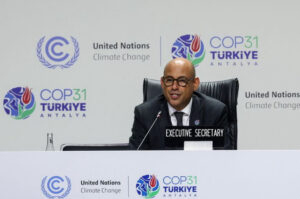
Simon Stiell
A report by US News says the annual UN climate conference faces new challenges this year as a slew of crises from war to inflation push global warming down the list of priorities for world governments.
“Each country has a view,” Stiell is reported telling the summit. ”Every country has a voice. Getting agreement on every word, every sentence is tough but vital work.
“There is no collective success without compromise from every party. As we head into the second week, I urge parties to move swiftly to the hardest issues and to avoid tactical delays.”
The report further highlights that big fossil fuel producers and consumers at the talks are resisting any deal that would specify firm new targets or a shift away from oil, gas and coal, observers said, posing a challenge for summit host Turkey and lead negotiator Australia to land the kind of ambitious agreement climate advocates say is needed to address global warming.
“A UN report last month found the world is already on course to exceed the 1.5 degrees Celsius (2.7 degrees Fahrenheit) warming threshold, a limit scientists say should prevent the worst effects of climate change.
“Major oil producers such as Saudi Arabia and Russia have traditionally resisted language constraining fossil fuels, while large developing economies such as India have opposed measures they say could limit their development and energy choices, a dynamic that has compromised the outcomes of past deals.
“The world’s biggest oil consumer, the United States, meanwhile, has skipped the talks for the second year in a row under President Donald Trump, who has called global warming a hoax and promoted continued use of fossil fuels,” says the report.—Editing and additional reporting by Duncan Mlanjira; Maravi Express

Advertisement