
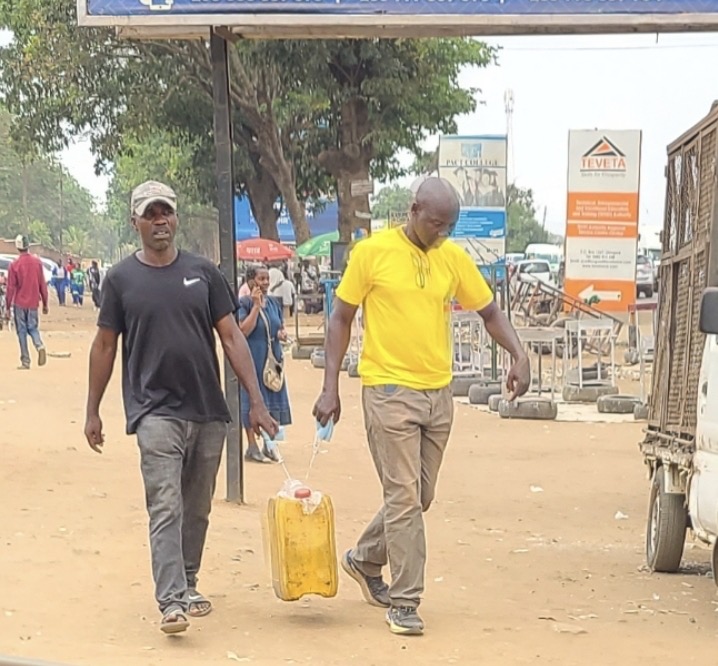
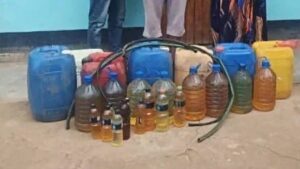
* Dangerous fuel is now sold openly, at extortionate prices, to people who have no alternative
* The mixing of fuel with paraffin is not a rumour — it is a risk people are taking because the formal system has collapsed around them
Dr James Kadyampakeni — the Canada-based Malawian economist and accountable governance advocate, who regularly comments on Malawi’s economy, governance, and politics — recently returned home on both tour of duty and a vacation.
Having experienced economic challenges the country is facing, compounded by the fierce queues for fuel at service stations, he thus writes of his experiences as follows:
I knew Malawi’s fuel crisis was bad, but what I am witnessing is far worse than I ever imagined.
Around 20h00, I paid someone to join the fuel queue on my behalf because I could not afford to spend the entire night there. He started at number 162 on the queue. By 06h15 the following morning, after spending more than 10 hours in that queue, he had moved to number 7 — only to be told that the fuel had run out.
Let that sink in. Ten hours of waiting, only to go home empty-handed.
But what broke my heart even more was meeting two young women from Brandon, Manitoba in Canada, who are visiting Malawi. They were almost in tears over what they were going through.
I kept asking myself: When they return to Canada, what will they tell their friends about Malawi?

Advertisement
Like many others, I and the two young Canadian ladies eventually had no choice but to turn to the black market. I paid K80,000 for just five litres of fuel. That is K16,000 per litre.
K16,000! for fuel that may not even be safe; for fuel that can wreck an engine; and for fuel being sold by people who are profiting from a crisis they did not create but are more than happy to exploit.
The queue is not just a queue — it is a daily humiliation. It is a place where people lose sleep, lose money, lose business, and lose dignity, only to be told the fuel has run out after spending hours.
Imagine that!
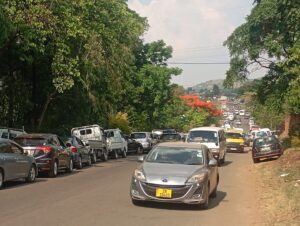
The black market is not just a side effect. It is a symptom of a system that has failed so badly that dangerous fuel is now sold openly, at extortionate prices, to people who have no alternative.
The mixing of fuel with paraffin is not a rumour — it is a risk people are taking because the formal system has collapsed around them.
My rented vehicle almost caught fire. I am not exactly sure as to why, but it is possible bad fuel could have been the cause. My experience should be a warning loud enough for everyone to hear. But in this crisis, warnings are ignored, prices keep rising, and the desperate keep paying.
This is not a functioning economy — it is an economy where scarcity creates opportunities for exploitation, where ordinary citizens are punished for leadership failures, and where those with access to fuel can profit from the desperation of everyone else.
I am angry — I have every right to be. And this must be called out loudly, clearly, and without apology.
I am angry because this is not just incompetence. This is cruelty. It is cruelty to the person who spends 10 hours in a queue and goes home with nothing. It is cruelty to the small business owner watching transport costs eat into already thin margins.
It is cruelty to the family whose livelihood depends on a vehicle that may be destroyed by contaminated fuel. It is cruelty to everyone who is forced to choose between paying K16,000 per litre on the black market or being stranded.
It is cruelty to tourists who are visiting Malawi because of great stories we have told them about our country and it is cruelty that this is happening openly, while those with the power to act offer no transparent solid economic plan other than the band-aid approach being offered at the moment.