
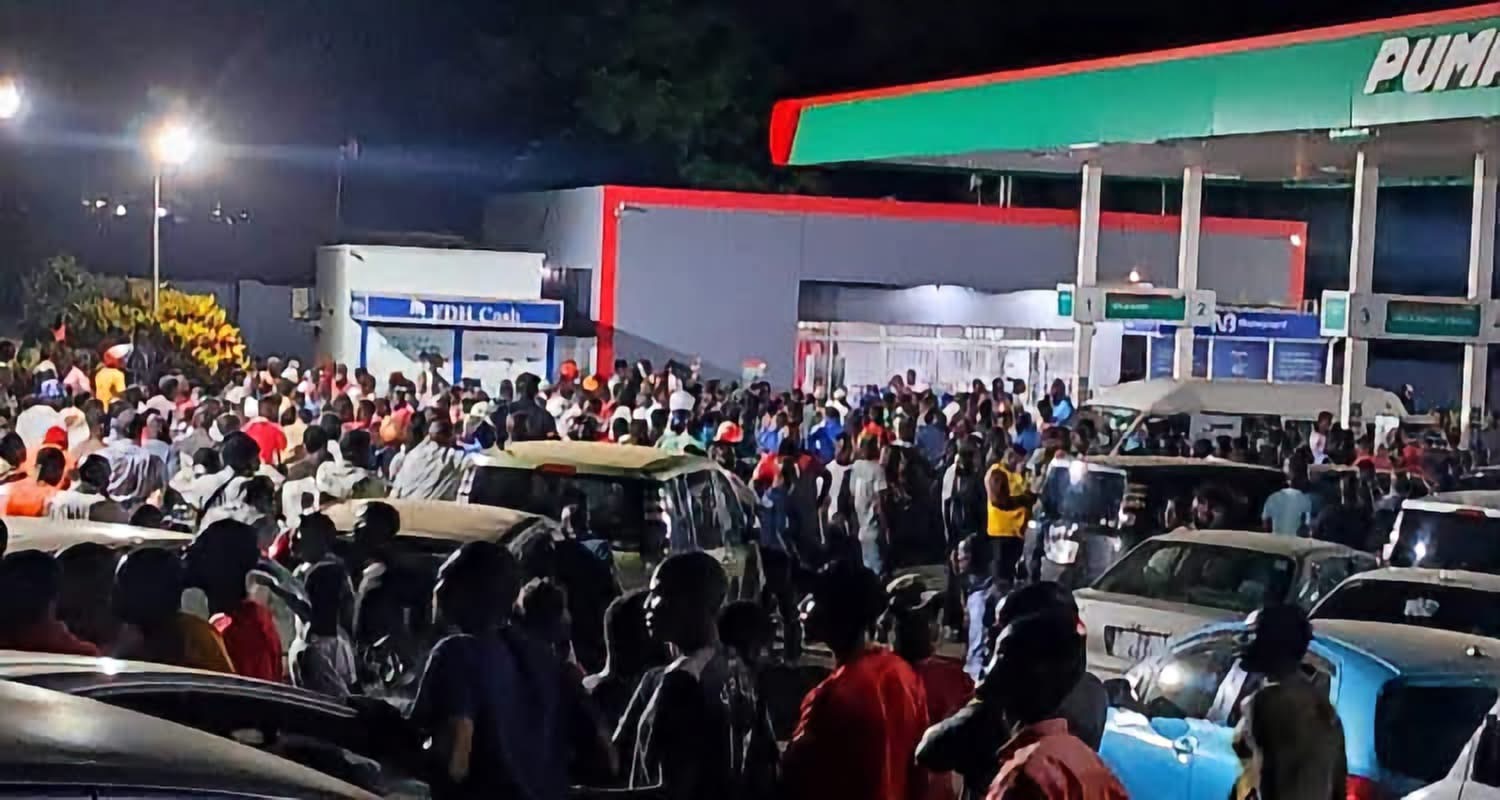
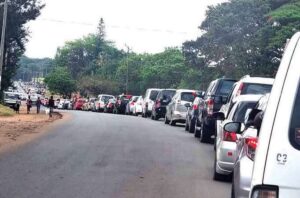
* The fuel crisis is not just an inconvenience for motorists queuing for hours — it is a national strangulation
* Fuel is the lifeblood of any economy. When it vanishes, so does everything else
* Transport grinds to a halt, businesses choke, agricultural costs skyrocket, supply chains collapse, and the cost of living soars
* Every day without fuel is a day of lost economic activity, lost income, and lost hope.
Dr James Kadyampakeni — the Canada-based Malawian economist and accountable governance advocate, who regularly comments on Malawi’s economy, governance, and politics — recently returned home on both tour of duty and a vacation.

Advertisement
Having experienced economic challenges the country is facing, compounded by the fierce queues for fuel at service stations, he thus writes of his experiences as follows:
There is something deeply disturbing about returning to your homeland after years away, only to find a country on life support.
The Malawi I left is not the Malawi I had hoped to come back to. What I am witnessing is heartbreaking, and my recent trip to the Lake has exposed only a small part of a much bigger, man-made disaster.
Let us be brutally honest and call it what it is. Malawi’s economy is on its knees, and ordinary Malawians are paying for a catastrophic failure of leadership, economic illiteracy, greed, and a brazen lack of accountability. This is not a natural disaster — it is a governance crisis.
The fuel crisis is not just an inconvenience for motorists queuing for hours — it is a national strangulation.
Fuel is the lifeblood of any economy. When it vanishes, so does everything else. Transport grinds to a halt, businesses choke, agricultural costs skyrocket, supply chains collapse, and the cost of living soars.
Every day without fuel is a day of lost economic activity, lost income, and lost hope.
My trip to the Lake was particularly revealing. Tourism, one of our few potential foreign exchange earners, is being brought to a standstill by sheer incompetence.

Kadyampakeni at the lake chatting with tourism industry players
I heard stories of tourists stranded because operators cannot access fuel. I was talking to a boat operator — who invested his savings in a vessel, created jobs, and depends on tourism to feed his family and could not take me on Namarinje island tour — is being forced out of business by a failure in the country’s fuel supply system.
Think about that. A man is being bankrupted not by market forces, but by the state’s inability to perform its most basic function.
What message are we sending to the world? Tourists don’t just spend money at hotels; they support transport operators, guides, restaurants, fishermen, and entire communities.
Every stranded tourist becomes a scathing online review. Every cancelled excursion is lost foreign exchange. And every negative experience damages a tourism brand that takes years to build but a moment of spectacular mismanagement to destroy.
These stories travel through international networks, social media, and word of mouth. The reputational damage is incalculable.
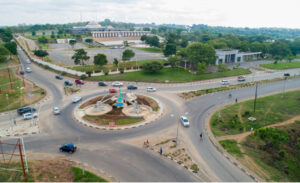
Lilongwe, the Capital City
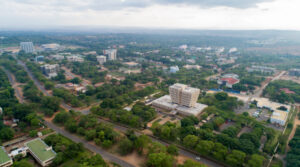
Then there is Lilongwe. Our capital city, which should be buzzing with commercial activity and nightlife, increasingly feels like a ghost town after dark.
A capital city should inspire confidence. What we have instead is a disturbing picture of economic paralysis, a city too afraid and too broke to function.
And this is happening in a country blessed with fertile soils, a magnificent lake, hardworking people, and enormous tourism potential. How did we get here?
We cannot continue treating every economic crisis as an isolated inconvenience. Fuel shortages, foreign exchange scarcity, inflation, and business closures are interconnected symptoms of a deeper rot.
They point to a fundamental breakdown in macroeconomic management, foreign exchange administration, energy security, and public-sector accountability.
Leadership cannot keep offering hollow explanations while the productive economy bleeds out. Where is the credible economic recovery programme? Where is the strategy to restore fuel supply and rebuild foreign exchange reserves?
Where is the urgency to restore investor confidence and protect the businesses that employ Malawians? We need more than press statements, political rhetoric, and tired promises from officials who seem to live on another planet.
We need measurable action, transparent procurement, and competent economic management.
And let us not forget the human cost. Behind every closed business is a family struggling to survive. Behind every stranded tourist is a business losing revenue. Behind every empty fuel pump is an economic transaction that may never happen. Behind every struggling household is a parent wondering how to put food on the table.
Advertisement
Malawians deserve better than this. They deserve leaders who understand that a country cannot spend its way out of a crisis while failing to produce, export, attract investment, and earn foreign exchange.
I have spent years observing how functioning economies manage institutions, markets, and public resources. No country is immune to economic shocks, but the difference lies in the quality of institutions, policy choices, and the willingness of those in authority to accept responsibility.
Here, we have none of the above.
Malawi needs an urgent economic reset. We need to restore confidence in our institutions, address the distortions in the foreign exchange market, ensure a reliable fuel supply, and create an environment where businesses can operate without being held hostage by policy failures.
Most importantly, public office must once again become a responsibility to serve, not a license to loot.
I returned home hoping to see progress. Instead, my journey to the Lake has given me a painful glimpse of a country whose immense potential is being deliberately undermined by failures that ordinary citizens have no power to correct.
I refuse to believe that Malawi is destined to remain poor. But potential without competent leadership, sound economic policies, and accountability is nothing more than a cruel, wasted opportunity.
Malawi is not short of opportunities. Malawians are not short of talent or hard work. What we desperately lack is leadership that understands the economy, respects public resources, and recognises that governing is about improving people’s lives, not enriching one’s inner circle.
The question is no longer whether Malawi has economic potential. The question is how much longer Malawians must endure the consequences of leadership failures before meaningful action is taken.
A nation cannot survive on promises. It must be governed. Every betrayal of public trust must be answered for. All those governing unconstitutionary may dodge accountability today, but they cannot dodge it forever.
Sooner or later, Malawians will demand answers and they will have every right to.
As I write, the pain of a struggling economy is being felt in every corner of Malawi.

Dr. James Kadyampakeni