
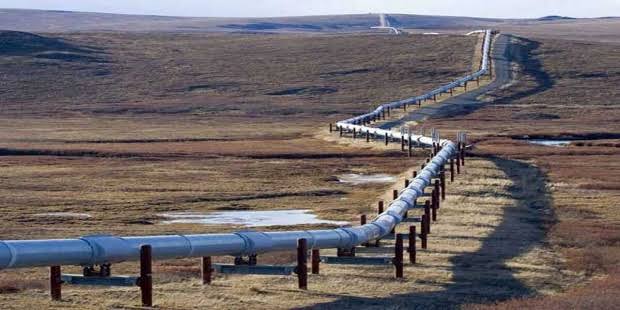
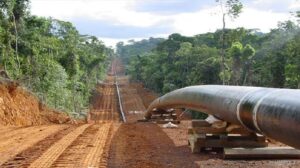
The Beira-Feruka pipeline that is being expanded that forms part of Nacala Corridor
* Discussions centred on expanding fuel transportation capacity, diversifying supply routes and strengthening the Beira Corridor’s role in supporting regional economic growth
* Ongoing expansion of the Beira-Feruka pipeline is expected to increase its annual transportation capacity from three million to five million cubic metres by December 2027
By Winston Mwale, Africa Brief in Livingstone, Zambia
Southern African countries have been urged to strengthen regional cooperation and invest in coordinated fuel infrastructure as growing petroleum demand places increasing pressure on supply networks serving Malawi, Zambia, Zimbabwe, Botswana and the Democratic Republic of Congo (DRC).
The call emerged from the 2026 Beira Corridor Forum, convened by Companhia do Pipeline Moçambique-Zimbabwe (CPMZ) in Livingstone, Zambia on October 27 — bringing together government representatives, regulators, investors, financial institutions and energy industry leaders.
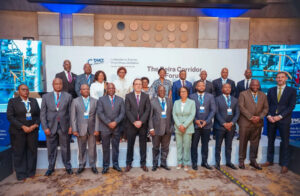
The participants at the Companhia do Pipeline Moçambique-Zimbabwe Forum
According to a statement issued Friday, the discussions centred on expanding fuel transportation capacity, diversifying supply routes and strengthening the Beira Corridor’s role in supporting regional economic growth.
A major development highlighted at the forum was CPMZ’s ongoing expansion of the Beira-Feruka pipeline, which is expected to increase its annual transportation capacity from three million to five million cubic metres by December 2027.
The project includes the construction of two additional pumping stations and is intended to accommodate rising demand for petroleum products across Southern Africa.
CPMZ Board member and Managing Director, Patrick Dias da Cunha said partnerships with the governments of Mozambique and Zimbabwe had been instrumental in advancing the corridor’s development.
“Our strong partnerships with the governments of Mozambique and Zimbabwe have been fundamental to CPMZ’s success and our shared vision of developing the Beira Corridor into an integrated regional energy supply route,” he said.
Dias da Cunha added that the company aims to position Harare as a regional fuel distribution hub serving neighbouring markets, including Zambia, Malawi, Botswana and the DRC.
He emphasised that infrastructure investment must translate into tangible economic benefits for communities and businesses that depend on reliable fuel supplies.

Advertisement
Regional fuel demand projected to rise 35%
Presenting a market outlook at the forum, S&P Global Energy vice-president Daniel Evans projected that fuel demand within the Beira Supply Zone would increase by approximately 35% over the next decade.
The projected growth represents an additional four million cubic metres of fuel demand, with further increases anticipated beyond that period.
Evans said Africa remains the only region where S&P Global Energy projects sustained fuel demand growth over the coming decades across all its scenarios.
The projections underscore the importance of long-term infrastructure planning, diversified supply routes and investment in regional energy logistics.
Zambia calls for coordinated infrastructure investment
Zambia’s Ministry of Energy Permanent Secretary, Prof. Ephraim Kabunda Munshifwa, said dependable fuel supplies were essential to the country’s mining, agriculture, manufacturing and transport sectors.
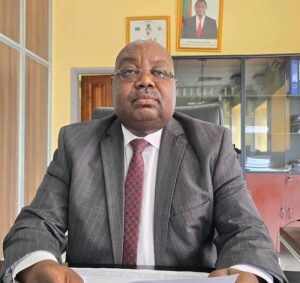
Prof. Ephraim Kabunda Munshifwa
He welcomed the pipeline expansion but cautioned that increased transportation capacity alone would not guarantee improved energy security.
“As a land-linked country, Zambia depends on efficient and diversified connections to regional seaports. A stronger Beira Corridor can widen our fuel supply options, improve reliability and support the competitiveness of our industries,” Munshifwa said.
He called for complementary investment in fuel storage, transport infrastructure and efficient border procedures to ensure the benefits reach businesses and communities.
Munshifwa also urged closer cooperation among Zambia, Mozambique and Zimbabwe, supported by transparent regulation and commercially sustainable investment.
Turning infrastructure into economic opportunity
Delivering the keynote address, Africa Finance Corporation representative Osam Iyahen said the corridor’s long-term success should be measured not only by increased fuel transportation capacity but also by the economic opportunities it generates.
“The future of Africa’s economic corridors will depend as much on the partnerships connecting our infrastructure as on the infrastructure itself,” Iyahen said.
He advocated stronger cross-border coordination, integrated infrastructure planning, engagement with major industrial customers and investment in complementary logistics and industrial facilities.
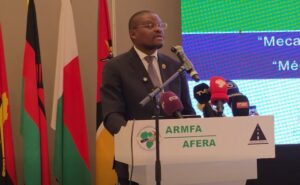
Mozambique’s Secretary of State, Eng. Chinguane Mabote
Mozambique’s Secretary of State at the Ministry of Transport & Logistics, Eng. Chinguane Mabote, similarly urged participating countries and institutions to translate the forum’s recommendations into concrete commitments.
“The value of this meeting will be measured not only by the quality of the discussions, but by our ability to follow through on the opportunities identified and the recommendations made,” Mabote said.
He stressed that pipeline expansion must be accompanied by improvements in port infrastructure, fuel storage and distribution capacity, supported by public-private partnerships.
According to Mabote, reducing logistics costs, shortening waiting times and improving service reliability will be critical to making the Beira Corridor more competitive.
For Malawi and other inland markets, the proposed improvements could strengthen access to an additional regional fuel supply route, although their practical benefits will depend on coordinated investment beyond the pipeline itself.
The forum concluded with a commitment to advancing regional partnerships and developing the Beira Corridor into a more competitive and reliable fuel supply network for Southern Africa.

Advertisement