
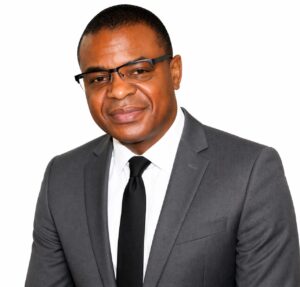
Chifipa Mhango
* Mining has enormous potential to transform our economy, but without the appropriate governance structures, transparency and national economic interests at the centre of policy, we risk becoming a country rich in mineral resources but poor in economic benefits
By Duncan Mlanjira
Chief Economist, Chifipa Mhango, contends that “the time has come for Malawi to undertake a comprehensive overhaul of its mining sector’s institutional, regulatory, operational and financing environment”.

Advertisement
Mhango, who regularly comments on the country’s economic governance, highlights that “mining has enormous potential to transform our economy, but without the appropriate governance structures, transparency and national economic interests at the centre of policy, we risk becoming a country rich in mineral resources but poor in economic benefits”.
“Of particular concern are serious allegations of potential conflicts of interest involving individuals who previously held Government positions overseeing the mining industry and subsequently assumed roles within foreign mining entities operating in the same sector or as consultants.
“While such career transitions are not necessarily improper, they raise legitimate questions about regulatory independence, confidentiality, accountability and the protection of Malawi’s national interests.
“These concerns warrant independent investigation, stronger disclosure requirements and appropriate post-public-service conflict-of-interest safeguards.
“We must strengthen institutions rather than prejudge individuals,” says Mhango, who proposes that Malawi can consider the South African mining institutional model as an important reference point for reform.
“South Africa has developed an ecosystem involving Government regulators, the Minerals Council South Africa, mining companies, financial institutions and specialised technical agencies.

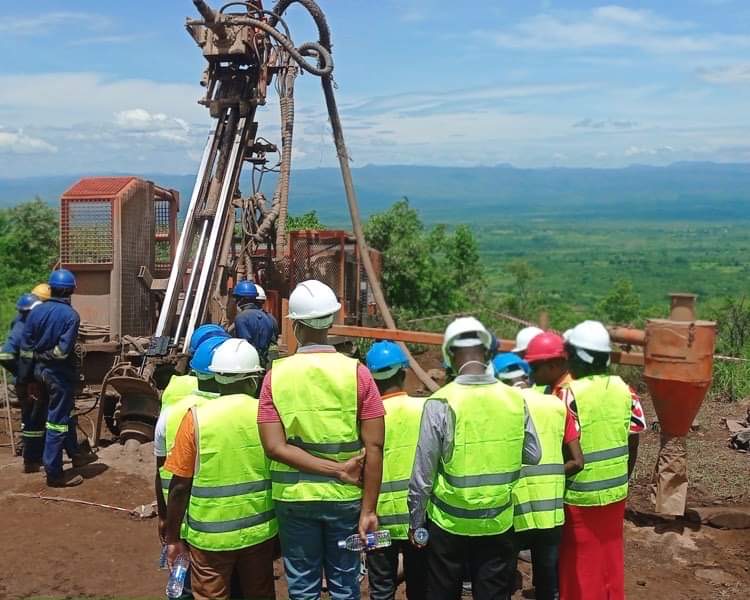
Unregulated mining activities captured last year
“Malawi should consider establishing a credible Malawi Minerals Council, representing responsible mining operators and promoting industry standards, investment, transparency and structured engagement with Government.
“Importantly, such a council would complement, rather than replace, an independent and adequately resourced mining regulator.”
Last week, the Minstry of Mining reported that Malawi Mining Investment Company (MAMICO) has identified more than 100 gold mining sites across 26 districts to provide miners with another formal market to help Malawi retain more value from its mineral resources.
However, Mhango contends that there is a need reconsider the “excessive reliance on informal and artisanal mining as a development pathway”.
“Artisanal mining has a legitimate role when properly formalised and regulated, but it cannot become the foundation of a modern national mining strategy.
“Unregulated operations expose the country to mineral smuggling, environmental degradation, unsafe working conditions, revenue leakages and potentially organised criminal networks.

“Equally concerning is the limited capacity to independently monitor production, mineral grades, export volumes, sales values and profitability among large foreign mining operators.
“Malawi must strengthen its geological, statistical, customs and revenue institutions to ensure that mineral production and sales are independently verified.
“We cannot effectively tax what we cannot accurately measure. Monthly mining production and sales statistics, supported by independent mineral valuation, transfer-pricing oversight and coordinated tax audits, should become standard practice.
“Mining financing also requires fundamental attention,” says the Chief Economist, who is Executive Director-Economic Research & Strategy at South Africa’s Don Consultancy Group (DCG).
And drawing from his experience of almost 10 years working at South Africa’s Industrial Development Corporation (IDC), Mhango believes that Malawi “can learn important lessons from development finance models that link investment funding to industrial development outcomes”.
“The IDC approach demonstrates how development finance can support commercially viable projects while promoting domestic value addition, local participation, industrial linkages and employment creation.
“Malawi should examine financing arrangements involving development finance institutions, strategic equity participation, private-sector co-investment and carefully structured partnerships with international mining investors.
“The objective should not simply be to attract foreign capital, but to negotiate financing and ownership structures that retain meaningful economic benefits within Malawi, while appropriately allocating commercial risks.
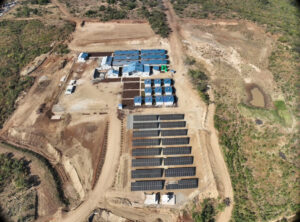
Investiment at Kangankude rare earth mine in Balaka
“Furthermore, mining licences and investment agreements should incorporate measurable commitments on local procurement, skills development, infrastructure, domestic processing where economically viable, environmental rehabilitation and transparent revenue contributions.
“We must move beyond simply extracting and exporting minerals towards building a competitive mining-based industrial economy.”
Thus Mhango’s central message is that Malawi “needs a comprehensive National Mining Sector Reform Programme, covering governance, institutional independence, licensing, investment agreements, financing, production monitoring, revenue collection and mineral beneficiation”.
“This should involve Government, the private sector, development finance institutions, technical experts and civil society.
“We should draw practical lessons not only from South Africa, but also from other established mining economies, adapting international experience to Malawi’s institutional and economic circumstances.
“Ultimately, the success of Malawi’s mining sector should not be measured by the number of mining licences issued or foreign investors attracted, but by the measurable contribution of mineral resources to national revenue, industrialisation, employment, foreign exchange generation and the long-term prosperity of Malawians.
“Our mineral wealth is finite. The opportunity to structure this industry correctly must not be wasted.”

Advertisement
He concludes by saying: “As we engage on these important national economic matters, I would encourage all of us to embrace a culture of respectful, informed and constructive dialogue”.
“Differences of opinion are natural and indeed necessary in shaping better public policy. However, when confronted with alternative perspectives or uncomfortable questions, our response should not be personal insults, intimidation or attacks on individuals, but rather reasoned arguments, credible evidence and practical alternative proposals.
“We must learn to challenge ideas without attacking the people presenting them. Malawi’s economic transformation requires intellectual maturity, mutual respect and a willingness to accommodate diverse perspectives.
“Let us elevate our national discourse to a standard befitting a society genuinely committed to progress. Ultimately, the strength of an argument should be measured by its substance, not by the intensity of the language used to defend it.
“Our common objective should always remain the advancement of Malawi’s national interests, regardless of our individual differences,” says Mhango.

Advertisement