
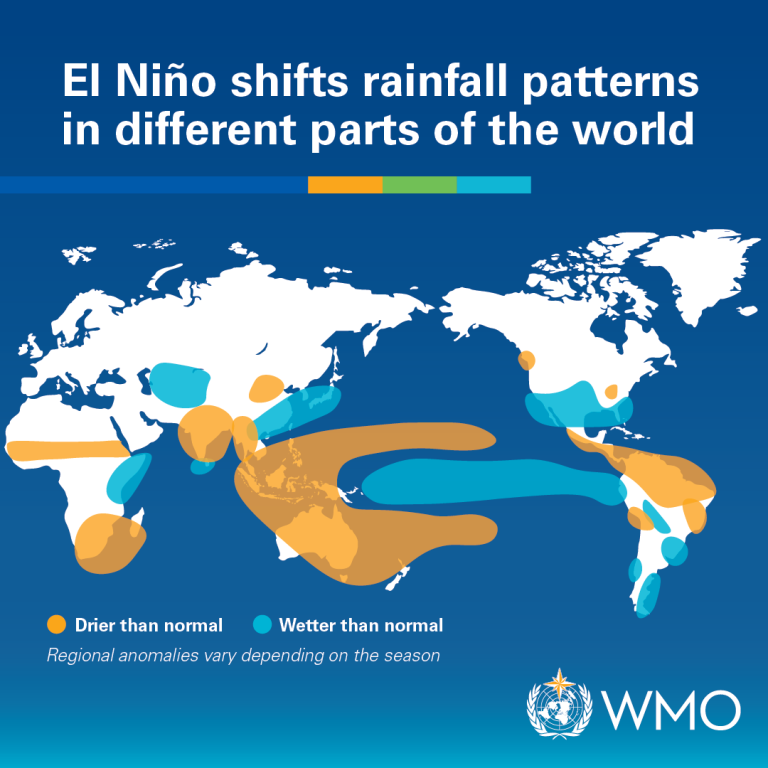
* Likely to persist into 2027 and current updates indicate about 24% chance of surpassing the 2015/16 El Niño, which is the strongest event recorded since 1982
* DCCMS report consolidates area-specific advisories for all 28 districts of Malawi, grouping them into risk tiers
* To support national and district-level contingency planning, and provides the complete district-by-district reference
By Duncan Mlanjira
The Ministry of Natural Resources, through the Department of Climate Change & Meteorological Services Climate (DCCMS) alerts the nation that climate monitoring indicates that a strong-to-very-strong El Niño event is developing over the tropical Pacific Ocean, which is likely to persist into 2027.

Advertisement
The report further indicates that international climate prediction centres estimate the probability of a strong-to-very-strong El Niño occurring at above 80%.
“The current updates indicate about 24% chance of surpassing the 2015/16 El Niño, which is the strongest event recorded since 1982,” says the report dated July 15, 2026.
El Niño is a naturally occurring climate pattern characterised by the unusual warming of surface waters in the central and eastern tropical Pacific Ocean.
The World Meteorological Organisation (WMO) and the National Oceanic & Atmospheric Administration (NOAA) an exceptionally strong ‘Super El Niño’ has locked into place, pushing ocean temperatures close to 2°C (and up to 4°C in specific zones) above average. Climatologists from the organisations warn that the system is tracking to become one of the strongest ever recorded.
It will heavily disrupt global weather patterns, food supplies, and economies through early 2027.
The DCCMS report thus consolidates area-specific advisories for all 28 districts of Malawi — grouping them into risk tiers to support national and district-level contingency planning, and provides the complete district-by-district reference.
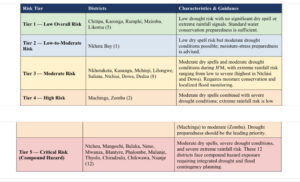
National risk overview
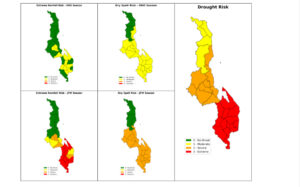
The DCCMS reports that impact of strong El Niño in Malawi varies markedly by region with the Northern Region districts generally facing low overall risk, with dry spell and extreme rainfall hazards minimal and drought risk low to moderate.
Central Region districts face a mixed picture of moderate dry spells and moderate drought, with extreme rainfall risk elevated in a cluster of districts around Ntchisi and Dowa.
The Southern Region carries the highest and most compound risk with 12 districts facing the combination of moderate dry spells, severe drought conditions, and severe extreme rainfall risk simultaneously.
This means both drought and flood contingency measures must be planned together rather than treated as separate hazards.
Key recommendations
* Tier 1–2 districts (Northern Region) are being encouraged to maintain standard water conservation awareness and continue routine monitoring of rainfall onset and distribution.
* Tier 3 districts (Central Region): to prioritise moisture conservation practices and climate-resilient agricultural options; districts with severe extreme rainfall risk (Ntchisi, Dowa, Dedza) should also strengthen localized flood monitoring.
* Tier 4 districts (Machinga, Zomba): to prioritise drought mitigation and water conservation, while maintaining flood awareness in Zomba.
* Tier 5 districts (Southern Region): to implement integrated drought-and-flood contingency plans; pre-position agricultural inputs and water resources ahead of the dry spells while establishing early-warning systems for extreme rainfall and flooding.
* All districts should continue to use updated seasonal forecasts as the event develops, given the high (>80%) probability of a strong-to-very-strong El Niño.

Advertisement