
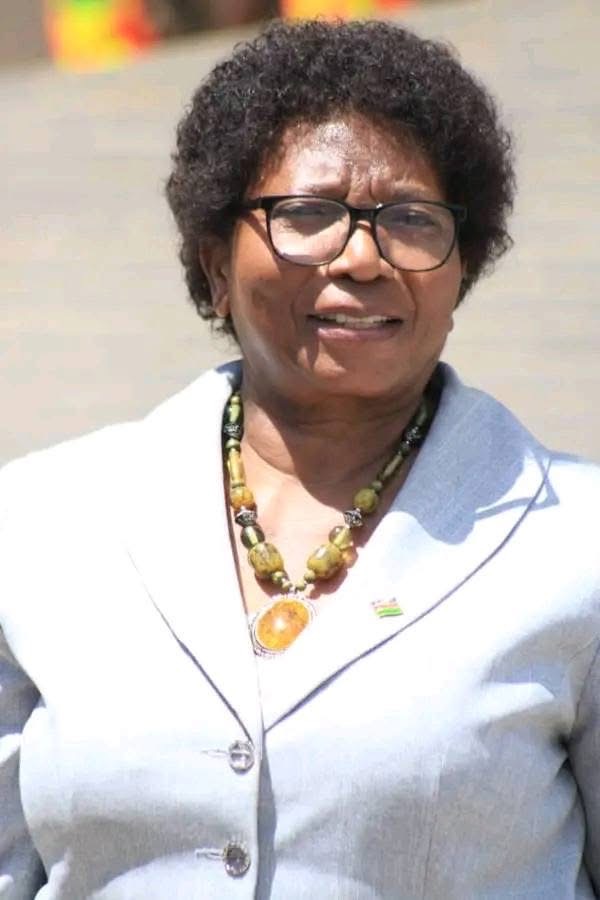
* As she welcomes the announcement of construction of Blantyre District Hospital after government secures US$27 million loan from Kuwait Fund for Arab Economic Development loan
* We started hearing about Blantyre District Hospital during President Bakili Muluzi’s time but over 20 years down the line, there isn’t even a stone or a brick
By Frank Humphreys, Malawi News Agency (MANA)
While welcoming the news that the Government has secured a US$27 million loan from the Kuwait Fund for Arab Economic Development to finance the construction of Blantyre District Hospital, health rights advocate Dorothy Ngoma cautioned against what she described as a pattern of unfulfilled promises from previous governments.

Advertisement
She indicated that Blantyre District Hospital project is long overdue, saying: “We started hearing about it during Muluzi’s time, over 20 years down the line, there isn’t even a stone or a brick.
“For me, I think we can do better as a country,” she said, while quick to add that the commencement of the project — along with the wider strategy of decentralising healthcare services — is “a necessary and overdue response to the pressure that rapid urbanisation has placed on Malawi’s referral hospitals”.
Responding to a question from Lilongwe Chiwamba Member of Parliament, Winstone Kaimapanjira, Minister of Health & Sanitation, Madalitso Baloyi told the august House that the loan — with funding already provided for in the 2026/2027 National Budget — forms part of a broader government strategy to address mounting pressure on referral hospitals is being tackled through construction of the new district hospital in Blantyre alongside the upgrading of urban health centres into community hospitals.
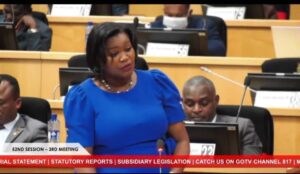
Minister Baloyi in Parliament
The Minister said government is also exploring more cost-effective options, including establishing community hospitals in high-density urban areas — an approach aimed at improving access to healthcare and reducing congestion at referral hospitals, particularly during emergencies.
She added that among the facilities already benefiting from the upgrading strategy is the former Chilinde Health Centre in Lilongwe, now elevated to Area 21 Community Hospital.
Baloyi told Parliament that the facility is already providing healthcare services to residents even as government finalises preparations for its official opening.
The initiative is in line with MW2063 agenda, which envisions universal health coverage with a significant expansion and upgrade of the country’s health infrastructure equipped with quality, equitable, and affordable healthcare for all Malawians.
While being was critical of what she characterised as a culture of announcements without delivery, noting that the pledge for Blantyre District Hospital project is not new, health rights advocate Ngoma very warmly welcomed its commencement along with the wider strategy of decentralising healthcare services.
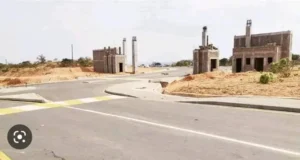
An example of project neglect of Mombera University which the DPP administration is now focused to complete
She described the initiatives as “a necessary and overdue response to the pressure that rapid urbanisation has placed on Malawi’s referral hospitals”.
“The health system, like any other system, has to evolve with the times,” she said in an interview with MANA. “Upgrading is about developing these areas, strengthening them, and making sure services are brought closer to the community.
“That means having the physical building, but also strengthening the community outreach services around the areas it serves, and making sure there are enough health personnel and experts according to the healthcare needs of that community.”
She agreed to the logic of building district and community hospitals closer to where people live as tying directly to the scale of urban migration Malawi has experienced in recent years.
Ngoma further said socio-economic pressures, food shortages and the search for opportunity have pushed large numbers of people from rural areas into cities such as Lilongwe and Blantyre in search of jobs, water, roads and other services — resulting in heavy congestion in urban centres.

Advertisement
“Lilongwe District alone may have something close to three million people,” she said. “If there is no major hospital close to them, they will continue to congest Kamuzu Central Hospital.”
Ngoma argued that without functioning district and community-level facilities, referral hospitals end up carrying a burden they were never designed for.
“Instead of a central hospital being a referral centre for major health problems that need surgeries and expert care, you find that even basic diseases like malaria, chest infections and diarrhoea continue putting pressure on the major hospital.
“That wastes the time of consultants on minor ailments that could be dealt with at local level” said the veteran health expert, who added that facilities — such as the planned Blantyre District Hospital and the newly upgraded Area 21 Community Hospital — once fully equipped, would free up central hospitals.
Meanwhile, Lokhomo building contractors and H & T on Tuesday handed over Chanza Health Post to Chiradzulu District Council, whose where construction included installation of solar powered water system for reliable supply.
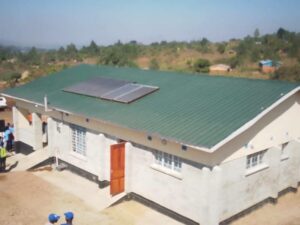
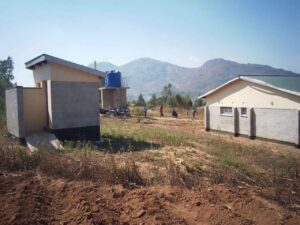
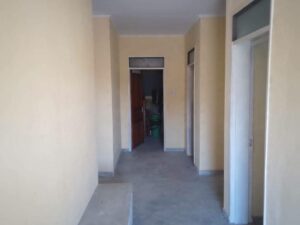
Chanza Health Post in Senior Chief Likoswe area, was constructed with funding from the World Bank through Governance to Enable Service Delivery (GESD) in two phases — at a cost of K83 million and K122 million respectively to serve a population of not less than 7,824, according to Chiradzulu District director of economic development & Planning, Kelvin Harawa.
Member of Parliament of Chiradzulu Nguludi Constituency, McTimes Malowa and Chiradzulu District Council chairperson, Alick Naphiyo, called on people in the area and Chanza Post health personnel to take care of the new facility and all it’s equipment to ensure continued primary health care provision within reach.
District Commissioner, Elestina M’mame said the council will continue implementing various projects to meet communities development aspirations.—Reporting from Chiradzulu by Evance Chisiano, MANA; editing by Duncan Mlanjira, Maravi Express

Advertisement