
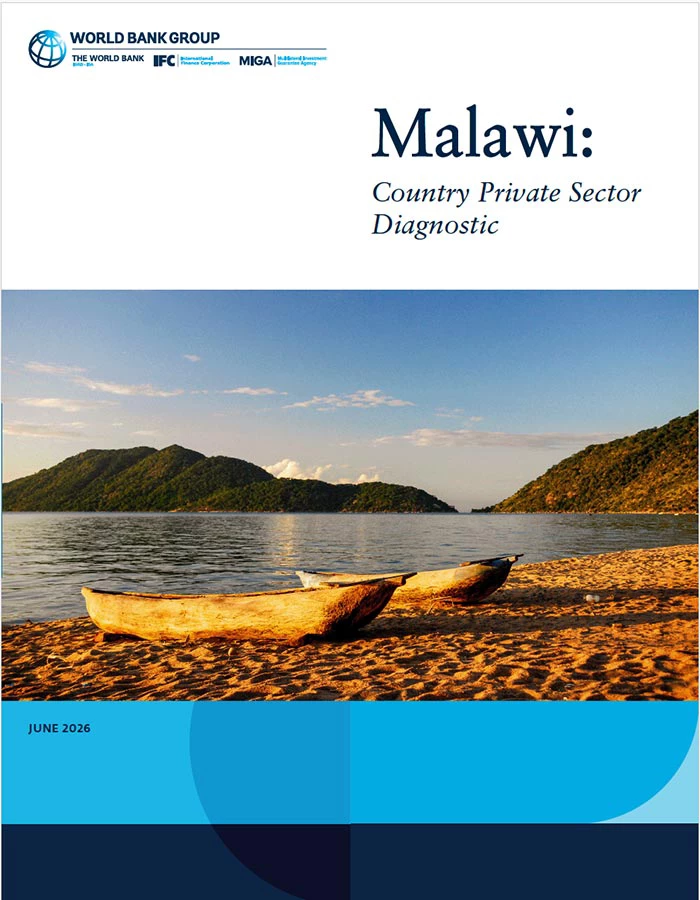
* As contained in the Country Private Sector Diagnostic (CPSD) report released on June 17, 2026, which identifies commercial mining, nature-based tourism and mango production as sectors with the greatest potential to stimulate economic growth and generate employment
By Innocent Manda, Malawi News Agency (MANA)
The World Bank says Malawi could create more than 100,000 jobs, expand exports and attract greater private investment if the country implements targeted reforms to improve the business environment.
The projection is contained in the Country Private Sector Diagnostic (CPSD) report released on June 17, 2026, which identifies commercial mining, nature-based tourism and mango production as sectors with the greatest potential to stimulate economic growth and generate employment.
World Bank Group Division Director for Tanzania, Malawi, Zambia and Zimbabwe, Firas Raad, said the three sectors present commercially viable opportunities capable of attracting increased investment and creating jobs in the short to medium term.
“The three subsectors of the economy analysed in this report represent commercially viable opportunities to attract increased investment and create jobs in Malawi in the short to medium term,” Raad said.

Firas Raad
He, however, noted that sustaining investment and unlocking broader economic gains will require complementary reforms and stronger institutional capacity.
Raad said improving the regulatory environment, investing in infrastructure and strengthening collaboration between the public and private sectors will be critical to creating a more competitive investment climate.
“Ultimately, further increases in investment and economic gains will require complementary reforms and capacity building over the coming years,” he said.
International Finance Corporation (IFC) Division Director for Eastern Africa, Mary Porter Peschka, said Malawi has the natural resources, entrepreneurial drive and ambition needed to attract substantially higher levels of private investment.
“Malawi has the assets, the entrepreneurial energy, and the ambition to attract significantly greater private investment,” Peschka said.
“The country stands at an inflection point where targeted reforms can unlock new industries, create jobs and expand exports,” she said, adding that the recommended reforms have the potential to unlock new economic opportunities, strengthen the private sector and promote inclusive growth.

Mary Porter Peschka
Government is already implementing reforms in the mining, tourism, agriculture and export sectors as part of broader efforts to stimulate economic growth, attract investment and expand employment opportunities.
The World Bank report highlights that “Malawi has significant potential [which] arises from its natural resources, a favourable climate, and emerging mining sector”.
“Despite this private investment remains below its potential,” says the report. “This reflects persistent macroeconomic challenges, including foreign exchange shortages and weak export performance, alongside structural constraints such as a restrictive business environment, rising concerns around corruption, and barriers affecting firm competitiveness.
To unlock growth, the report “identifies concrete, actionable recommendations that can promote private sector investment in export orientated sectors”.
It does so through deep dives in three sub-sectors, international nature-based tourism, mango production and processing, and rutile and graphite mining.
“Each of these offer strong potential for investment, job creation, and foreign exchange generation. Tourism leverages Malawi’s natural beauty to attract regional and global visitors, while the mango sector benefits from favorable growing conditions and a unique harvest window that allows access to export markets.
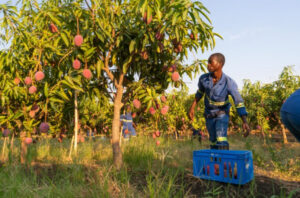
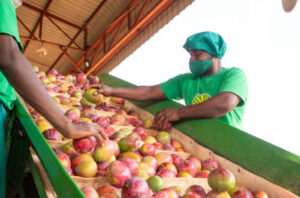
“The mining sector, particularly rutile and graphite linked to the global energy transition, has the potential to mobilize large-scale capital investment.”
Across these sectors, the report thus estimates that reforms could more than double exports and generate over 100,000 jobs over the medium term and realising these opportunities requires addressing key constraints to investment.
These include limited access to land for productive investors, weak public–private dialogue, poor connectivity, especially air transport and roads, and regulatory uncertainty.
Sector-specific reforms are also needed, such as improving concession frameworks in tourism, and clarifying regulatory provisions in mining.
“By implementing reforms in these areas, Malawi can unlock private sector investment that supports job creation, economic diversification, and long-term growth,” says the report.—Additional reporting by Duncan Mlanjira, Maravi Express

Advertisement