
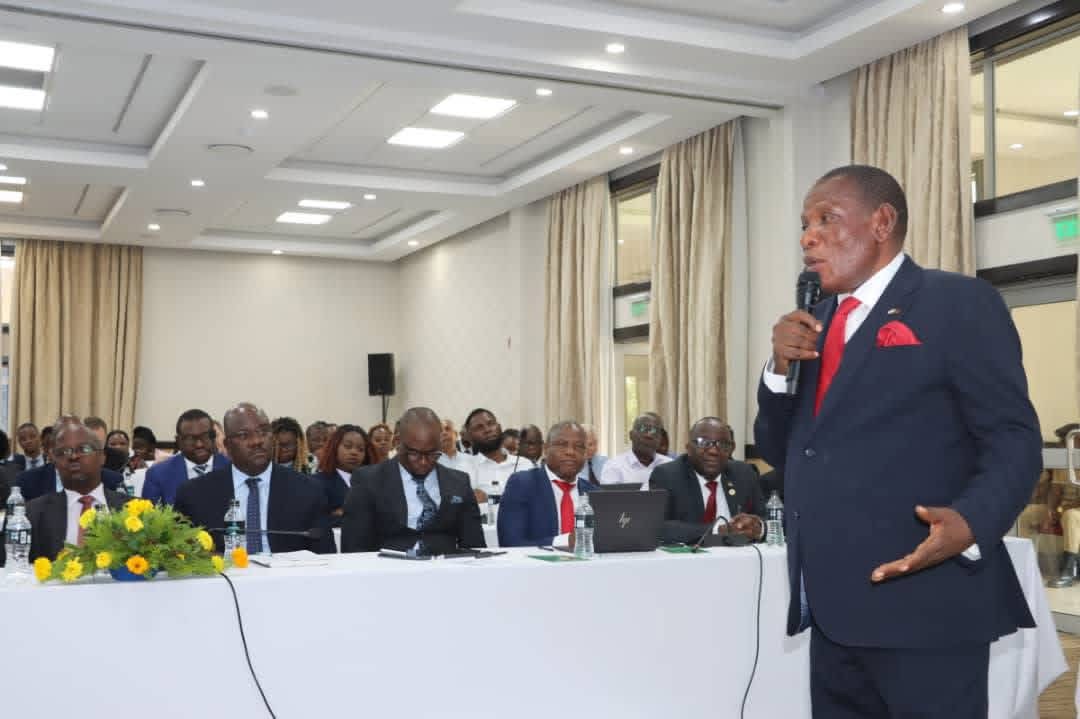
Finance Minister Mwanamveka during the pre-budget consultation meeting
* By digitisation of revenue collection to reduce spillage, corruption, manual errors, or evasion that will lead to its growth
* Incentivise business registration to reduce informal enterprises sector, which is at 89% against 11% formal enterprises in the MSME sector
* To introduce earmarked taxes on motorcycle (kabaza) operations, whose increasing accidents are constraining health sector in terms of budgetary resources
* Restructuring state-owned enterprises (SOEs) into profitable models fiscal discipline and to widen tax base to ensure that everyone is contributing equitably
By Duncan Mlanjira
The Malawi Confederation of Chambers of Commerce and Industry (MCCCI) has indicated to the government that it expects efficiency revenue collection in the 2026/27 National Budget and going forward.

Advertisement
In her presentation during the Blantyre session of the 2026/27 pre-budget consultation meeting that Minister of Finance, Economic Planning & Development, Joseph Mwanamvekha hosted today at Sunbird Mount Soche, MCCCI Chief Executive officer (CEO), Daisy Kambalame, suggested that efficient revenue collection should include digitisation of its system to reduce spillage, corruption, manual errors, or evasion in order lead to economic growth.
The Budget should also incentivise business registration to reduce informal enterprises sector, which is at 89% against 11% formal enterprises in the micro, small & medium enterprises (MSME) sector.
MCCCI also expected that state-owned enterprises (SOEs) should be restructured into profitable models fiscal discipline and that the Budget should widen the tax base to ensure that everyone is contributing equitably.
The voice of the private sector, which is pivotal in the economic development of the country, also takes particular note of the unregulated motorcycle taxi (kabaza) operations, whose increasing road accidents are constraining health sector in terms of budgetary resources.
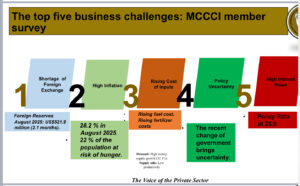
Thus the MCCCI is suggesting that the government should consider introduce earmarked taxes on these kabaza operators, whose funds could directly help reduce financial pressure and support improvements in health service delivery.
Other suggestions the MCCI made included targeted and strategic expenditure to reduce deficit and maximise outcomes; to incentivise public and private sector productivity (short & long term); create a dynamic investment landscape that will establish Malawi as a compelling destination for investors, among others.
In the agriculture sector, the MCCCI considers that the mega and anchor farm model, to be the best to commercialise that industry as is can improve productivity and production for export markets.
The MCCCI thus suggests that an assessment of the mega and anchor farm model — which was much touted by the immediate past administration — should be conducted to rebrand it.
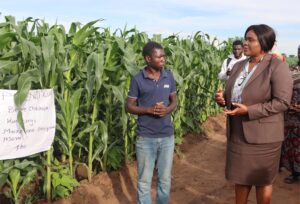
Expanding irrigated land is a crucial strategy to strengthen the resilience of the agricultural sector against the impacts of climate change. Climate change should be integrated in all agricultural models.
Increased production and adoption of organic manure should be promoted to enhance soil fertility and reduce dependence on chemical inputs and to encourage farmers to consider high-potential crops — such as legumes, wheat, fruits, cannabis, and seeds, cassava for diversification.
The government should also establish structured markets to enable efficient aggregation of non-traditional crops for export — and while many incentives, such as tax breaks and duty exemptions already exist for agro-processors, the government is being encouraged to introduce deliberate measures to simplify the application and administrative processes so that SMEs are able to fully benefit from these arrangements.
The government should prioritise fostering growth in the manufacturing sector in the 2026–27 budget, as this will reduce dependence on imports, expand a solid export base, and ultimately ease pressure on foreign exchange reserves.
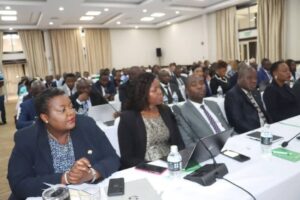
On manufacturing, the MCCCI expects the National Budget to focus on high-value products such as:
Pharmaceuticals
Malawi’s pharmaceutical industry is constrained, with only four main companies and their limited output meets only a small portion of national needs, resulting in heavy reliance on imports, significant foreign exchange outflows, recurring drug shortages, and heightened exposure to substandard products.
Fertilizers
Malawi imports of fertilizers is over 90% (about 430,000 MT/year), despite heavy reliance on agriculture and if fertilizer production can be supported, it would ease the product’s cost and scarcity, cut import costs, enhances agricultural productivity and boost food security, supports export diversification and save forex.
Support emerging local wine industry
Reducing the excise duty on locally produced fruit wines from 95% to 10% in order to stimulate the growth of this emerging industry and enhance the livelihoods of small-scale domestic fruit suppliers.
Banning exports of scrap metal
The government is being advised to extend the ban on raw mineral exports to include scrap metal, as it is important for the local casting industries and to curb vandalism of critical infrastructure — being greatly affected by Electricity Supply Corporation of Malawi (ESCOM); water boards; the telecommunications sector, among others.
Review of 20% sewer charges for bottling manufacturing companies
The charge has had severe repercussions for bottling companies whose operations (up to 70 %) depend heavily on water.
Reduction of excise tax on spirits beverages currently at 110% to 60%
The current excise tax rate (110%) on spirits is driving an increase in smuggling activities involving lower-cost spirits from neighboring countries and posing health risks.
Remove import duties on critical spare parts: to ensure productivity and competitiveness of Malawian products.
The Customs & Excise Tariff must clarify the applicable excise tax base: The Act is not clear what the base should be.
Remove the 10% excise tax on Maheu
The product is not subject to excise in neighboring Zambia and Mozambique, making our local product uncompetitive, resulting in the smuggling of similar products. It is expected that removing the excise tax and effectively addressing and eliminating smuggling could lead to new investments in the industry totaling at least MK500 million.
Remove 10% excise duty on domestic pipes
To enhance the competitiveness of Malawi’s local pipe industry, the MCCCI proposes the elimination of domestically manufactured pipes to align with imported pipes that are coming in duty-free.

Kayelekera Mine in Karonga
Mining
Create a private sector driven Mining Investment Fund with potential projects in rare earths, graphite, niobium
Revenue generation & management
Capture royalties (e.g. 5% minerals + 0.45% community), taxes, and equity stakes from new projects to build reserves for future generations, stabilize budgets during commodity price fluctuations, and fund infrastructure (e.g., power, rail, roads) needed for mining viability.
Attracting and de-risking Investment
Provide seed capital, co-financing, or guarantees for exploration/development, reducing reliance on foreign direct investment alone while ensuring local benefits.
Local content & industrialisation
Channel funds into downstream processing (e.g. rare earth separation, graphite beneficiation), skills training, SME linkages, and community development to maximize value retention.
Governance Model
Draw from global best practices (e.g. Norway’s intergenerational fund, Ghana’s multi-fund approach) with strong transparency, independent oversight, and rules-based allocation (e.g. stabilisation, heritage, infrastructure components).
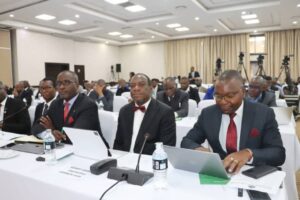
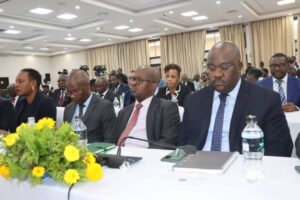
In his closing remarks after being appraised with other presentations — including from Institute of Chartered Accountants in Malawi (ICAM); University of Malawi (UNIMA) representing the academia; and other stakeholders’ suggestions during plenary, Minister Mwanamveka described the meeting as very productive.
He took cognizance that the same exuberance was observed during two other pre-budget consultations held in the Capital Lilongwe and Mzuzu City, and he pledged that some of the proposals shall be implemented in the 2026/27 National Budget.
He assured that President Arthur Peter Mutharika is very concerned with the state of the economy and vows that he wants to leave a legacy that he found an ailing economy but managed to solve the challenges at the end of his tenure of office.
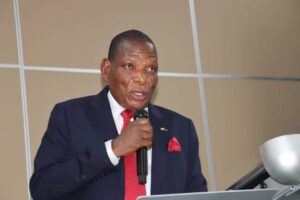
He stressed what Mutharika emphasised in his inaugural speech last October that he will not tolerate underperformance, corruption, over-expenditure and that his administration is currently implementing a set of reforms anchored in the National Economic Recovery Plan (NERP) — which was initiated soon after the DPP took over the government.
“The NERP is aimed at addressing immediate macroeconomic and social challenges while laying a strong foundation for sustainable and inclusive growth and in support of this, Government has already announced and begun implementing a range of revenue-enhancing and expenditure control measures during the 2025-26 Mid-Year Budget Review.”
He appraised the gathering that the 2026/27 pre-budget consultations have taken place against a backdrop of significant global, regional, and domestic economic challenges — and that the national consultations “underscore Government’s commitment to inclusive, transparent, and participatory public finance management; ensuring that fiscal and development priorities are informed by broad stakeholder engagement”.


Advertisement