
* Defends Tsogolo Account and vows to expand National Economic Empowerment Fund (NEEF) into a government-owned fully-fledged bank
* Assures quality maternal services in rural areas; rehabilitation of the M1 road to be completed at all costs — with key trading centres given special attention
* To increase the constituency development fund (CDF) from K220 million to K500 million to ensure continuity of infrastructure development initiatives
Analysis by Duncan Mlanjira from MANA’s coverage of Chakwera’s whistle-stop campaign tour
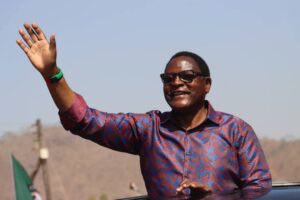
As the September 16 general election fast approaches, President Lazarus Chakwera has been on a rigorous campaign tour across the Central Region this week, pledging lucrative development projects — highlights of which include construction of long-lasting infrastructure and to bail out Malawians from the cost of living by supporting small-scale businesses.

Advertisement
At Chinsapo 1 in Lilongwe, Chakwera promised that if given another mandate, his administration is committed to building strong infrastructures that will stand the test of time, adding that the Capital City was the starting point of these developments because it serves as the centre of the country.
“As you have seen the way my government has transformed the roads in the Capital City, we are doing this not for a particular section of people but for all Malawians. “The transformation of the city will also attract investors from abroad,” he said, adding that the Capital should reflect its status, just as it does in other countries.
In Kasungu, he pledged to construct quality infrastructure that can withstand the test of time and climate change, plans to continue investing in agriculture to revive the sector, which remains the country’s economic backbone — by finding better markets for farmers for their agricultural produce.
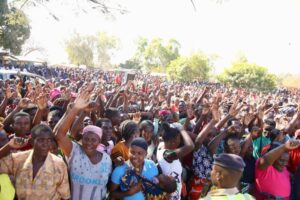
He told communities that his government’s focus in the next term will be to consolidate progress already made in the agricultural sector and other key areas of development.
“We have laid a solid foundation in our first term, and most of the fruits of our labour will be enjoyed moving forward after September 16,” said Chakwera, while emphasising that farmers remain central to Malawi’s economy and will continue to benefit from deliberate policies aimed at improving prices and easing access to markets.
He added that his administration has invested in agricultural reforms, some of which will begin showing tangible results in the years ahead — and beyond farming, Chakwera highlighted the government’s priority in infrastructure development.
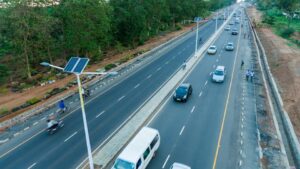
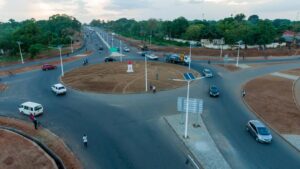
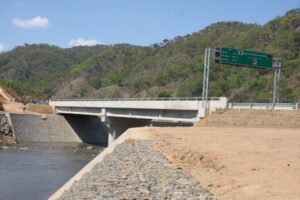
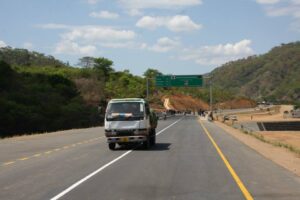
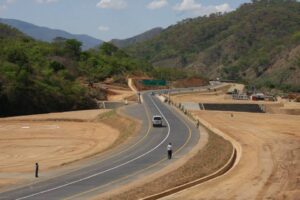
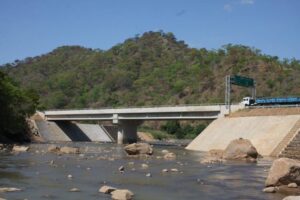
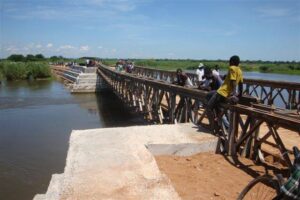
He said major roads have already been constructed in cities and districts, but going forward, more focus will be on upgrading rural roads to link farmers to markets and social services.
He urged communities to play their part by turning out in large numbers to vote in the upcoming elections, saying continuity of policies is critical to sustaining development gains.
“We will revitalise the agriculture sector, invest in irrigation, and bring back dams in all areas to support agriculture. We know Kasungu District as an agricultural hub, but that is not the case now because of past mistakes that led to estates dying. We want to reverse this and restore its old glory.”
He further emphasised the need for investments in manufacturing and mining to increase the resource envelope, which he said could help stabilise the economy and accelerate development.
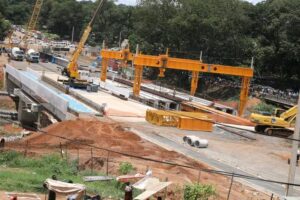
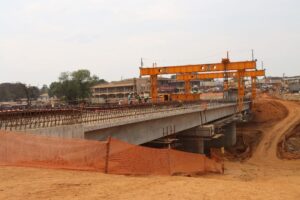
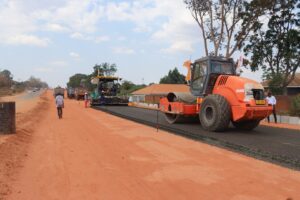
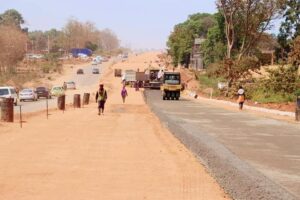
In Ntchisi, Chakwera also assured the people that the road infrastructure project from Ntchisi to Dzaleka will continue to receive attention and funding while in Dedza he expressed satisfaction with the construction of Dedza loop road and Thete Road.
He observed that Thete Road was one example of a lack of seriousness in the provision of quality development by the previous government as it did not last long and during his previous visit, construction work for the Dedza Loop Road was not impressive, such that he demanded that authorities act.
The work has resumed and while calling for its speedy completion, Chakwera warned the contractor not to compromise the durability of the road, saying: “My government wants infrastructure development that will benefit more generations to come.”
At Lumbadzi in Dowa East, Chakwera said major construction works are ongoing on the M1 Road, but key trading centres like Lumbadzi require special attention — describing the business area as an important growing centre strategically positioned to serve both people from Dowa and Lilongwe.
He emphasised that Lumbadzi requires heavy investment in amenities and that he has plans to establish good water connections, improve health facilities, and provide quality education so that it has all the services it requires as a growing centre.
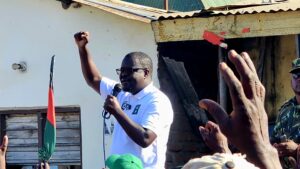
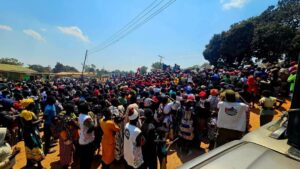
On his behalf, MCP presidential running mate, Vitumbiko Mumba, pledged that the M1 Road stretch from Songwe Border to the rest of the country will be maintained to high standards, stressing that he will personally monitor the project to ensure quality delivery.
Speaking at Songwe Border in Karonga, Mumba said the Chakwera administration recognises the importance of the route as a key economic lifeline and gateway into Malawi.
“The condition of this stretch of the M1 is indeed a concern. I want to assure you that once maintained, I will personally monitor progress on the works. I am an engineer by profession, and I worked for five years on similar road projects in Botswana and Namibia. I know what quality roads mean for development,” Mumba said.
He further emphasized that President Lazarus Chakwera values the Northern Region, pointing to his own selection as a running mate: “Chakwera’s decision to choose me, a son of the north, shows that he considers this region in matters of national development.

Advertisement
Still in Dowa, Chakwera defended the Tsogolo account through which he intends to invest K500,000 for every new-born baby after September 16, saying it is destined to be the backbone in creating citizens who are self-reliant.
“Malawi must have wealthy people who are reaping from their sweat, be it business persons, farmers or workers. That is why we have plans to put measures to ensure wealth creation for all, including for our children through the Tsogolo Account.
“And when we form the next government, we are going to push for legislation which will pave way for the implementation of this,” he said, emphasising that this does not focus on bearing short term fruits, but rather it is a long term investment plan.
He observed that some people do not understand the Tsogolo Account concept, emphasising that it will help future generations to have the financial muscle to engage in various entrepreneurships — adding that it will lay a solid foundation of an economically empowered, self reliant and productive population capable of contributing to the development of Malawi.
“We want every Malawian, be it women, men, the youth, people with disabilities, to have a good life and fully enjoy their rights in this country without any form of exploitation,” said Chakwera.
He thus pledged to transform the National Economic Empowerment Fund (NEEF) into a government-owned fully-fledged bank to provide soft loans to women and youths at lower interest rates to enable them to start businesses and contribute to the growth of the national economy.
“Through the initiative, we aim to reach as many people as possible, even those that were not reached under NEEF programs,” he said, adding that NEEF has so far distributed over K300 billion in loans.
On health, the President is pledging to provide quality maternal health services in rural and hard-to-reach areas to protect the lives of expectant mothers and newborns.
He said this after inspecting Matekenya Health Centre in the area of Senior Chief Nsakambewa, saying: “Matekenya is a small health centre, but services being provided are commendable. The next step here is to expand services being provided so as it can at least match those being provided at the newly constructed Mwangala Hospital and Nalunga Health Centre.
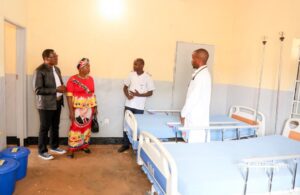
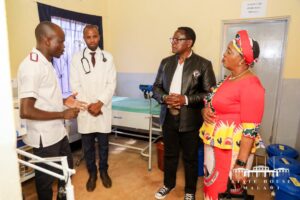
Matekenya Health Centre was built in 2011 but started operating in 2019, initially providing only out-patient services but now it has now been upgraded to include maternal services, whose delivery room is equipped with state-of-the-art machines, including a resurcitaire, suction machine and an oxygen concentrator.
The health centre also has solar powered equipment producing around 2.5 kilowatts, powering the facility and its equipment.
Dowa’s director of health & social services, Dr. Peter Makoza said the centre serves a population of over 25,000 people across 96 major villages, with at least 12,000 births recorded annually.
“Initially, the health centre used to provide OPD services only. This was a challenge because expectant women used to travel to Dowa, Mwangala, or Nalunga, which is at least 15-21km away, and worse during rainy seasons.
“But with this development, expectant women will be able to deliver at this facility, hence protecting lives and minimising travel time and costs to access maternal services.”

Advertisement
In Salima, Chakwera pledged to transform Chipoka into a secondary city with functional railway infrastructure and water transport systems to boost trade and investment, saying Chipoka was once a harbour where ships docked and businesses thrived, and thus he holds the vision of restoring that status.
He disclosed that a German company has already been identified to implement the project and that paperwork and a roadmap for construction have been completed.
The Chipoka transformation falls under the Malawi Secondary Cities Plan (MSCP), which seeks to establish eight pilot secondary cities. Phase one includes the Chipoka Port Infrastructure Development Programme aimed at elevating the district’s economic and urban profile.
The President thus announced that he will increase the Constituency Development Fund (CDF) from K220 million to K500 million to ensure continuity of infrastructure development initiatives that can drive economic growth and improves lives of people.
Throughout his tour of the Central Region, he pledged to address challenges affecting the communities such as food shortages, delayed irrigation schemes, poor infrastructure — and to revive the agriculture sector, promising improved prices for farmers.
He also condemned economic sabotage, particularly hoarding of commodities, which he described as a practice that punishes the poor through artificial shortages and price hikes.
* MANA coverage of the presidential whistle-stop tour by Sellah Singini, Wanangwa Tembo, Patience Longwe, Zenak Matekenya, Sylvester Kumwenda, Fostina Mkandawire and George Mponda


Advertisement