

* For the past 30 years, it’s the first time we are observing the transformation of the national political landscape of South Africa
* Where the traditional dominant party — the African National Congress (ANC) is below the 50% electoral victory
By Duncan Mlanjira
South Africa-based Chief Economist for Don Consultancy Group, Chifipa Mhango says the 2024 election results in that country “have transformed the political landscape, and the challenge remains on transforming the economy towards a higher sustainable economic growth rate trajectory”.

Advertisement
This follows the release of official national and provincial election results which Mhango views that it shows a slight fragmentation of society into several interest group as defined by political party manifestos.
He said: “This is a clear demonstration that the socio-economic and political-economy dynamic challenges facing the South African economy can be viewed by society or the electorate from a different micro-scoping view, but also indicates a positive maturing South African democracy.
“For the past 30 years, it’s the first time we are observing the transformation of the national political landscape of South Africa, where the traditional dominant party — the African National Congress (ANC) is below the 50% electoral victory.
“However, the challenges of transforming the South African economy towards higher sustainable economic growth rate, industrialisation of the economy, creation of more jobs across sectors, dealing with massive poverty and inequality remain.

“As the country awaits the formation of government in the month of June 2024, the question of whether the transformation of the South African political landscape is good or bad, especially at national level, will be defined by what type of government will be constituted and the key political partners.
“This process will also define not only political stability and policy certainty, but also the way the economic environment will transform to dealing with the existing challenges,” Mhango said.
He further observed that the South African political landscape, as per the election results, is providing room for a coalition government at national level, in which on the Party Economic Policy, “there will be a ‘give and take’ approach on some areas of strong conviction, to which investors will be watching closely”.
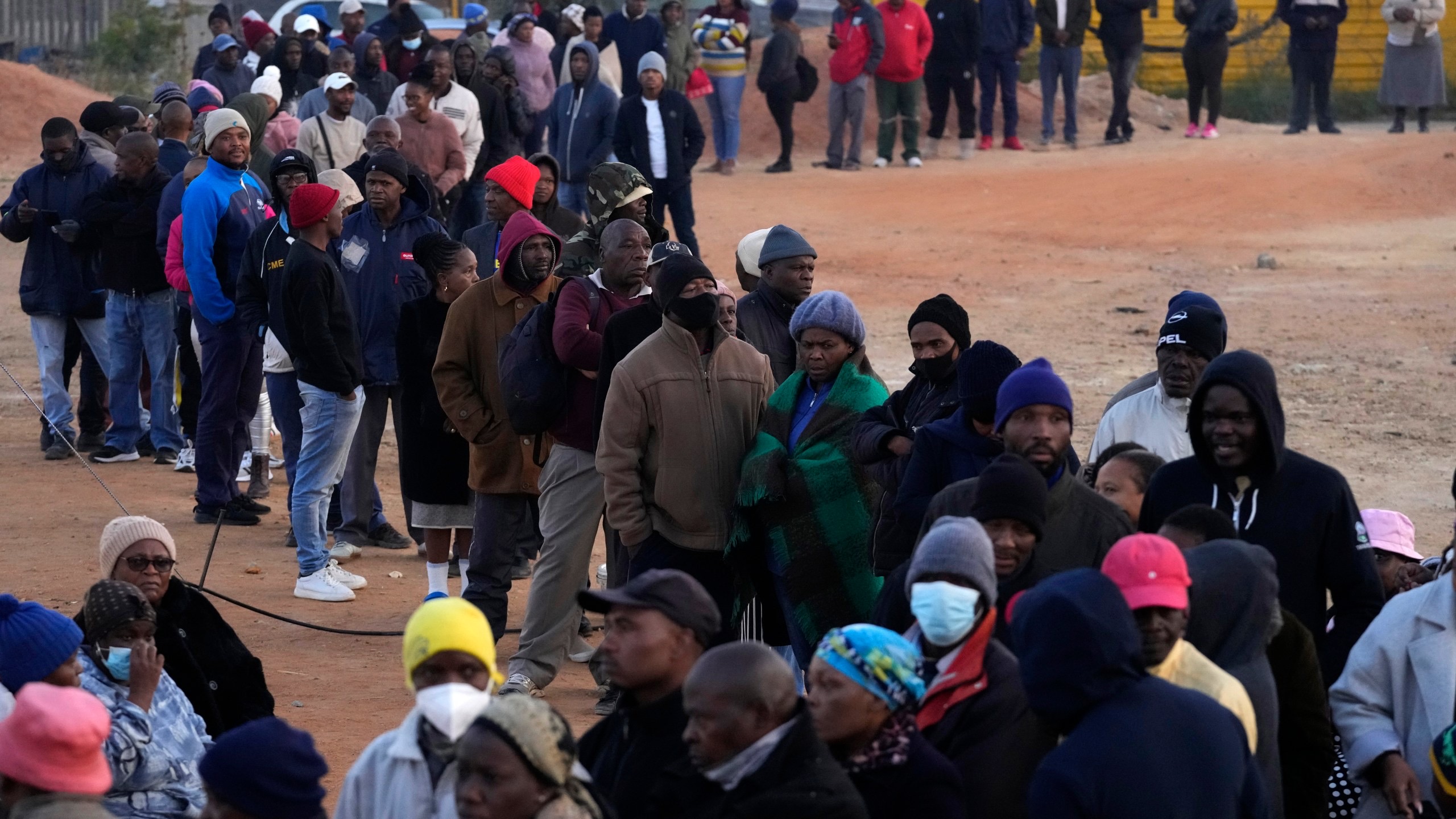
“The elections results have attracted a lot of attention, with key international media live coverage of official results announcements and the State President Cyril Ramaphosa’s speech beamed live, and with newspaper frontpage coverage, as well as toping social media trending especially in some SADC countries.

President Cyril Ramaphosa delivering his speech
“Any coalition government that will be formed in the next two-weeks period, should, therefore, prioritise the interest of South Africans, with the economy as a priority. The country has entered a new chapter, and just like other countries that have been managed through coalition governments, business lobbying also plays a critical role in backroom talks, be it directly or indirectly; and South Africa will not be spared in its new process.”
Mhango added that he is delighted on how the 2024 elections were conducted in general, from party campaign process to managing of the Election official results announcements, saying: “We are looking forward to a national government as well as provincial governments that will deal with the structural challenges facing the South African economy in energy & logistical issues, unemployment, effective governance & rule of law, fight against corruption, creation of business-friendly environment and prioritization of the broader citizens’ needs.”

Chifipa Mhango
Ahead of the elections, Mhango painted a ‘sad picture’ for South Africa’s economy as quoted in a publication by BusinessTech in April, which reported that latest downgrade of the country’s GDP growth prospects paints a worrying picutre for its ability to tackle some of its biggest challenges.
The report said International Monetary Fund (IMF) published its 2024 World Economic Outlook, dropping its GDP growth projections for South Africa from 1.0% to 0.9% and the projections for 2025 were also reduced by 0.1% to 1.2%, with growth of only 1.4% expected by the end of the decade.
Notably, the report further said, South Africa’s growth prospects effectively halved from the October outtlook of 1.8% for 2024 and that the IMF started off 2024 by cutting South Africa’s growth outlook – and its latest global update has sliced off even more.
In his comment, Mhango said: “The IMF’s latest World Economic Outlook Report slashing of 2024 GDP growth rate for South Africa paints a bad picture of the country’s ability to address its challenges despite all the efforts Government has put in place.

“A sad picture being painted on the South African economy, where its GDP growth rate … is the second worse performing in the Sub-Saharan region, with Equatorial Guinea at 0.5% for 2024. While Economies such as Nigeria are being depicted to grow by 3.3% in 2024 from 2.9% in 2023.
“Adding further to the sad news, is the IMF projection of rising unemployment for South Africa to 33.5% come end 2024.”
Mhango, who used to work for ArcelorMittal South Africa, PetroSA and Nedbank, said the South African government has to be more active in deality with the structure challenges facing the country, such as its electricty, water and logistical infrastructure issues.
Mining companies, for instance, have recently cut production due to the inability to export products at the nation’s ports, which has also affected the exporting of manufactured goods.
In addition, personal consumption, which accounts for roughly 65% of GDP, is also seeing a declininng picture due to the high debt levels among consumers as well as the spending patterns being depressed by high costs of living.

Advertisement
Unemployment levels are also currently standing at 32.1% and Mhango added: “The South African economy’s ability to attract the much-needed investment is also being eroded by the structural challenges mentioned above, hence the level of Investment to GDP is still below 20%, at almost 15%.
“The Government fiscal constraints are also limiting the ability to divert resources to the productive side of the economy, as fiscal debt ballons.
“The South African economy’s ability to trade effectively is also being limited due to the uncompetitive productive landscape such as rising costs of doing business (ie. electricity costs, logistical costs).”
Mhango further analysed that some businesses within the sector, including manufacturing, have either shut down or reduced operations amid the uncompetitive industry landscape, where imports are effectively gaining market share against local products.

Jacob Zuma
On the elections, Mhango maintained that it “may provide grounds of uncertainty on policy matters, with predictions of coalition Government even at National level holding strong in international discussions”.
“The only positive for South Africa’s economy is that GDP is still expected to grow from the 0.6% in 2023. This means that not all is not lost for the South African economy to achieve much higher GDP growth rates, if efforts are geared to ensure that towards addressing the structural challenges in the economy.


Advertisement