
* Social cash transfer in Malawi is assisting people at the grassroots level by enhancing security and decision-making power
* Over 150,000 households — 90% of them women — have benefited from this programme
By Lisa Kadango-Malango, MANA in New York
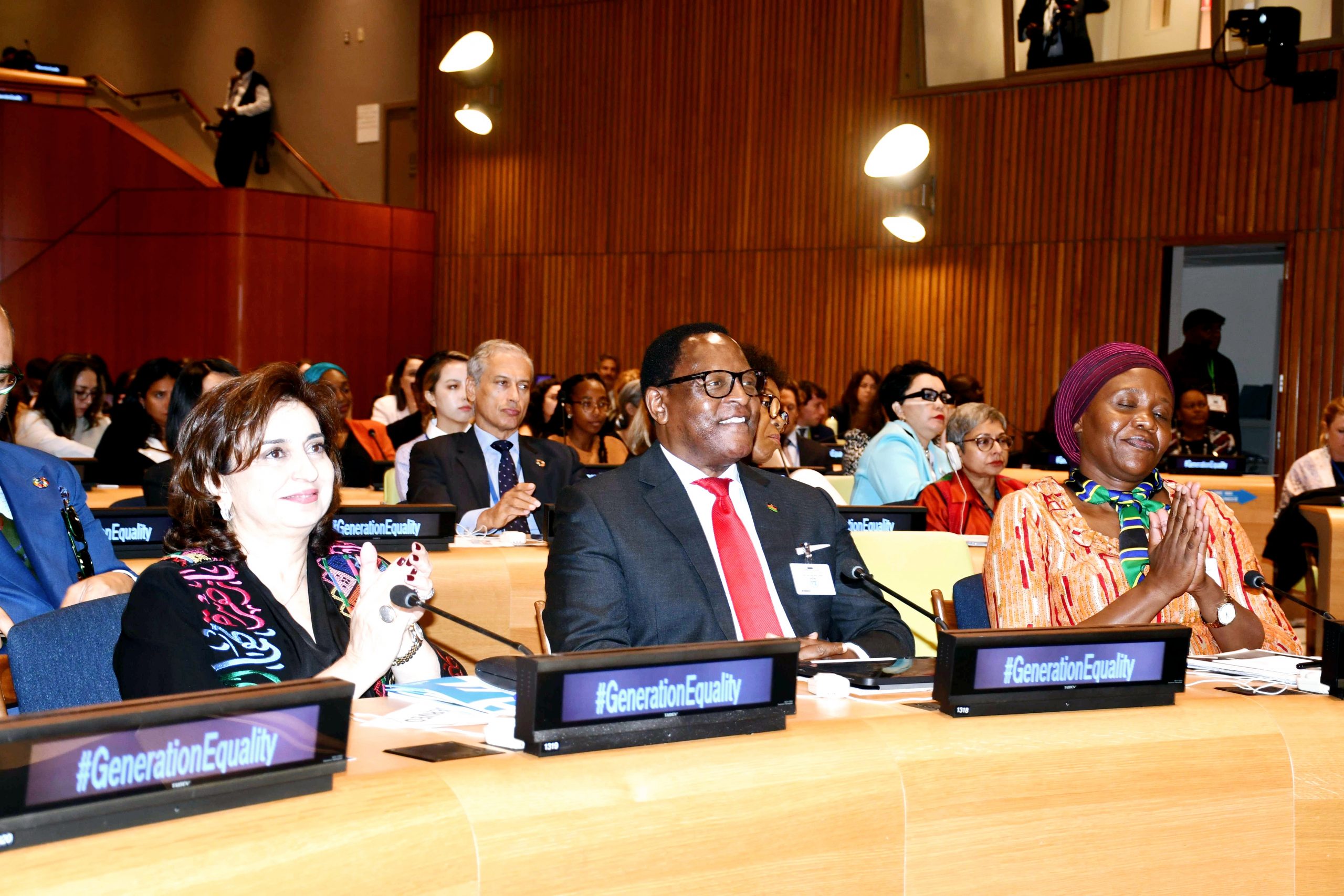
President Lazarus Chakwera says his administration is committed to provide support in women initiatives to drive their socio-economic growth in employment and mandate gender mainstreaming in all spheres of life.

Advertisement
He said this during the review meeting on UN Women Generation Equality Midpoint at the United Nations Headquarters in New York, saying there is need to provide opportunities to women and girls to achieve gender equality to enable them improve their livelihoods and promote their businesses in rural areas.
He said the social cash transfer in Malawi is assisting people at the grassroots level by enhancing security and decision-making power highlighting that over 150,000 households — 90% of them women — have benefited from this programme.
“There is growing evidence that supporting households with cash directly for a period of time under supervision has more lasting positive impact in building resilience and self-resilience long term than pouring money into the programmes of some implementing organisations that exist,” he said.

Advertisement
In the education sector, President Chakwera said Malawi has adopted the national girls education strategy, which aims at reducing barriers to girls’ education and ensure continued progress in gender equality.
He observed that since the initiative of the provision of sanitary wear, it has greatly benefitted girls to remain in school and that a number of adolescent mothers returned to school.
“We need to create a safe environment for young girls and women to enhance global cooperation in advancing the rights of women in bridging the gender divide.”
The President added that the Gender Equality Act of 2013, which prohibits harmful practices like child marriages has been setting standards and holding duty bearers accountable.


Advertisement
He called for renewed efforts and collaboration partnership that will create strong alliances and advance the global cause of the development to address emerging challenges facing women and girls.
Chakwera added that the Parliamentary Women Caucus in Malawi have been crucial in ensuring legislation for protection of girls towards the implementation of generation equality commitments.
In her remarks, UN Women Executive Director Sima Bahous expressed solidarity to work with the UN family to provide support to young girls and women.

Advertisement
She noted that women are still struggling to overcome multiple challenges to meet the great enabler SDG 5 to accelerate progress across all SDGs.
“While we are celebrating the progress in key areas such as women representation in key decision positions, in some countries women are still marginalised hence the need to put an extra gear,” Babous said.
She added that gender gaps remain high, particularly among women — driving food insecurity, maternal mortality as well as political representation.
She further said there is need to strengthen UN women and continue to advance collective commitment to women and girls to achieve the 2030 Agenda, adding that the conference offers the platform to address the huge gap and strengthen accountability for the promotion of women and girls.
Meeting with Prime Minister of Republic of Iceland, Katrin Jakobsdottir
Later in the day, President Chakwera held bilateral talks with the Prime Minister of Republic of Iceland, Katrin Jakobsdottir that centered on strengthening development cooperation between the two countries.
Iceland continues to support Malawi, particularly in Mangochi, in delivery of basic services in maternal health, areas of education as well as community development.

With ILO Executive Director, Gilbert Houngbo
Chakwera also met the International Labour Organisation Executive Director, Gilbert Houngbo where they discussed creation of greater opportunities for women and men, job creation for the youths.
According to Minister of Foreign Affairs, Nancy Tembo, the two leaders discussed issues of promotion of rights to work and enhancing social protection as well as strengthening dialogue on work related issues.—Pictures by Lisa Kadango-Malango, MANA

Advertisement