

By Duncan Mlanjira
South African lifesaving examiner, Deon Woodley, who is in Malawi to train youths in prevention and stopping of drowning at local level along the shores of Lake Malawi, disclosed an alarming rate of deaths by drowning that is at 360,000 annually worldwide.
Woodley arrived in the country on Monday and proceeded to travel to Nkhata Bay on Tuesday with Lytton Mabeti, a qualified lifeguard by professional and swimming instructor at St. Andrews International High School.
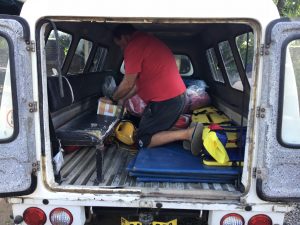
Woodley getting prepared
Woodley is in the country courtesy of the affiliation partnership that Malawi Aquatic Union’s Lifesaving Society has with Lifesaving South Africa in the international drive to provide excellent standards of leadership and lifeguard training.
The expert said most people drown because of not having been provided with lifeguards and lifesaving skills.
“The most vulnerable are toddlers, who usually drown in fish ponds, swimming pools, wells, rivers because they were not under supervision.

Advertising: Fruitila Orange Squash from Rab
Processors
“Other victims are adult males who, after consuming alcohol, want to also swim. Alcohol is playing a major part in the rate of drowning worldwide,” Woodley said.
In conjunction with Mabeti and Nkhata Bay-based Alex Ndipo, Woodley will train selected youths in rescue techniques, resuscitation skills, water safety preventives, spinal body rescue management among others.
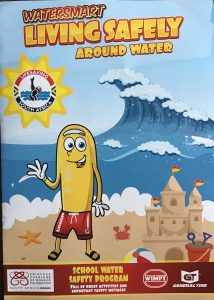
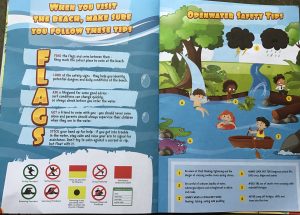
The literature for kids
The trainees will be provided with some rescue equipment such as torpedo buoys and they will also take the initiative to primary schools where the learners will undergo some presentations on how to be WaterSmart, a school water safety program which Lifesaving South Africa is executing.
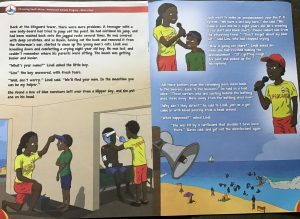
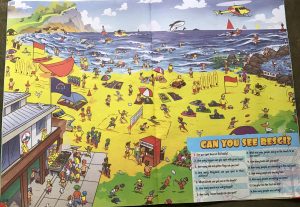
The school learners will be provided with WaterSmart easy-to-read literature presentations.
Woodley said Lifesaving South Africa’s partnership with St. Andrews International High School goes way back through its provision of training for the school’s staff and learners after every two years.
St. Andrews also has a lifesaving club, whose initial beneficiary are the staff and students, but Mabeti said it will soon be opened to the communities surrounding the International High School.

Nkhata Bay was chosen due to an increase of drowning incidents, especially during festive season, Easter holidays and other celebration holidays and also because district’s beaches are tourists destination.
Most tourists who want to swim along these beaches, which are very deep, always ask for lifeguard supervision, and thus the need to train more experts in another objective of job creation for the youths.
The project shall then be sustained by Ndipo in collaboration with Mabeti from Blantyre.
Malawi Lifesaving Society was registered in 2014 under Malawi Aquatic Union, the mother body of swimming in the country.
Lifesaving skills or equipment along Lake Malawi are almost non-existent in the local communities with just a few at some of the holiday resorts.
“At the same time, it is also some sort of sport through regular exercises the lifeguards undergo to keep their bodies fit and healthy.
“It is also a serious career from which one can get employment,” Mabeti said.
Woodley said Lifesaving South Africa, which provides an essential volunteer community service at the highest international standards for the public of the Rainbow Nation, has close to 1,000 members.
According to its website, LSA leads, supports and partners with national and international organisations committed to drowning prevention, water safety supervision, emergency response and sport.
It believes in humanitarian principles; effective governance; tolerance and respect for all; ethical conduct and behaviour; equity through diversity; environmental responsibility; evidence-based decisions; learning; friendship and camaraderie.
Lifesaving South Africa organises national competitions such as the South African Lifesaving Surf National Championships, that involves various lifesaving events, including sea, board and beach competitions.
Lifesaving officially began in South Africa around 1911 after Sir William Henry, who was at the time the Secretary for Royal Life Saving Society(RLSS) toured all member countries of the Commonwealth to establish branches of the RLSS.
The inaugural lifeguard awards in South Africa subsequently started in 1913, with the RLSS retaining control of lifesaving activities till 1961 when South Africa established the South African Life Saving Society.